

The Kurdish Community of Germany said today that a growing number of Kurds who travelled from Germany or elsewhere in Europe to Türkiye on holiday or to visit family have been unable to return, because exit bans have been imposed on them. “We are following the development with great concern,” the association said. The reports reaching it have increased in recent weeks, and its own members are among those affected.
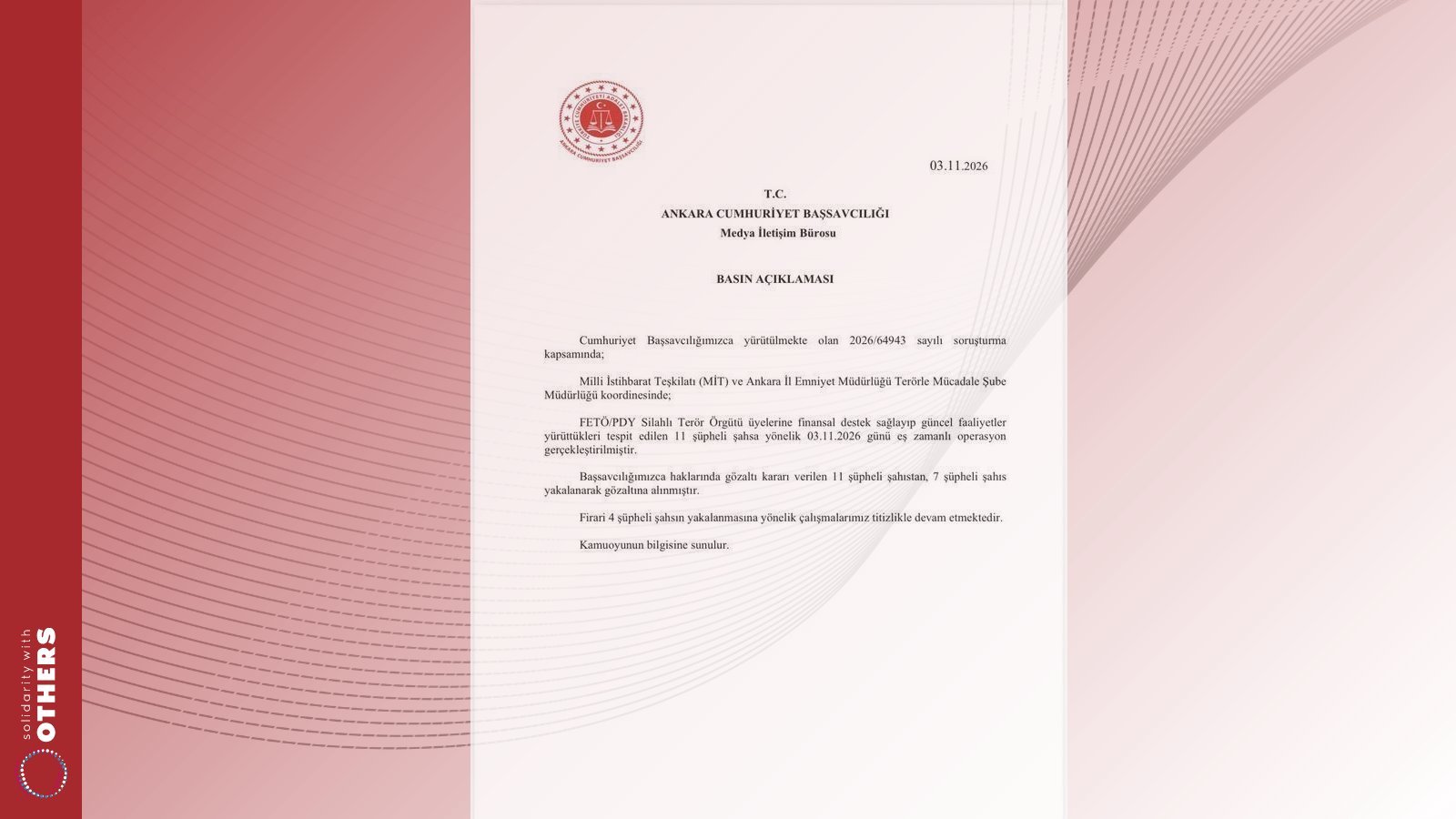
Bans have been imposed on a number of people, it said, and investigations opened against them on allegations of terrorist propaganda.
The association added that it was further disturbed by reports that sums of up to €10,000 had been demanded from some of those affected in exchange for having their exit bans lifted. It did not say who was alleged to have asked, and it made no finding. “These allegations need to be investigated urgently and independently.”
None of this, the association said, is new. “For at least ten years, people coming to Türkiye from Germany, and Kurds in particular, have faced questioning, detention, criminal investigation and travel restrictions on entering or leaving Türkiye.” The grounds most often cited are insulting the President, terrorist propaganda, or links to illegal organisations. And the accusations, it said, “are mostly connected to critical statements about the Turkish government, social media posts, or participation in political events in Germany.”
That last clause is the whole of the matter. The conduct is lawful where it occurs. The consequence arrives at a border two thousand kilometres away.
“It is unacceptable,” said the association’s deputy chair, Mehmet Tanrıverdi, “that people who exercise their rights to freedom of expression and assembly in Germany are then criminalised for precisely that when they visit Türkiye.”
The association has asked the German government, and Foreign Minister Johann Wadephul in particular, to act without delay: to summon Türkiye’s ambassador in Berlin to the Foreign Ministry; to provide diplomatic and consular support to those affected, case by case, and above all to German citizens and permanent residents; and to have the allegations about payments examined and cleared up.
It asked Berlin not to treat the matter as Türkiye’s internal affair. “If people who have lived in Germany for many years are placed under pressure for expressing their political views, and prevented from returning to Germany, that directly concerns the Federal Republic of Germany as well.”
Around 1.3 million Kurds live in Germany, according to Mediendienst Integration’s 2023 research. There are no official figures, because German population statistics record citizenship rather than ethnicity. Most are of Turkish origin, with substantial numbers from Syria, Iraq and Iran. They are among the largest communities of migrant origin in the country.
Two points of law belong in any European assessment of this.
The first is that Türkiye’s own constitution already prohibits what is described. Article 23 provides that a citizen’s freedom to leave the country may be restricted only by a judge’s decision, in connection with a criminal investigation or prosecution. An exit ban imposed administratively, or kept in place without a judicial decision anyone can see, is unlawful on Türkiye’s own terms before any international instrument is reached.
The second is that the obvious international instrument is not available. The right to leave any country, including one’s own, is guaranteed by Article 2 of Protocol No. 4 to the European Convention. Türkiye signed that Protocol in 1963 and has never ratified it. The Strasbourg Court has therefore dealt with Turkish travel bans under the right to respect for private life instead, and it has done so successfully: in İletmiş and Paşaoğlu it held that withholding travel documents from people facing no charge was disproportionate, and in March 2023, in Telek and Others, it found a violation where three academics had their passports cancelled because they had signed a peace petition.
Those are remedies that arrive years later, to people who have already missed the funerals, the school terms and the jobs.
What the Kurdish Community of Germany is asking for is more modest and more immediate: that the German state find out how many of its citizens and residents are currently unable to come home, and say so out loud to the government that is keeping them.
Source:
DW Türkçe, “KGD: Türkiye Kürtlerin Almanya’ya dönüşünü engelliyor”, 29 October 2026: https://www.dw.com/tr/kgdden-t%C3%BCrkiyeye-k%C3%BCrtlere-%C3%A7%C4%B1k%C4%B1%C5%9F-yasa%C4%9F%C4%B1-su%C3%A7lamas%C4%B1/a-79788674