
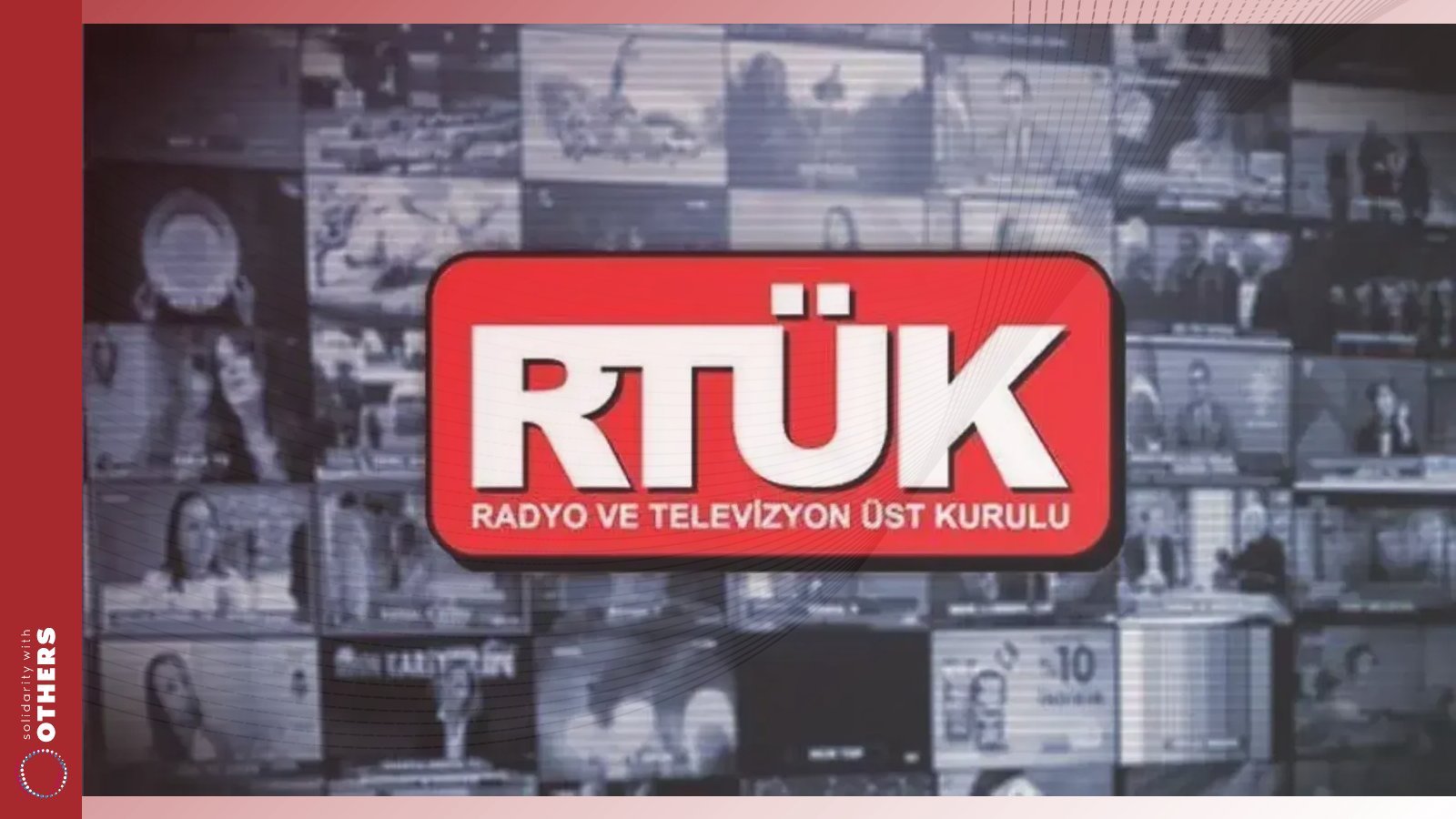
On Wednesday Türkiye’s broadcasting regulator fined two television channels for the second time in twelve days over their coverage of the country’s investment fund collapse. Sözcü TV was fined 1 per cent of its previous month’s advertising revenue and Koza TV 2 per cent, for breaching the rules requiring impartiality, accuracy and truthfulness. Twelve days earlier RTÜK had fined both of them the maximum, 3 per cent, over programmes about alleged connections between government figures and people implicated in the scandal.
The ground given for the Sözcü TV penalty repays reading slowly. The programme, presented by Simge Fıstıkoğlu on 25 October, discussed the arrest of the investigative journalist Murat Ağırel. RTÜK’s finding is that the broadcast created the impression that Ağırel had been jailed because of his journalistic activities, without providing sufficient evidence to support that conclusion.
Murat Ağırel was placed under house arrest on 10 October in an investigation concerning his reporting on the fund scandal. He was jailed pending trial on 19 October, accused of aiding a criminal organisation without being a member of it. His own account is that he had been looking into allegations brought to him by sources and had held the story because he could not verify the documents. He is in prison in connection with reporting he did not publish.
The state regulator’s position is that it requires evidence before a television programme may suggest that this amounts to a journalist being jailed for journalism.
Koza TV was fined over two editions of a political discussion programme, Doğrusunu İstersen, presented by Evren Özalkuş, in which two opposition members of parliament — Yüksel Selçuk Türkoğlu of the İYİ Party and Özgür Karabat of the New Party — commented on the fund investigation. The regulator’s objection was that the presenter did not challenge or correct what the politicians said, and appeared to endorse it.
One member of the regulator refused to go along with this and said so. Tuncay Keser wrote that the repeated penalties against channels covering the fund scandal, together with the access restrictions imposed on related news, were undermining the public’s right to information and freedom of the press. He argued that treating political commentary on a discussion programme as though it were factual reporting subject to strict verification requirements violates the principle of pluralism and the regulator’s own duty to protect a diversity of opinion. And he said the Sözcü TV sanction disregarded Ağırel’s presumption of innocence.
The scandal these channels are being fined for covering is not a minor one. On 17 September the Capital Markets Board ordered the liquidation of 131 funds managed by seven companies, their assets to be sold to repay investors. The funds had nearly half a million individual investors.
The response to it has been consistent across every channel of communication at once.
On 30 September the Freedom of Expression Association recorded that at least 147 X accounts had been blocked in a single day for posting about the fund crisis. Their combined following was about 2.65 million. Among those blocked were economists, academics, technical analysts, traders, investors, finance professionals and lawyers — the people best placed to explain to half a million investors what had happened to their money.
On 9 October the journalists Şaban Sevinç and Mustafa Balcı were jailed pending trial, accused of publicly disseminating misleading information. On 10 October Ağırel and İsmail Saymaz were placed under house arrest. On 16 October the two channels were fined the maximum. On 19 October Ağırel was jailed. On 28 October the channels were fined again.
The earlier round of fines concerned, among other things, allegations about the Trade Minister’s investments and photographs showing the governing party’s spokesman at a public event attended by a suspect in the investigation. The minister denied wrongdoing and filed a criminal complaint against the journalists who had discussed it.
The Committee to Protect Journalists has called for the jailed journalists’ release and urged Türkiye to repeal the disinformation law under which some of them are held.
Half a million people lost access to their savings in September. Since then the state has blocked the accounts of those explaining it, jailed four of the journalists reporting it, and fined the two channels discussing it twice inside a fortnight — the second time, in part, for saying out loud that one of those journalists is in prison because of his journalism.
Sources:
1- Stockholm Center for Freedom, “Turkey fines 2 TV stations again over coverage of fund scandal, jailed journalist”, 28 October 2026: https://stockholmcf.org/turkey-fines-2-tv-stations-again-over-coverage-of-fund-scandal-jailed-journalist/
2- İfade Özgürlüğü Derneği, “Fon krizi hakkında paylaşım yapan en az 147 X hesabı”, 30 September 2026: https://ifade.org.tr/