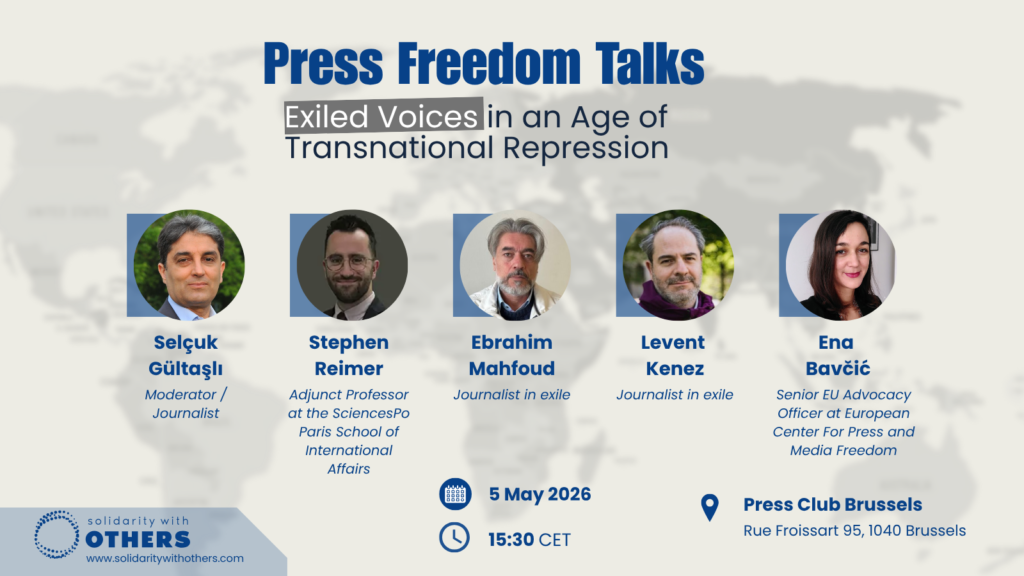


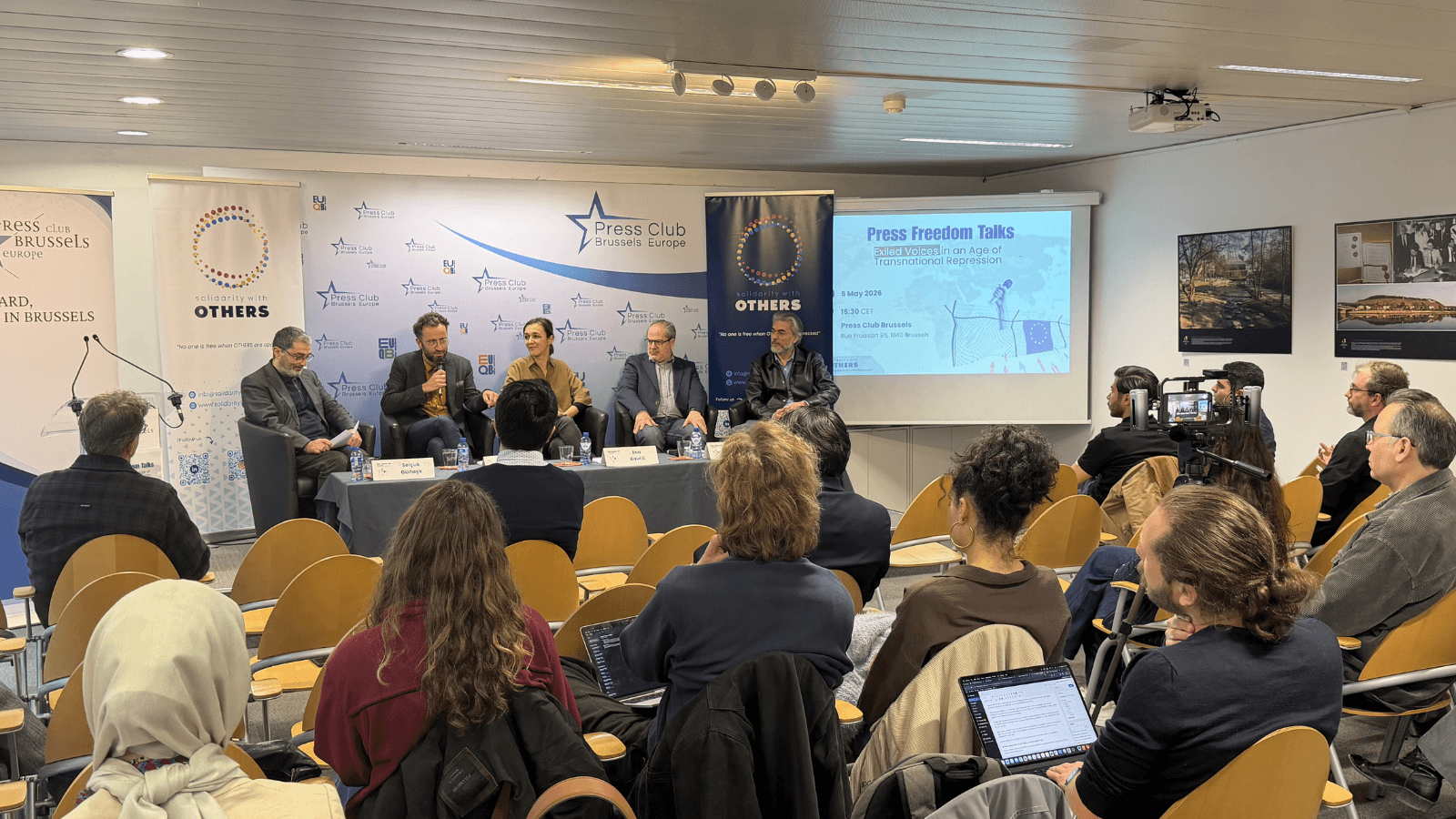
On 5 May 2026, Solidarity With OTHERS hosted the second edition of Press Freedom Talks at Press Club Brussels to mark World Press Freedom Day. This year’s discussion focused on journalists living and working in exile and the growing reality of transnational repression across borders.
The discussion brought together researchers, civil society and journalists who shared both professional expertise and personal experiences about what it means to continue reporting after being forced to leave home.
Stephen Reimer : Financial Systems Become Tools of Repression
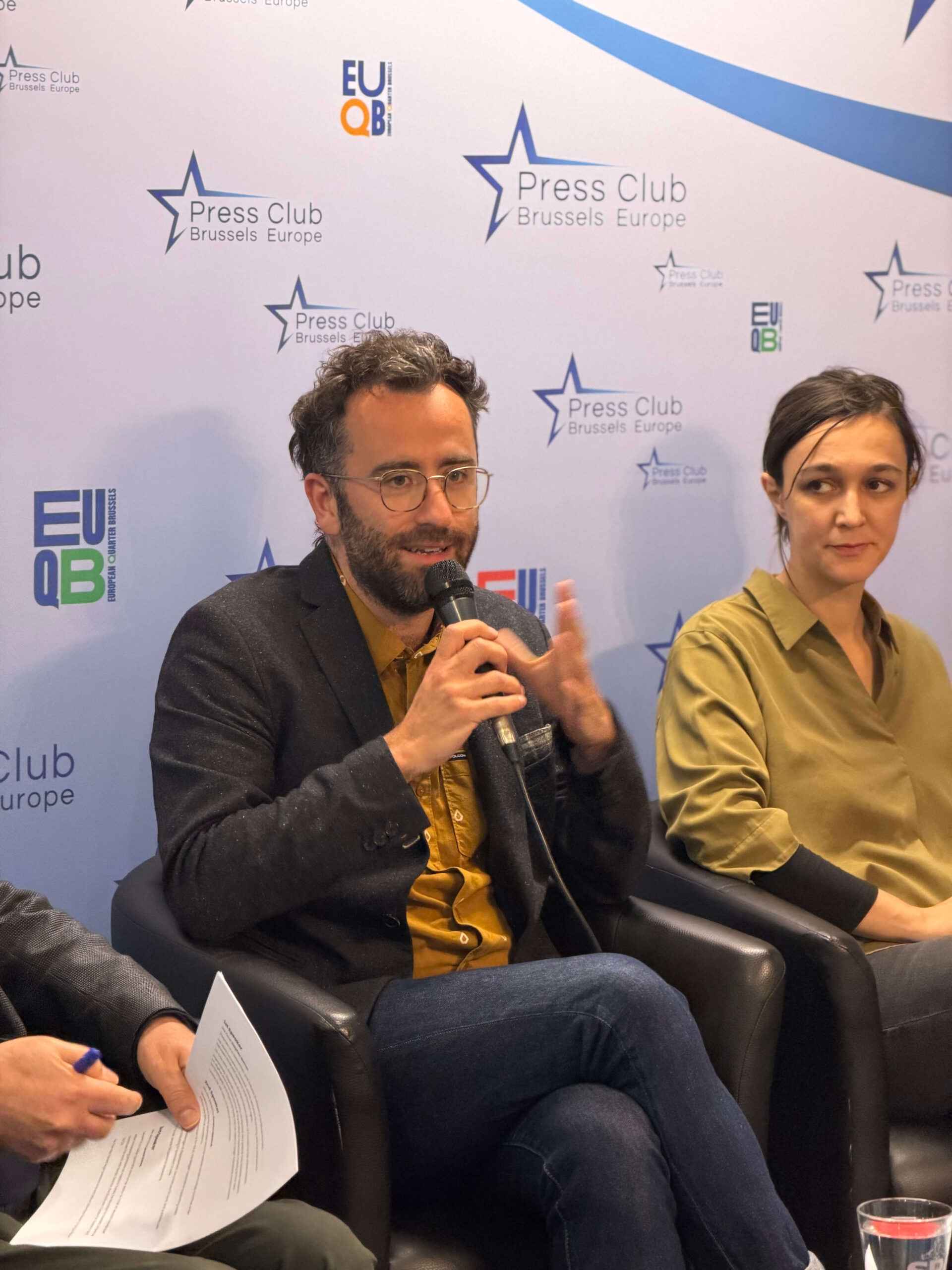
Stephen Reimer, researcher and adjunct professor at Sciences Po Paris, spoke about a form of transnational repression that often receives little public attention: the misuse of financial systems against journalists, dissidents and civil society actors abroad.
He explained how anti-money laundering and counter-terrorism financing frameworks, originally designed to combat organised crime and terrorism, can also be abused by authoritarian governments to target critical voices beyond their borders. Reimer described how journalists and activists can end up facing banking restrictions, frozen accounts, financial monitoring or suspicion based on politically motivated accusations and international information-sharing systems that lack proper safeguards.
His remarks highlighted how repression today is not always direct or visible. In many cases, it works quietly through administrative systems, financial pressure and the fear created by being labelled a security threat.
Ena Bavčić : Supporting Journalists Beyond Emergency Protection
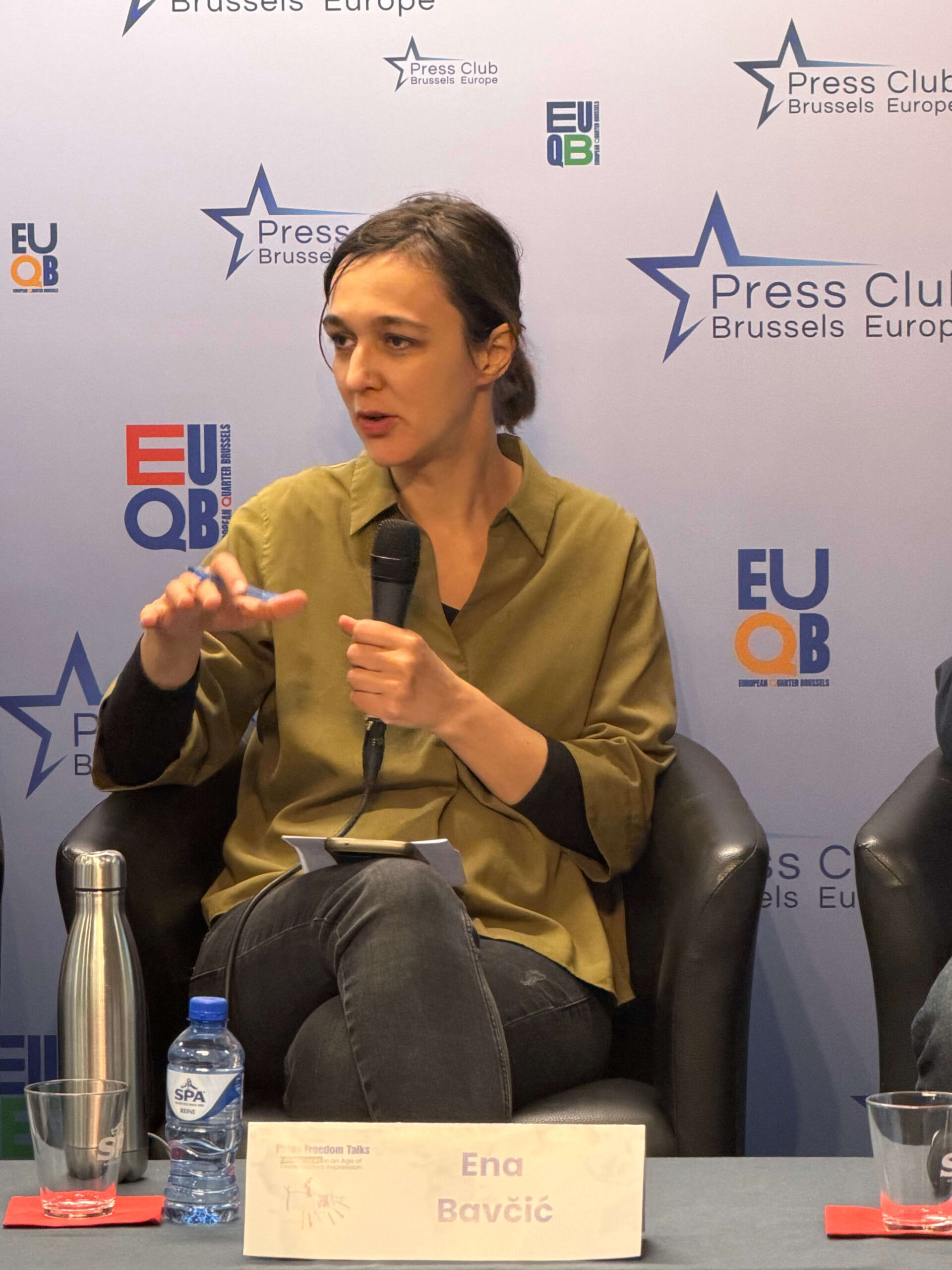
Ena Bavčić, EU Advocacy Officer at the European Centre for Press and Media Freedom (ECPMF), spoke about the realities journalists in exile face after arriving in Europe and the support systems that currently exist for them.
She explained that many journalists continue living under enormous pressure long after leaving their countries, dealing with insecurity, isolation, financial hardship and psychological stress while trying to rebuild their lives and careers. Bavčić also presented the different forms of support ECPMF provides, including legal consultations, psychological support, security assistance, language courses and professional training opportunities.
A particularly important point in her intervention was the lack of protection available for family members who remain in home countries and are often subjected to intimidation because of a journalist’s work abroad. She stressed the need for stronger coordination, long-term support mechanisms and greater recognition of transnational repression within European policy discussions.
Levent Kenez : Exile Does Not Mean Safety
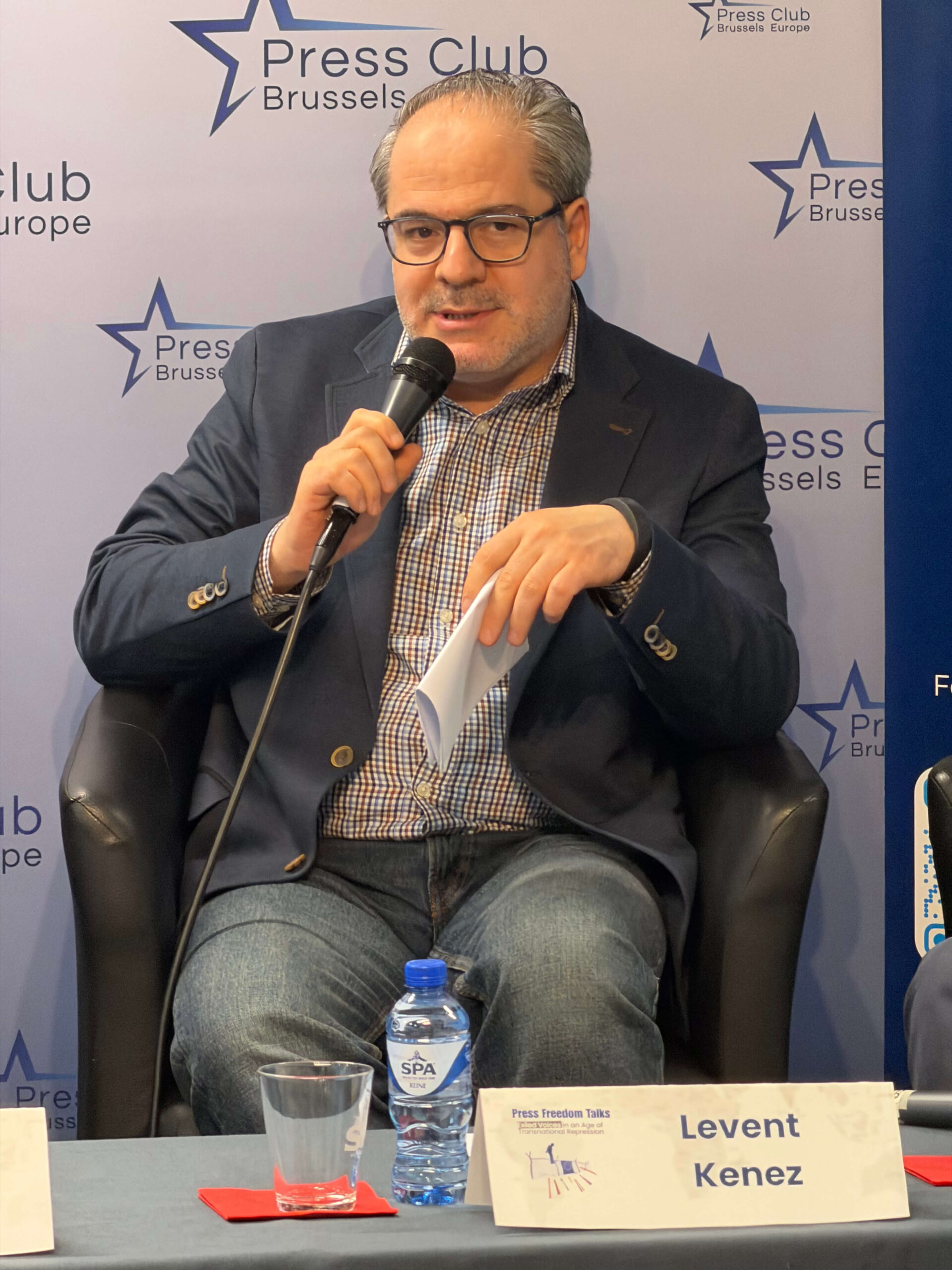
Turkish journalist Levent Kenez shared his own experiences after leaving Turkey and continuing his work from abroad. His intervention gave a direct and personal picture of how authoritarian pressure can continue far beyond national borders.
He spoke about threats against his family, attempts to extradite him from Sweden, surveillance, smear campaigns in pro-government media and accusations related to terrorism used to justify financial restrictions and legal pressure. He also described how governments increasingly try to silence journalists abroad through online censorship and cooperation from social media platforms.
One of the strongest parts of his testimony was his reflection on the emotional burden carried by journalists whose family members remain vulnerable back home. Despite the risks and pressure, Kenez also underlined the importance of journalists in exile, especially at a time when independent reporting inside countries like Turkey has become increasingly difficult.
Ebrahim Mahfoud : Trying to Continue Journalism in Europe
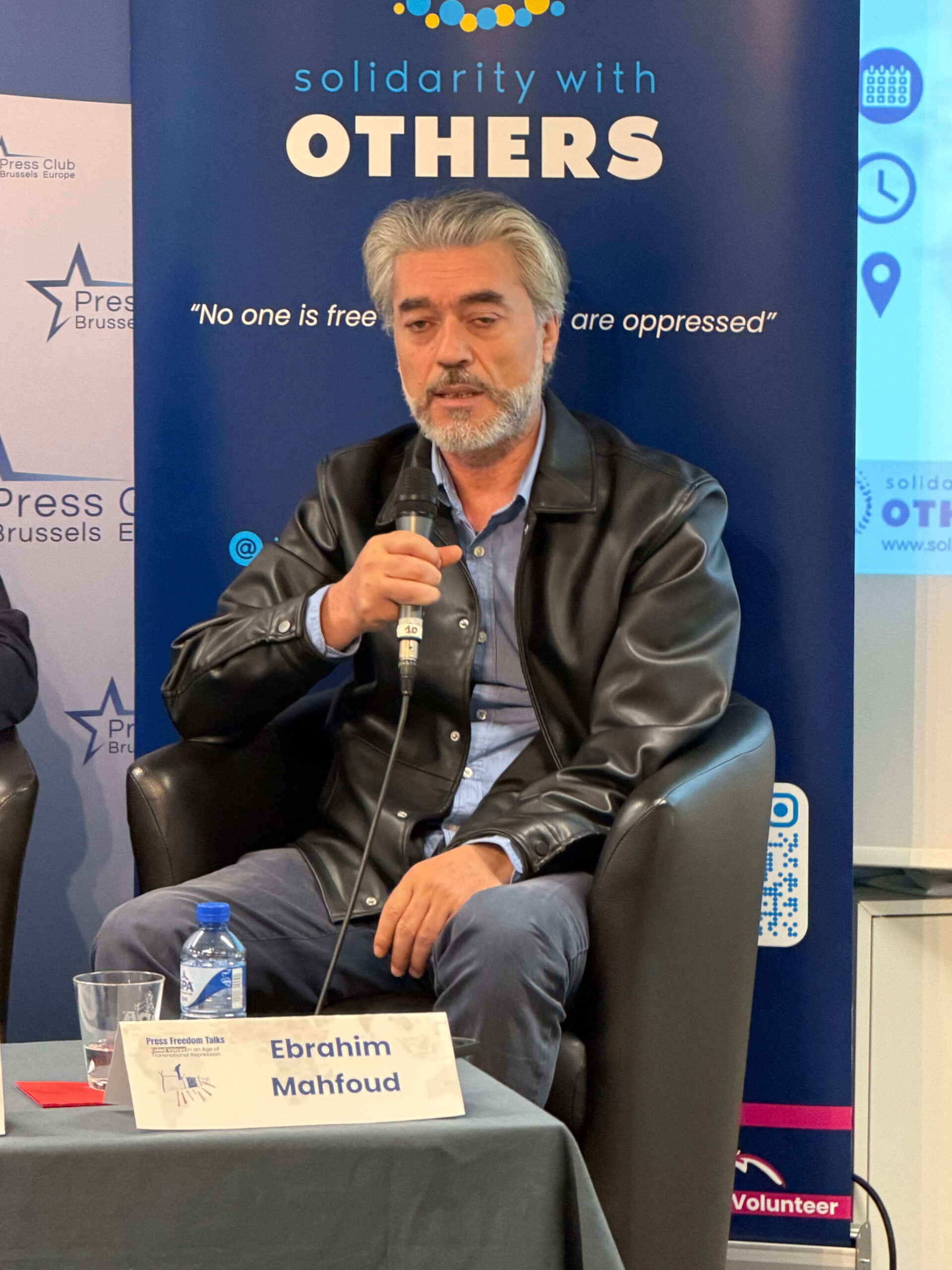
Syrian journalist Ebrahim Mahfoud spoke openly about the difficulties of rebuilding a journalistic career in exile and the frustration many exiled journalists face when trying to find space within European media environments.
Drawing from his own experience in Belgium, he described how journalists coming from countries affected by war or authoritarianism are often not treated as equals despite years of professional experience and deep knowledge of their regions. Mahfoud questioned why exiled journalists are so often overlooked while discussions about their countries continue without their voices being included.
He also spoke about the responsibility many journalists in exile still feel toward the people and stories they left behind. For him, continuing journalism is not simply about maintaining a profession, but about making sure the realities of places like Syria are not forgotten or misunderstood.
A Conversation That Needs to Continue
Throughout the discussion, one message remained clear: exile does not automatically bring safety. Many journalists continue to face surveillance, intimidation, legal harassment, financial pressure and threats targeting their families even after reaching Europe.
At the same time, the panel also showed the determination of journalists who continue reporting despite these challenges and the importance of creating stronger protection mechanisms for those defending press freedom across borders.