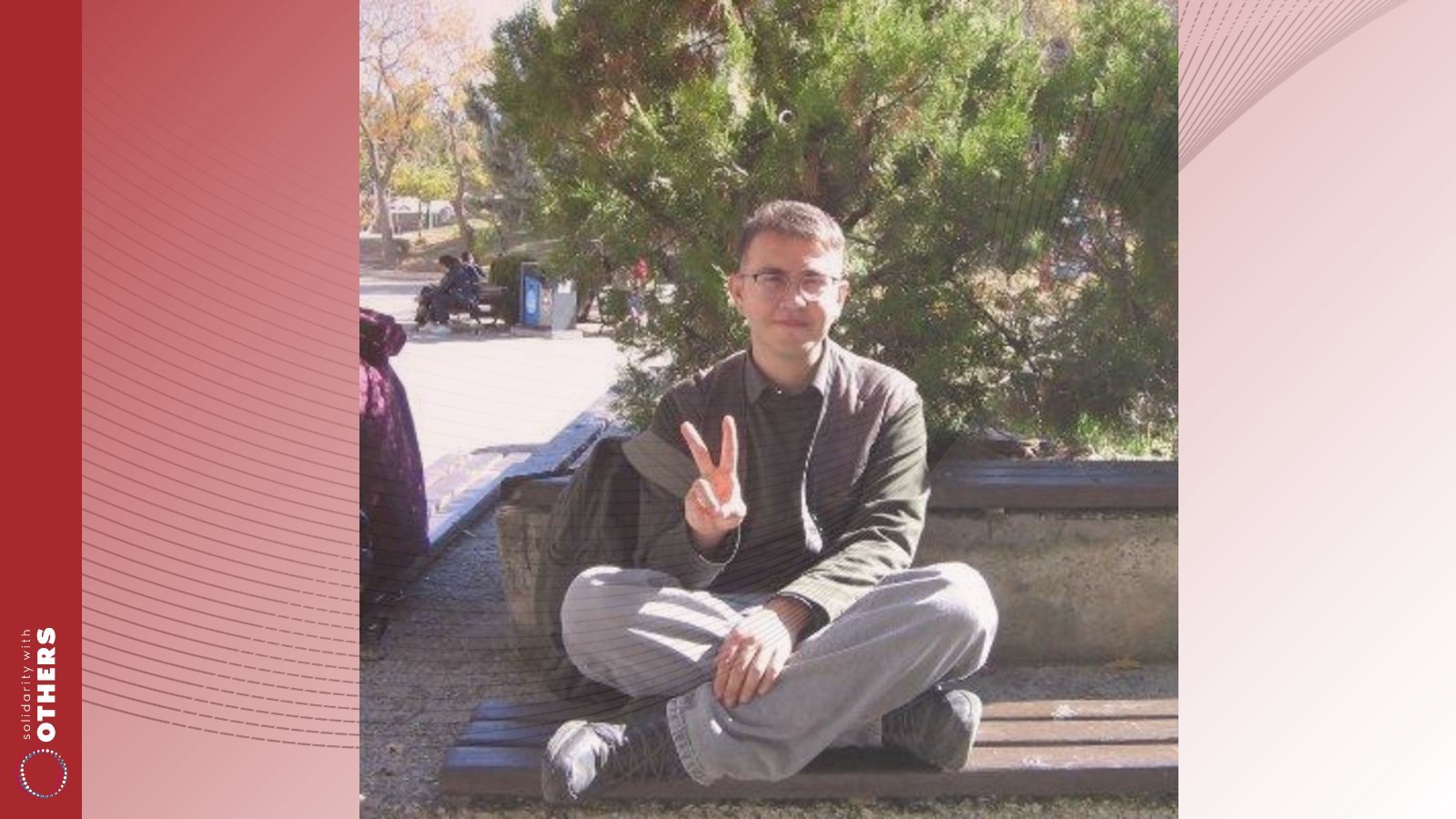


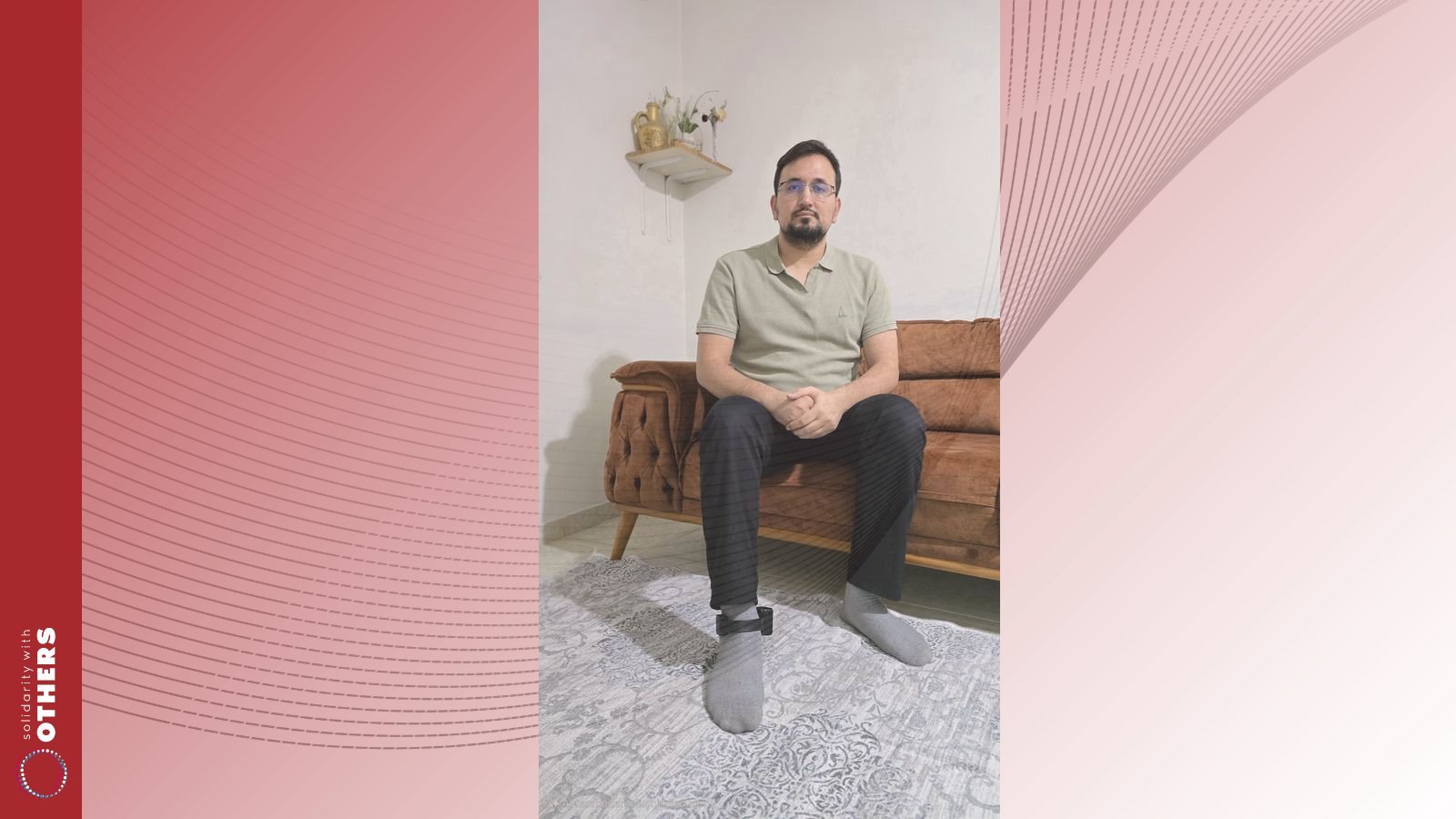
The lawyer Bilal İpek posted a photograph of himself on Tuesday evening, sitting in his living room with an electronic tag on his ankle.
“Solely because I acted as counsel for Alparslan Kuytul within the scope of my professional activity as a lawyer, I have been held under house arrest for 60 days,” he wrote. “Advocacy is one of the things a state governed by law cannot do without. If you punish the practice of law as though it were criminal activity, tomorrow you will not find a lawyer to defend you.”
The sequence that produced this is on the record.
On Tuesday 18 August, Oktay Saral, chief adviser to the President, wrote publicly to Alparslan Kuytul: “Your turn will come.” Kuytul had days earlier criticised police raids on the Süleymancılar, another religious community.
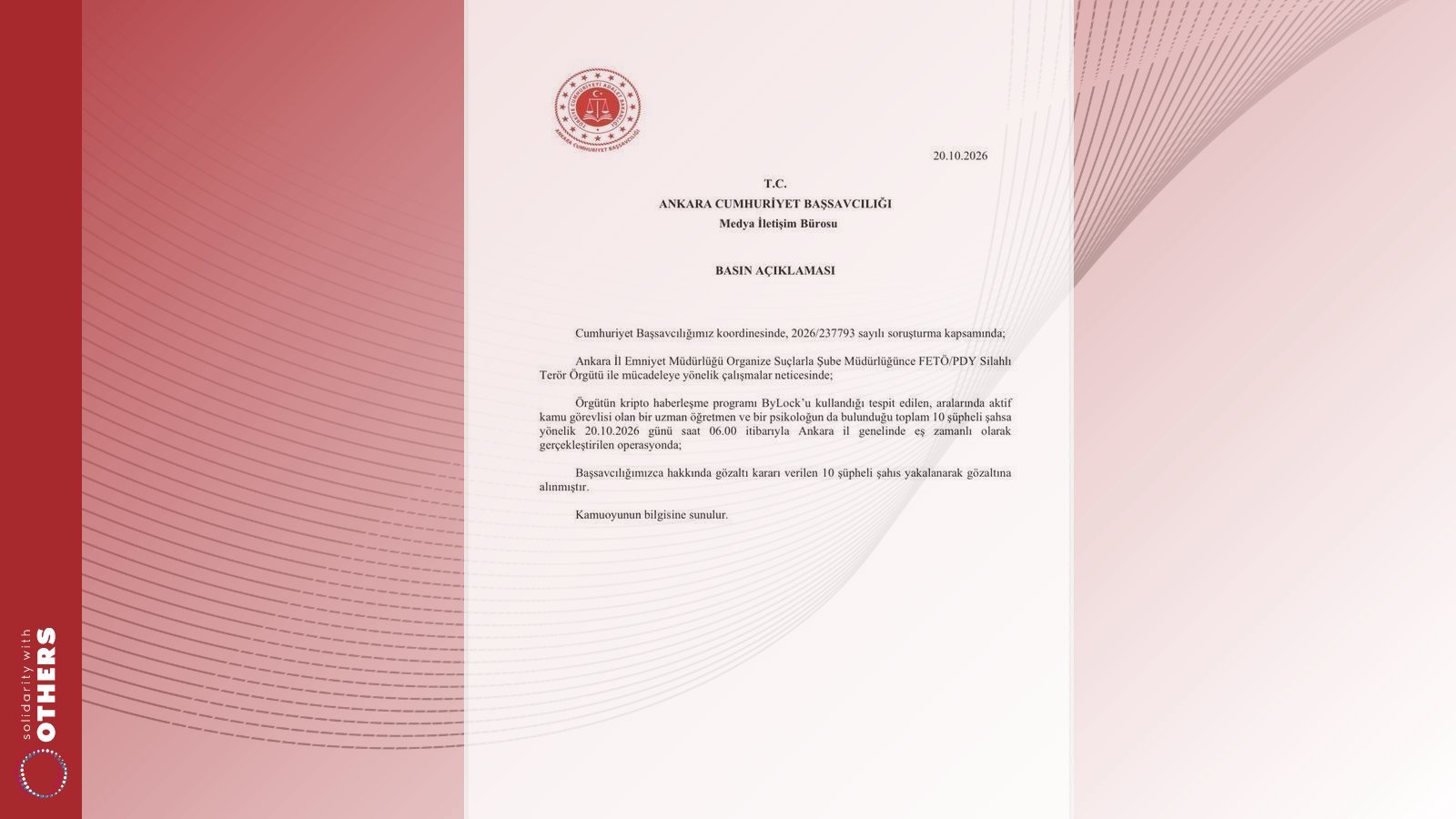
The next morning counter-terrorism police searched 49 locations in six provinces. Kuytul and his wife Semra were detained at their home in Adana. Their account is that no detention order was shown to them. Trustees were appointed to five companies. Access was blocked to 349 social media accounts. Within three days there had been 62 detentions.
Both of Kuytul’s lawyers were taken: Bilal İpek and Alişan İnci.
Kuytul then gave his statement to the authorities with no lawyer present. He described it as the seizure of his right to a defence.
He and his wife were remanded in custody on 23 August. Of those detained, 56 were sent to court, three were released, and proceedings continue against 51. The investigation is run by the Adana Chief Public Prosecutor’s Office. The offences listed across the case are forming and leading a criminal organisation, membership of an organisation, laundering the proceeds of crime, aggravated fraud, forgery of official documents and breach of the Tax Procedure Law. There is no terrorism charge.
The Justice Minister said the investigation does not target any religious group, belief or opinion.
Two things should be said about what this case is and is not.
It is not a Gülen case, and it is not a Kurdish case. The Furkan Foundation was established in Adana in 1994 and runs Quranic exegesis classes, conferences and social assistance. Its constituency is religious and conservative. Whatever one makes of its teaching, the method applied to it in August is the method documented against other groups for a decade: a dawn raid across multiple provinces, trustees over the companies, the social media accounts blocked, and the lawyers taken with the clients.
And it is not, on the face of it, about Bilal İpek’s own conduct. Sixty days into a measure that confines him to his house and tracks his movements, no offence attributable to him has been stated publicly. What he has said, and what nobody has contradicted, is that he represented a man the state was prosecuting.
House arrest is not a lesser thing than prison in Convention terms. In Buzadji v. the Republic of Moldova the Grand Chamber confirmed that house arrest constitutes a deprivation of liberty within the meaning of Article 5, requiring the same justification as detention in a cell. Sixty days is sixty days.
The consequence for Kuytul is the one İpek’s post identifies. A defendant whose two lawyers are both detained is a defendant without a defence. The right under Article 6 § 3 (c) to be assisted by counsel of one’s own choosing, and the right established in Salduz v. Turkey to a lawyer from the first interrogation, are not satisfied by the theoretical availability of some other lawyer. They are defeated at the point where representing this client becomes a reason to be investigated.
Principle 18 of the United Nations Basic Principles on the Role of Lawyers states it in one line: lawyers shall not be identified with their clients or their clients’ causes as a result of discharging their functions.
In May 2025 the Council of Europe opened for signature in Luxembourg the first binding international treaty on the protection of lawyers, which obliges states to ensure that lawyers can work free from threats, harassment, intimidation and improper interference, and to investigate effectively where such acts occur. Seventeen states signed in the first two days. Türkiye was not among them.
Bilal İpek’s warning is not rhetorical, and it is addressed to the people who will need the answer. If acting for an unpopular defendant is itself a reason for an ankle tag, the profession that makes a trial possible stops functioning, and it stops functioning for everyone.
Source:
Bilal İpek (@Avbilalipek3), 20 October 2026: https://x.com/Avbilalipek3/status/2112605354303299774