

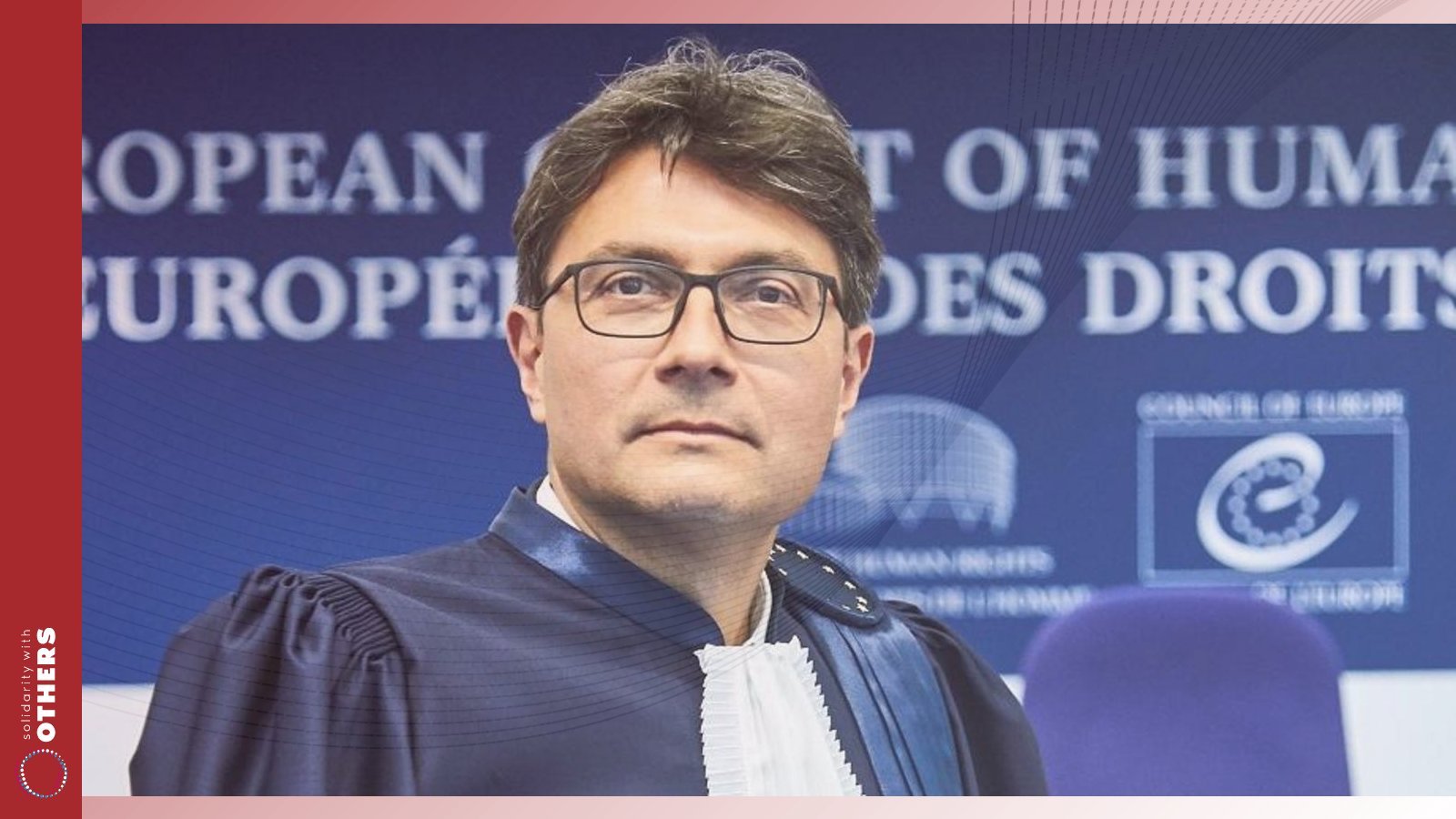
Mattias Guyomar, President of the European Court of Human Rights, addressed the plenary of the Parliamentary Assembly of the Council of Europe this week. He said that in the past year the Court had received 12,000 new applications concerning dismissals from public service by emergency decree in Türkiye.
Of those, 7,000 have been registered and 5,000 are at the registration stage. He said the Court had activated special case-processing mechanisms because of the volume.
He told the Assembly that the number of pending applications had fallen at the end of last year to its lowest level in twenty years, and that the Court’s overall workload had begun to rise again because of this mass wave of applications arising from the decree dismissals.
The Court’s published statistics for 31 August 2026 record 58,100 applications pending before a judicial formation. Türkiye accounts for 23,850 of them, 41 per cent of the total. Russia follows with 5,700, applications remaining from before its expulsion from the Council of Europe, then Poland with 3,850, Ukraine with 3,550, Italy with 2,850, Greece with 2,350, Azerbaijan with 2,250 and Romania with 2,150. The remaining 37 states account for 9,100 between them.

The applications against Türkiye alone exceed the combined total against the 44 member states other than Russia and Poland.
At 31 December 2025 the pending total stood at 53,450, with 18,464 against Türkiye. In the eight months to 31 August 2026 the total rose by 4,650, while the Türkiye figure rose by 5,386.
Guyomar also addressed the Grand Chamber’s most recent judgment concerning Osman Kavala, saying that what had happened to Kavala was not an isolated situation.
On implementation, he said the Court works closely with the Committee of Ministers and the Department for the Execution of Judgments, and put the success rate in the implementation of judgments at 87 per cent.
He said the Court is not an actor in political debates but their subject. It was natural, he said, for states to debate questions such as migration and border security, but this had to be done with respect for judicial independence. The Court hears states’ concerns, he said, but will never allow itself to be dictated to about what it should or should not do. He said international judges must be protected from pressure and threats, and expressed full solidarity with the judges of the International Criminal Court targeted by United States and Russian sanctions.
He devoted a substantial part of his address to the Court’s budget, saying that an institution serving 700 million people and deciding 38,000 cases a year operates on an annual budget of less than €90 million, which he described as insufficient. He contrasted this with the Court of Justice of the European Union in Luxembourg, whose budget exceeds €500 million. He said falling voluntary contributions from member states would lead to the termination of lawyers’ contracts and a drop in the number of cases examined, and warned that if a proposed 2 per cent cut were applied to the Court, it would have to lock its doors.
He reminded the Assembly that the Court’s 46 judges are elected directly by it, and that the Court draws its legitimacy from that democratic mandate.
Ten years after the decrees, the dismissals they imposed are now the largest single driver of the European Court’s workload.
Sources:
1- TR724, 29 Sept 2026: https://www.tr724.com/aihm-baskani-mattias-guyomar-duyurdu-son-bir-yilda-khk-ihraclarina-iliskin-12-bin-basvuru-yapildi/
2- TR724, 15 Sept 2026: https://www.tr724.com/aihm-istatistikleri-dava-basvurularinin-yuzde-41i-turkiyeden/
3- ECtHR, Pending applications allocated to a judicial formation, 31 August 2026: https://www.echr.coe.int/documents/d/echr/stats-pending-month-2026-bil
4- ECtHR, Analysis of Statistics 2025: https://www.echr.coe.int/documents/d/echr/stats-analysis-2025-eng