


Executive summary
This report examines the role of the Turkish Maarif Foundation (TMV) in the global closure, transfer, and restructuring of educational institutions linked to the Gülen movement following the events of July 2016. Established by Law No. 6721 in June 2016 as a state-backed foundation, TMV operates as a hybrid entity combining formal non-profit status with embedded executive control, extensive public funding, and a mandate to deliver education services abroad on behalf of the Turkish state.
Since 2016, TMV has emerged as a central operational instrument in Turkey’s overseas campaign targeting Gülen-affiliated educational networks. Across multiple jurisdictions, this campaign has resulted in the closure, confiscation, or transfer of at least 162 institutions in 29 countries, affecting approximately 7,800 personnel. In 131 cases, schools were transferred to TMV, while others were closed or otherwise restructured.
The report identifies recurring patterns across jurisdictions despite variations in legal frameworks and local contexts. These include sustained diplomatic engagement by Turkish authorities; the use of executive, administrative, or security-based measures by host states; and the subsequent reassignment of institutions to TMV or alternative entities. In several cases, these processes occurred in the absence of transparent legal procedures, effective judicial remedies, or adequate compensation, raising concerns regarding due process, property rights, and the rule of law. In all, transfer or closure cases, it happened against the will of the school managers and the Gülen community as well as the parents and students of the schools.
The comparative country cases—while non-exhaustive—demonstrate a spectrum of implementation models, ranging from negotiated transfers and administrative licence revocations to coercive interventions involving security forces, deportations, or intelligence services. These cases also reveal broader patterns of transnational coordination, including the collection and transmission of personal data, restrictions on movement, and parallel legal or administrative actions targeting individuals associated with the institutions.
From an institutional perspective, TMV’s governance structure, funding model, and operational practices indicate a high degree of integration with the Turkish state apparatus. The Foundation’s activities are supported by substantial and increasing public budget allocations and are closely aligned with Turkey’s foreign policy and security objectives, particularly in relation to the Gülen movement.
The report further assesses these developments under international law, with particular reference to Article 7(1) of the Rome Statute of the International Criminal Court. It finds that there is a reasonable basis to consider that the acts documented—when viewed cumulatively—may amount to the crime against humanity of persecution. This assessment is grounded in evidence of severe deprivation of fundamental rights (including property rights, employment, and access to justice), targeting on political grounds, and the existence of a widespread or systematic attack directed against a civilian population.
Taken together, the findings suggest that the global reassignment of Gülen-linked educational institutions was not a series of isolated national measures, but rather formed part of a coordinated transnational policy. In this context, the Turkish Maarif Foundation operates not only as an education provider, but as a key vehicle through which this policy has been implemented across diverse legal and political environments.
1. Turkish Maarif Foundation
1.1. Legal establishment and statutory mandate
The Foundation’s legal basis is Law No. 6721, adopted on 17 June 2016 and published in the Official Gazette on 28 June 2016.[1] Parliamentary records show that deliberations on the “Maarif Foundation Law Bill” were completed and the bill was adopted following an open vote in June 2016.[2] The timing of its establishment—less than one month prior to the attempted coup of 15 July 2016—is notable, as subsequent policy developments would position the Foundation at the centre of Turkey’s overseas education strategy.
The statutory purpose clause provides that the Foundation is to deliver and develop formal and non-formal education services abroad, award scholarships across educational stages, and establish institutions such as schools, educational facilities, and student dormitories.[3] The activity provisions further authorise it to open schools, learning and cultural centres; establish libraries, laboratories and sports facilities; produce educational content; and provide in-kind or financial support to students.[4]
Two features of the law are particularly relevant to the organisation’s international operations. First, the Foundation is empowered to obtain, lease, purchase, or take over educational institutions abroad, and may carry out its activities either independently or in partnership with legal or natural persons. Secondly, it may establish or acquire private-law companies to implement its activities where necessary—an element of flexibility that has been interpreted as allowing adaptation to diverse host-country legal frameworks.[5]
Beyond these general provisions, the law establishes a distinctive institutional model. The Turkish Maarif Foundation is the only entity, alongside the Ministry of National Education, authorised to open educational institutions abroad on behalf of the Republic of Turkey . In practice, this creates a dual system in which TMV operates as a parallel channel of state authority in the field of international education. In locations where the Foundation is active, other Turkish public institutions—including the Ministry itself—are reportedly restricted from establishing equivalent structures for similar purposes.
The governance framework prescribed by Law No. 6721 further reinforces the Foundation’s close integration with the state. The Board of Trustees consists of seven members appointed directly by the executive—four by the President of the Republic and three by the Council of Ministers—alongside representatives from key state institutions, including the Ministries of National Education, Foreign Affairs, and Treasury and Finance, as well as the Council of Higher Education. The Ministry of National Education is also directly involved in staffing and budgetary processes, and the law regulates operational matters such as salaries, allowances, taxation, and overseas postings in a manner consistent with public-sector frameworks.
Taken together, these provisions establish a hybrid legal entity: formally constituted as a foundation yet structurally embedded within the executive branch and exercising functions typically associated with public administration. This hybrid design enables the Foundation to combine legal flexibility with centralised state control.
This institutional configuration is accompanied by a funding model that is closely linked to the state. From an early stage, the Foundation has been supported through direct transfers from the Ministry of National Education budget[6], with allocation ceilings subject to adjustment by presidential decision. Reported figures indicate that planned transfers for 2021 were significantly increased during the fiscal year—from 486 million Turkish lira to approximately 1.77 billion lira—and that for 2022 the ceiling was raised to approximately 1.87 billion lira.[7] These allocations demonstrate that the Foundation was conceived not as a self-financing charitable body, but as a state-backed operational instrument with access to substantial public resources.
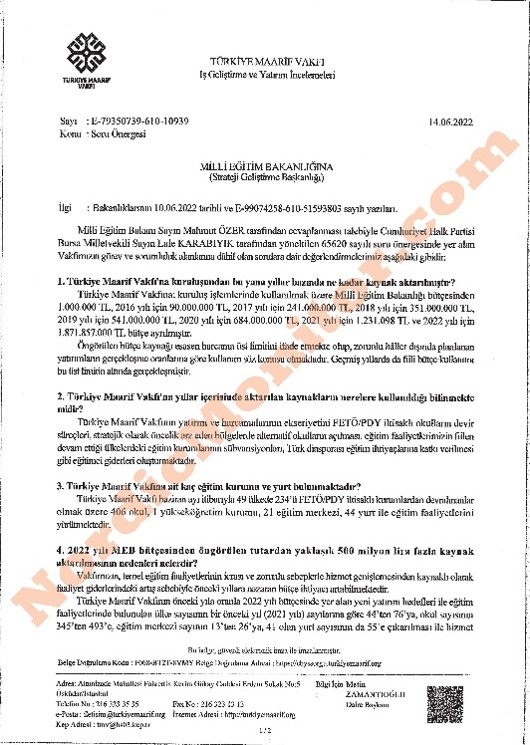
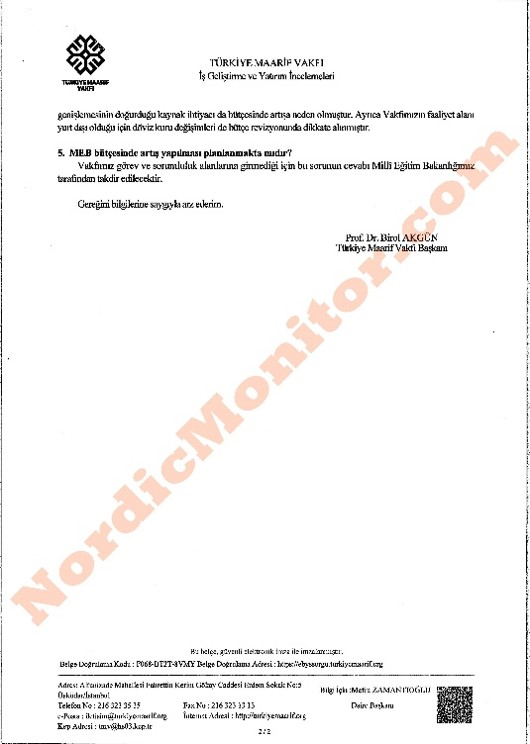
The document, signed on June 14, 2022 by Maarif President Birol Akgün, reveals that the foundation runs 406 schools in 49 countries in addition to 21 tutoring centers, 44 student dorms and one institution of higher learning. It has some 50,000 students enrolled in Maarif schools and employs some 7,000 staff. The foundation plans to be operating in nearly 100 countries by the end of next year.[8]
Publicly available reporting and official narratives further suggest that the Foundation’s statutory mandate has been interpreted in practice in connection with the Turkish government’s efforts to restructure overseas education networks associated with the Gülen movement. While the law itself is framed in neutral educational terms, contemporaneous accounts describe the Foundation as having been established, inter alia, to take over and continue the operation of such institutions abroad.[9] Statements by Foundation leadership[10] indicate that, in multiple jurisdictions, host states have proceeded to close, nationalise, or transfer schools to TMV following engagement with Turkish authorities.
In this context, the statutory powers to acquire, assume control of, and operate educational institutions take on particular significance. They provide the legal basis for a pattern of institutional substitution, whereby pre-existing education providers are replaced by a centrally coordinated entity operating under Turkish state authority. State-aligned media narratives have reinforced this framing by presenting the Foundation as a mechanism for replacing allegedly problematic educational structures and restoring what is described as legitimate provision.[11]
The discourse accompanying these developments is also relevant from a policy perspective. Official communications and statements of politicians like President Erdogan[12] frequently situate the Foundation’s activities within a broader foreign policy and security framework, thereby linking its educational mandate to wider state objectives. This framing has been associated with efforts to persuade or encourage host governments to take administrative or legal action against targeted institutions, including closure or transfer. In operational terms, reports describe a multi-layered process involving political engagement, diplomatic facilitation, and subsequent negotiations conducted by Foundation representatives, culminating in the reassignment of institutional control.[13]
Accordingly, while the Turkish Maarif Foundation is formally presented as a non-profit entity serving educational and cultural objectives, its legal design, governance structure, funding model, and operational practice collectively indicate that it functions as a strategic instrument of Turkish state policy abroad. Its statutory mandate provides a broad and adaptable legal framework through which educational activities, diplomatic engagement, and institutional restructuring can be pursued in parallel.[14]
1.2. Organisational architecture and embedded state control
The founding law creates a three‑tier governance structure: a Board of Trustees (the decision body), a Board of Directors (executive body) and a Supervisory/Audit Board.[15] The Board of Trustees consists of twelve members, including a bloc of “permanent” members appointed through executive channels, alongside designated representatives from key state institutions—specifically the education ministry, the foreign ministry, the finance ministry, and the higher education council. The law further provides that the Board of Trustees selects its chair from among the permanent members for a five‑year term, and that the education minister determines certain remuneration (attendance fees) for trustees.[16]
The Foundation’s institutional proximity to the state is also reflected in personnel and status arrangements for staff posted abroad. The law grants members of the Foundation’s organs and certain posted education staff rights analogous to those extended to officials assigned to overseas missions under Turkish passport law provisions, signalling an expectation that overseas work will interface closely with Turkish diplomatic and consular structures.
A further indication of the Foundation’s embeddedness within the Turkish state apparatus is reflected in the subsequent career trajectory of its senior leadership. Prof. Dr Birol Akgün, who served as the founding president of the Turkish Maarif Foundation, was later appointed as Turkey’s Ambassador to Azerbaijan, as confirmed by the official website of the Turkish Embassy in Baku[17]. This transition from leading a formally non-profit educational foundation to holding a senior diplomatic post underscores the extent to which the Foundation operates within a circulating cadre of state officials spanning education policy, foreign affairs, and executive governance. From an institutional perspective, such movement between TMV leadership and the diplomatic service reinforces the interpretation of the Foundation as closely aligned with, and functionally integrated into, Turkey’s foreign policy machinery. It also suggests that experience within the Foundation may form part of a broader state career pathway, linking overseas educational operations with diplomatic representation and international engagement.
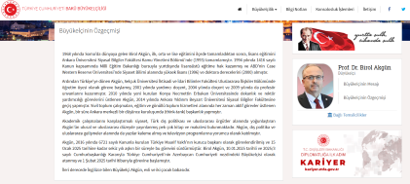
The biography of Birol Akgun on the embassy website.
This pattern of institutional interconnection extends beyond senior leadership to the broader composition of the Foundation’s governing bodies. According to the official list of the Board of Trustees published by the Turkish Maarif Foundation, individuals such as Hasan Aslan, H. Ali Özel, and Ömer Faruk Terzi currently serve as members of the governing body[18]. Their professional trajectories illustrate a consistent recruitment of individuals with extensive careers within the Turkish state apparatus. Hasan Aslan, appointed to the Board in 2025, previously held multiple senior roles within the Ministry of National Education, including provincial directorates, and served as education counsellor at the Turkish Embassy in Amman, directly linking domestic education administration with diplomatic representation. H. Ali Özel has held senior positions across the Turkish public administration and diplomatic service, including a posting at the Turkish Embassy in Washington, and currently serves in a senior capacity within the Ministry of Foreign Affairs. Similarly, Ömer Faruk Terzi has long served as an adviser within the Ministry of Youth and Sports, responsible for coordinating relations between the ministry and civil society organisations.
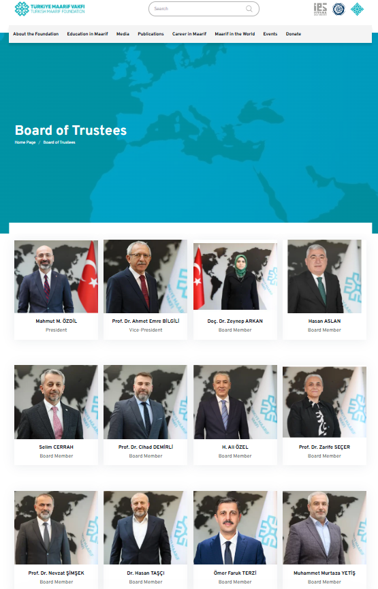
Board of Trustees on Maarif website
This pattern is further illustrated by the role and career profile of Dr. Hasan Yavuz, who has been consistently introduced in official communications[19] as an ambassador while simultaneously serving in a senior executive capacity within the Turkish Maarif Foundation. As Vice-President (or Deputy Chair) of the Foundation, Yavuz played a direct operational role in negotiating and formalising the transfer of Gülen-linked educational institutions across multiple jurisdictions, including Niger, Gabon, Mali, Madagascar and the Republic of Congo. In these processes, he acted not merely as a representative of an educational foundation, but as a state-linked envoy engaging directly with heads of state, ministers of education, and other high-level government officials, often conveying official messages from the Turkish President and participating in the signing of intergovernmental memoranda of understanding. His dual designation as both a diplomatic figure (“Ambassador Dr. Hasan Yavuz”) and a senior TMV executive underscores the functional overlap between the Foundation and Turkey’s diplomatic apparatus. From an institutional perspective, his role exemplifies how TMV operations are embedded within, and at times indistinguishable from, formal state diplomacy, with educational transfer processes conducted through channels typically reserved for intergovernmental relations rather than independent civil society engagement.
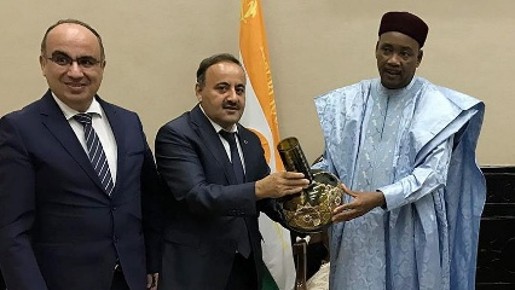
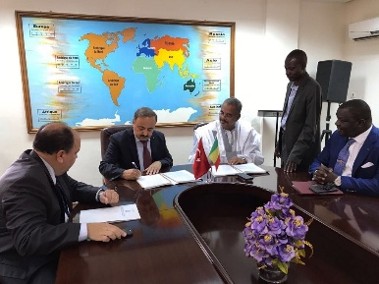
Hasan Yavuz (centre) signing deals on behalf of TMV with the authorities of Niger (December 2016), Republic of Congo (June 2017), and Mali (August 2017)
Taken together, these profiles demonstrate a broader pattern of elite circulation between Maarif, ministerial bureaucracies, and the diplomatic service, spanning multiple branches of the executive. The presence of serving or recently serving public officials within the Foundation’s Board of Trustees suggests that its governance structure functions not as an independent oversight body in the conventional sense, but as a multi-institutional extension of the state apparatus, integrating education policy, foreign affairs, and youth-sector governance within a single organisational framework. This composition reinforces the conclusion that the Turkish Maarif Foundation operates under substantive state control, with decision-making processes closely aligned with, and in some cases directly embedded within, the machinery of government.
On the other hand, the Turkish Constitutional Court’s 2018 decision—summarised in a 2019 English language press release—rejected constitutional challenges to several core provisions, including the breadth of “facility” types the Foundation may open and its capacity to partner with private actors or acquire companies. Importantly for accountability, the same press release states that whether the Foundation operates in accordance with its objectives is subject to supervision by the General Directorate of Foundations and the Foundation’s Supervisory Board.[20]
The Constitutional Court’s reasoning is instructive in clarifying the institutional character of the Foundation. In its judgment (E.2016/159, K.2018/108[21]), the Court explicitly acknowledged that the legislature had endowed the Maarif Foundation with a set of public privileges and operational flexibilities not ordinarily associated with private foundations, including the ability to establish and operate educational institutions abroad, form partnerships with public or private actors, and create or acquire companies to carry out its activities. The Court further noted that the Foundation’s governance structure incorporates direct representation from key state bodies, including the Ministries of National Education and Finance, and that its financial resources may be supplemented through transfers from the state budget and the allocation of public assets (including, where appropriate, assets abroad) by executive decision.
Importantly, the Court rejected arguments that these features violated constitutional principles of equality or legal certainty, reasoning that foundations established for public purposes may legitimately be subject to distinct legal regimes and enjoy differentiated treatment where this serves their statutory objectives. At the same time, the judgment confirms that the Foundation operates within a framework in which public authority, financial support, and administrative oversight are structurally embedded, including audit mechanisms involving state institutions. From an institutional perspective, the decision therefore reinforces the interpretation of TMV as a state-enabled entity exercising delegated public functions under a foundation legal form, rather than as an autonomous civil society organisation.
1.3. Funding model and fiscal oversight
1.3.1. Statutory revenue design
The law establishes a budget framework in which the Foundation prepares an annual budget; it limits administrative expenditure to a maximum of one third of gross annual income, with the remainder intended for mission delivery and investment in assets that expand the Foundation’s capacity. The law enumerates multiple revenue sources, including donations, activity income, returns from subsidiaries/participations, and—critically—amounts transferred from the general budget and public institutions by executive decision (originally via Council of Ministers decisions under the pre‑2018 constitutional system, with later practice reflected in presidential decisions).[22]
A transitional provision referenced by the Constitutional Court indicates that public funds were built into the establishment model from inception: a one‑million‑lira allocation from the education ministry budget was envisaged to support the set‑up period, with any remainder transferred to the Foundation after the process was completed.[23]
1.3.2. Recent public transfers
Public reporting tied to Official Gazette decisions shows a steep increase in the annual ceilings for budgetary transfers in recent years. Turkish state and mainstream outlets reported that a presidential decision enabled a transfer ceiling of up to TL 3,499,874,000 from the education ministry budget for 2023.[24] In 2024, reporting indicated a ceiling of up to TL 5,702,000,000 from the same budget source, again linked to a presidential decision published in the Official Gazette.[25] [16] For 2025, a further presidential decision was reported as permitting up to TL 6,774,954,000.[26]
Earlier decisions reflect the same mechanism at lower nominal levels (for example, reporting indicates that a 2022 presidential decision allowed up to TL 1,871,857,000).[27] These figures represent authorised maxima rather than verified outturn expenditure, but they demonstrate that the Foundation’s overseas education footprint is financially enabled through annual executive budget‑transfer decisions.[28]
Additional insight into the scale and trajectory of public funding has been provided through parliamentary opposition statements. In a public communication dated 21 May 2025[29], Suat Özçağdaş, a Member of Parliament from CHP and shadow minister for education, stated that a total of approximately TL 20.6 billion (~USD460 million) had been transferred to the Turkish Maarif Foundation since its establishment, and that a further allocation of approximately TL 6.7 billion (~USD150 million) had been earmarked for the Foundation for 2025 under a presidential decision published in the Official Gazette. While these figures derive from a political source and should be interpreted accordingly, they are broadly consistent with the upward trend in authorised transfer ceilings observed in official reporting.
The same statement also reflects ongoing domestic debate regarding the necessity and scale of these transfers in light of existing institutional capacity within the Ministry of National Education, which retains its own legal mandate to operate educational activities abroad. In this context, the Foundation has been characterised by critics as a parallel structure funded through public resources, raising questions about duplication of functions and the allocation of budgetary priorities.
More broadly, such parliamentary interventions highlight continuing concerns regarding the aggregate volume of public funds channelled to the Foundation over time, as well as the mechanisms through which these funds are allocated, monitored, and audited. These concerns form part of a wider domestic discussion about fiscal transparency and accountability in relation to entities that operate at the intersection of public authority and private-law organisational forms.
Further insight into the scale and trajectory of public financing is provided by longitudinal reporting[30] on the Foundation’s budget allocations over time. According to a 2026 analysis, the Turkish Maarif Foundation has received approximately TL 27.7 billion in cumulative budget allocations over an eight-year period, with annual allocations increasing markedly in recent years. Reported figures indicate a progression from hundreds of millions of lira in the earlier years of operation to TL 1.8 billion in 2022, TL 2.9 billion in 2023, TL 5.7 billion in 2024, TL 6.7 billion in 2025, and TL 7.8 billion in 2026, as illustrated in a summary of yearly budgets.
These figures, while derived from media reporting, align with the upward trend observed in official transfer ceilings and reinforce the conclusion that the Foundation’s activities are sustained through progressively expanding public funding commitments. The same source also notes that, despite its access to substantial state resources, the Foundation continues to receive additional private donations from unknown sources, reportedly amounting to TL 39.5 million, suggesting a mixed funding model combining public transfers with supplementary revenue streams.
From an operational perspective, the scale of funding corresponds with a significant expansion in institutional footprint. The Foundation is reported to operate in over 50 countries, with hundreds of schools, educational centres, and associated facilities, employing approximately 13,000 personnel and serving tens of thousands of students . This linkage between financial growth and geographic expansion underscores the extent to which public funding functions as the primary enabler of the Foundation’s international activities.
At the same time, the media reports[31] highlight ongoing domestic concerns regarding transparency and audit oversight, noting that the Foundation is not subject to standard Court of Accounts auditing procedures applicable to conventional public administrations. Statements attributed to Foundation leadership indicate that internal practices are intended to meet comparable standards, while opposition figures have called for greater transparency in light of the substantial public resources involved. These debates reinforce broader questions about accountability mechanisms in hybrid entities that combine public funding with a private-law organisational form.
2. Role in the post‑2016 overseas campaign against Gülen‑linked education networks
2.1. Political context
Following the July 2016 coup attempt, the government led by Recep Tayyip Erdoğan blamed[32] the coup on the Gülen movement and escalated a domestic and international campaign framed in counter‑terrorism terms, a campaign that is widely defined as transnational repression by human rights organisations[33]. This campaign has had a strong education dimension, in part because overseas school networks were widely regarded—by both supporters and critics—as central to the international reach and social reproduction of the Hizmet movement.[34]
Although the Foundation’s establishing statute predates (one month before) the coup attempt (June 2016), multiple sources describe it as the state instrument used to replace or assume control over education institutions previously linked to the Gülen movement.[35] An academic study in an open-access international relations journal characterises the Foundation’s primary goal as countering the Hizmet (aka the Gülen Movement) structure abroad and describes its operational role in the reassignment of Turkish private schools internationally after 2016, while also noting that outcomes differ across host states and that the Foundation’s appearance does not automatically result in school closure in every case.[36]
2.2. Mechanisms of transfer, closure and replacement
Documented pathways include (i) negotiated handovers with host governments; (ii) executive action by host states (closures, licence withdrawals, or other administrative measures); and (iii) court‑ordered vesting of assets in the Foundation.[37]
In Somalia, a widely cited 2016 report describes how the cabinet met within hours of the coup attempt to consider Ankara’s request to shut down schools and a hospital linked to Gülen; the closures were implemented quickly, and the report situates this responsiveness within the context of Turkey’s reconstruction and aid role in the country.[38]
In Afghanistan, reporting in 2018 described the handover of Afghan‑Turk schools to the Foundation and noted opposition by some parents and students.[39]
In Senegal, a 2018 report stated that schools were closed and transferred to the Foundation during the period of Turkish pressure around an Erdoğan visit, and it listed multiple African countries where transfers had occurred.[40] Academic analysis has also described bargaining dynamics in Senegal, including compensation linked to transfers, and argues that Turkey’s wider economic and political leverage can affect host-country responses.[41]
In Sudan, contemporaneous reporting described authorities handing over Gülen-linked schools to Turkey’s Foundation following earlier closure decisions targeting Gülen-linked businesses; the reporting links these steps to direct engagement with Ankara and post‑coup political alignment.[42]
2.3. Diplomatic facilitation and patterns of host‑country compliance
The public record indicates that Turkish diplomatic missions—alongside high‑level political visits—play an operational role in efforts to secure school closures or transfers, particularly in states where Gülen‑linked institutions were prominent and where Turkish bilateral relationships include aid, investment, or security cooperation.[43]
A detailed 2016 Reuters report provides direct evidence of embassy-level involvement. It documents (i) pressure applied to multiple countries to close Gülen‑linked institutions; (ii) a foreign ministry source in Kenya stating that Turkish officials had repeatedly requested closures; and (iii) that—after the coup attempt—the Turkish ambassador requested another meeting to pursue the same objective. The same report cites a German regional leader describing receipt of a letter from a Turkish consul general requesting examination of an “institution list,” and it records public German objections that such communication constituted improper foreign interference in domestic governance.[44]
Complementing this, a 2017 report described Turkey as pressuring countries worldwide to close or hand over control of schools linked to Gülen and framed this as a diplomatic campaign following the collapse of Erdoğan–Gülen relations and the coup attempt.[45] An openDemocracy analysis of the South Caucasus states that Turkish officials and diplomats made appeals worldwide calling for closures and examines how such pressure intersected with host-country strategic dependencies and legal processes (including licence removals and extradition requests linked to school administrators).[46]
A recurring pattern in the literature is that compliance is not uniform. Reuters records explicit resistance by host authorities in some countries (for instance, statements from Indonesia[47] emphasising that domestic law governs recognised institutions). Qantara similarly notes resistance in several Western states, while describing a number of African and other countries as yielding to transfer pressure over time.[48] A policy study commissioned by the Italian Ministry of Foreign Affairs and International Cooperation and produced by an Italian research centre characterises Mali’s rapid school transfers “upon request” from Turkey as part of Turkey’s wider influence approach in Africa—an example of how the education file can sit within broader diplomatic and political‑economy relations.[49]
For Western policymakers, the central point is not simply that diplomatic pressure occurs—this is well evidenced—but that education-sector transfers, when tied to a foreign state’s counter‑movement agenda, can implicate rule‑of‑law standards (ownership, due process, judicial independence) and can generate long‑tail risks around academic freedom and transnational repression, particularly where the education sector has been a key locus for identifying perceived opponents abroad.[50]
3. Comparative country cases: closure, transfer and restructuring of overseas education institutions
The domestic dimension of the post-2016 campaign provides important context for understanding developments abroad. According to data compiled by Solidarity with Others, a total of 3,492 institutions linked to the Gülen movement were closed in Turkey[51], including approximately 1,350 schools. In response to a parliamentary question submitted by MP Ömer Faruk Gergerlioğlu, the Minister of National Education stated that, as of 5 September 2018, the work permits of 19,962 personnel employed in these institutions had been cancelled[52], with reinstatement limited to individuals subsequently acquitted by court decisions, which was also ignored in the years to follow.
By contrast, the situation of educational institutions located outside Turkey presented distinct legal and operational constraints. The Turkish authorities could not directly close or assume control of such institutions through domestic legislative measures such as emergency decrees (KHKs). Instead, any closure, transfer, or restructuring required active cooperation with host-country governments, as well as the development of an institutional mechanism capable of assuming control over the affected schools once transferred.
It was within this context that the Turkish Maarif Foundation was established in 2016 as a state-run entity designed to manage and operate education institutions abroad, including those previously linked to the Gülen movement.[53] As noted above, the Foundation is uniquely authorised—alongside the Ministry of National Education—to provide formal education services outside Turkey. Its creation therefore addressed both a legal and operational requirement: to facilitate the transfer and continued operation of overseas schools under Turkish state authority, following closure or handover processes carried out in cooperation with host states.
Official statements by Turkish authorities and Foundation leadership further clarify the policy framing and operational scope of these activities. In November 2021, President Recep Tayyip Erdoğan publicly described the Turkish Maarif Foundation as playing a central role in addressing the legacy of education networks associated with the Gülen movement[54], while also contributing to the provision of educational services abroad. Similarly, in a 2022 Foundation bulletin, the then President of the Foundation, Prof. Dr Birol Akgün, characterised the organisation’s activities as part of a broader international effort directed at these networks:
“In this context, our Foundation has made official contact with 104 countries since its establishment to date. Particularly in developing countries, three out of four schools affiliated with FETÖ have actually been either neutralised or transferred completely; that is, they are out of FETÖ’s control. We have prevented FETÖ’s exploitation of education in the world. We have largely transformed these schools, with currently about twenty thousand students, and have made a significant investment in technological infrastructure. As the Turkish Maarif Foundation, we have taken over 234 FETÖ-affiliated schools in twenty countries, we are running them, and we have opened 172 schools in 29 countries.”[55]
According to these statements, the Foundation has engaged in official contacts with more than 100 countries since its establishment and has assumed control of, or otherwise replaced, a substantial number of pre-existing educational institutions. The same source indicates that the Foundation has taken over 234 schools in 20 countries and established an additional network of institutions across multiple jurisdictions, serving approximately 20,000 students.[56] These figures, while originating from official sources and reflecting the government’s own framing, are indicative of both the geographical reach and the scale of institutional transformation associated with the Foundation’s activities.
A number of methodological considerations arise when assessing the scale of school closures and transfers across jurisdictions. In particular, the definition of what constitutes a “school” varies between sources. The Turkish Maarif Foundation’s own reporting appears to count different educational levels within a single institution (such as primary, secondary, and upper secondary sections) as separate schools, thereby producing higher aggregate figures. By contrast, alternative analyses that treat such multi-level institutions as a single organisational entity yield lower overall counts. This distinction is relevant in reconciling discrepancies between official statistics and independent estimates.
Drawing on a comprehensive analysis of data assembled by the report’s authors for court documentation purposes (as of March 2023), it is estimated that, across 29 countries, at least 162 educational institutions linked to the Gülen movement were affected by closure, confiscation, or transfer processes. Of these, 131 schools were taken over by the Turkish Maarif Foundation, while a further 31 institutions were closed without transfer or were otherwise confiscated by state authorities.[57] The total number of personnel affected—including teachers and administrative staff—is estimated at approximately 7,800 individuals.
Table: Number of schools linked to the Gülen movement that were closed, confiscated by the state authorities or handed over to the Maarif Foundation, per country.
No | Country | Number of schools | Number of personnel
|
1 | Mali* | 18 | 450 |
2 | Niger* | 4 | 70 |
3 | Tunisia* | 2 | 40 |
4 | Chad* | 4 | 120 |
5 | Afghanistan* | 11 | 1305 |
6 | Venezuela* | 2 | 91 |
7 | D.R. Congo* | 4 | 110 |
8 | Gabon* | 1 | 45 |
9 | Senegal* | 18 | 519 |
10 | Jordan* | 1 | 110 |
11 | Zambia* | 3 | 47 |
12 | Tajikistan* | 7 | 243 |
13 | Gambia* | 3 | 29 |
14 | Liberia* | 2 | 62 |
15 | Albania* | 2 | 94 |
16 | Congo-Brazaville* | 3 | 24 |
17 | Guinea | 5 | 260 |
18 | Somalia | 3 | 320 |
19 | Sudan | 2 | 27 |
20 | Mauritania | 4 | 56 |
21 | Ethiopia | 6 | 325 |
22 | Togo | 1 | 86 |
23 | Pakistan | 28 | 1500 |
24 | Equatorial Guinea | 1 | 43 |
25 | Cameroon | 6 | 201 |
26 | Ivory Coast | 4 | 47 |
27 | Rwanda | 1 | 70 |
28 | Morocco | 6 | 60 |
29 | Azerbaijan | 12 | 1598 |
| Total | 164 | 7952 |
|
It is noteworthy that the countries indicated above with an asterisk (*) are those that have ratified the Rome Statute; within these jurisdictions, a total of 85 schools are implicated, affecting 3,359 individuals.
A country-level breakdown further illustrates the geographical spread and scale of these developments. Across the 29 jurisdictions identified, the number of affected institutions and personnel varies significantly, reflecting differences in the size of local school networks and host-country responses. The largest concentrations are observed in countries such as Pakistan (28 schools; approximately 1,500 personnel) and Azerbaijan (12 schools; approximately 1,600 personnel), followed by Mali and Senegal (18 schools each) and Afghanistan (11 schools; approximately 1,300 personnel). In a number of other countries—including Niger, Chad, the Democratic Republic of Congo, Ethiopia, and Cameroon—smaller but still notable clusters of institutions were subject to closure, confiscation, or transfer processes.
In aggregate, the dataset indicates that approximately 7,900 personnel were affected across 29 countries, with cases distributed across Africa, Central Asia, the Middle East, and parts of Latin America. A subset of these countries—identified as parties to the Rome Statute of the International Criminal Court—accounts for 85 institutions and approximately 3,300 personnel, a detail relevant for assessing the potential intersection between these measures and international legal frameworks governing property rights and due process.
From an analytical perspective, the data suggests that the process of closure and transfer was not confined to a specific region but rather constituted a broad, multi-regional pattern, with particularly high levels of activity in developing and aid-dependent countries. This distribution aligns with wider observations in the literature that host-country responses may be shaped by diplomatic, economic, and political considerations in bilateral relations with Turkey.
Finally, it is important to note that, according to the available sources, closures and dismissals were generally linked to the institutional affiliation of the schools, rather than to individually established criminal liability. This distinction is reflected in official statements at the time of closure or transfer and is relevant for evaluating the legal and procedural dimensions of these measures.
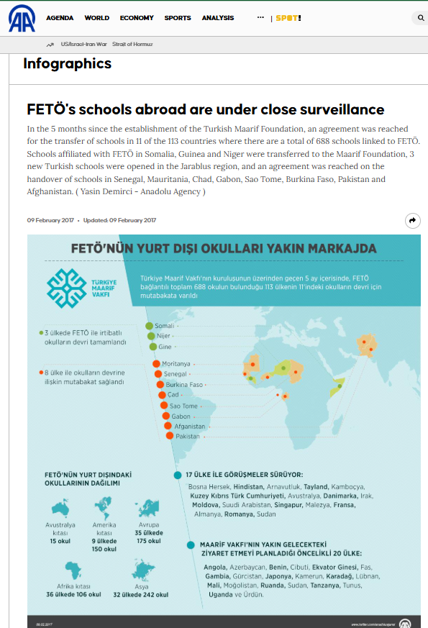
Infographics on state-funded Anadolu Agency, dated 09 February 2017
14 Country Cases[i]
The following country cases provide a comparative, evidence-based overview of how educational institutions linked to the Gülen movement were closed, transferred, or otherwise restructured across multiple jurisdictions after 2016. These cases are illustrative rather than exhaustive, and are intended to reflect recurring patterns observed across a broader set of countries. While the legal and administrative pathways differ from one jurisdiction to another, common features can be identified, including sustained diplomatic engagement by Turkish authorities, the use of executive or administrative measures by host states, and the subsequent transfer of institutions to the Turkish Maarif Foundation or alternative entities. Taken together, these cases demonstrate the range of mechanisms through which a broadly similar policy objective was implemented across diverse legal and political contexts.
Country Case 1. Mali: executive closure, legislative amendment and transfer to the Maarif Foundation
In Mali, a network of 18 educational institutions, employing approximately 450 personnel and serving around 1,200 students, was transferred to the Turkish Maarif Foundation in October 2017 following a sequence of executive and administrative measures. These schools, operating under the “Collège Horizon” network since 2002, were among the earliest cases of large-scale transfer in Sub-Saharan Africa.
The process was preceded by sustained diplomatic engagement. According to available documentation, the closure of these schools had been requested by President Recep Tayyip Erdoğan during a bilateral meeting with the President of Mali as early as February 2015, although the request was initially declined. Subsequent developments in 2017 indicate a shift in the position of the Malian authorities. In August 2017, a delegation of the Turkish Maarif Foundation, accompanied by the Turkish Ambassador and a senior Foundation official, was received by the Malian President, after which the government signalled its agreement to proceed with the transfer.

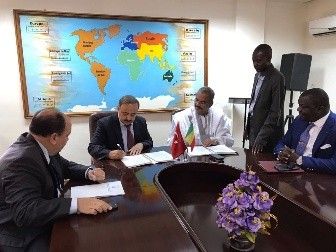
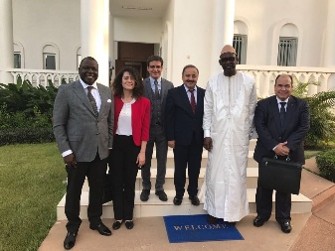
Signing of a memorandum of understanding with the Mali Government regarding the transfer of schools to Maarif (https://x.com/TMaarifVakfi/status/896334900718182400?s=20)
This political agreement was followed by a series of rapid administrative actions. A memorandum of understanding was concluded between the Maarif Foundation and the Government of Mali in August 2017, and within days, security forces were deployed to certain school premises. On 21 August 2017, the Malian Minister of National Education issued a decree revoking the licences of the Collège Horizon institutions and ordering the immediate completion of transfer procedures. The decision was publicly announced as a transfer of the schools to the Turkish Maarif Foundation, with representatives of the Foundation and the Turkish Embassy present. Requests by members of the press for clarification of the legal basis for the decision reportedly went unanswered.
The measures were implemented through a combination of administrative enforcement and legislative change. School administrators were formally notified of licence cancellations at the end of August 2017, and subsequent parliamentary statements confirmed that the institutions had been removed from the national education system. In parallel, legislative amendments were introduced in early October 2017 restricting the operation of educational institutions by Turkish nationals outside the Maarif framework and enabling the transfer of school assets and personnel to the Foundation.
The transfer process was accompanied by security operations and contested on the ground. Reports indicate that special security units entered school premises, while Foundation-appointed personnel conducted inventories and assumed operational control. Allegations were made by school representatives concerning the destruction of institutional records and removal of equipment during this period. Parent associations organised meetings and proposed public demonstrations against the closures, although these actions were curtailed following engagement with government officials. Statements attributed to senior Malian officials during this period suggest that objections to the measures were met with warnings and pressure to discontinue protest activities.
The consequences for staff were significant. Approximately 40 Turkish teachers, together with their families—amounting to around 120 individuals—were directly affected by the closures. All were dismissed, and a number encountered difficulties related to visa status, passport validity, and legal residence. Some had already left the country prior to the formal transfer due to uncertainty and administrative constraints, while others remained in precarious conditions following the loss of their employment and legal status.
Subsequent developments also indicate ongoing transnational implications. In December 2018, the Ankara Public Prosecutor’s Office initiated an investigation concerning individuals alleged to be linked to the Mali-based education network, with information reportedly gathered through the Turkish Embassy in Bamako. This suggests a continued linkage between overseas school closures and domestic legal processes in Turkey.
Overall, the Mali case illustrates a multi-layered mechanism of transfer, combining diplomatic engagement, executive decision-making, legislative amendment, and on-the-ground enforcement. It also highlights the role of the Turkish Maarif Foundation as the receiving entity for transferred institutions, operating within a framework shaped by both bilateral relations and domestic policy objectives.
Country Case 2. Niger: executive decision, judicial contestation and transfer under diplomatic pressure
In Niger, a network of four educational institutions, employing approximately 70 personnel and serving around 880 students, was closed and subsequently transferred to the Turkish Maarif Foundation between December 2016 and January 2017. The case is notable for the combination of diplomatic engagement, executive action, and subsequent judicial contestation, including proceedings before regional courts.
Prior to the closures, there were sustained efforts by Turkish diplomatic representatives to secure the transfer of the schools. Multiple meetings were held with senior Nigerien officials, including ministers and the presidency, during which proposals were made regarding the future of the institutions. According to contemporaneous accounts, school representatives were informed in July 2016 of a joint decision between the governments of Niger and Turkey, offering a choice between transferring the schools to the state or selling them to a buyer facilitated by the authorities. They were also reportedly instructed that Turkish staff should leave the country within a short timeframe.
Subsequent administrative reviews conducted by several Nigerien ministries and state bodies reportedly found no technical or legal grounds requiring closure, although it was acknowledged that a political decision could nonetheless be taken. Despite this, the process advanced through a combination of valuation exercises and continued engagement with Turkish officials, including meetings between the Maarif Foundation leadership and Nigerien authorities in December 2016.
The formal decision to close the schools was taken on 15 December 2016, after which security forces were deployed to school premises and access was restricted. Efforts by school representatives and parents to challenge the decision through public engagement and press activity did not result in reversal. The Ministry of Education issued formal notification of licence cancellation on 28 December 2016, without providing detailed justification, and required the schools to vacate their premises. No effective administrative remedies were made available to contest the decision.
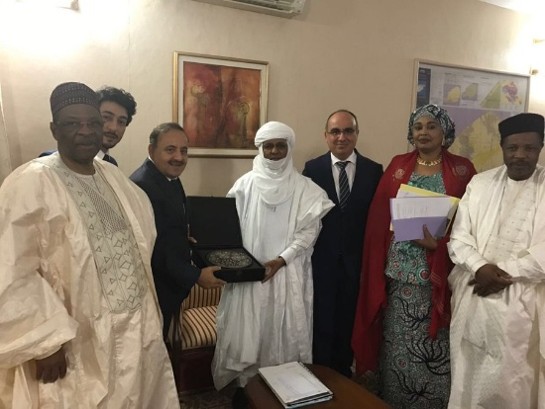
Hasan Yavuz meets with the Prime Minister and the Minister of National Education in Niger on 16 December, 2016 (https://x.com/H_Yavuz07/status/808754558293987328?s=20)
The transfer was rapidly implemented. A public announcement confirming the handover to the Turkish Maarif Foundation was made at the beginning of January 2017, and representatives of the Turkish Embassy participated in events marking the reopening of the institutions under new management.
Legal challenges followed. On 4 January 2017, a Nigerien court found that the licence cancellation constituted an unlawful administrative act, characterising it as a manifestly illegal interference. However, this ruling was not implemented. Statements attributed to senior government officials indicated that the decision would not be followed due to prior commitments made to the Turkish authorities. Shortly thereafter, the Administrative Supreme Court did not uphold the initial ruling. The case was subsequently brought before the ECOWAS Court of Justice, which, after several years of proceedings, ruled in July 2020 in favour of the former school management and ordered the Nigerien state to pay compensation. As of the available information, this compensation had not been executed.
The impact on personnel was immediate and significant. Approximately 32 Turkish staff members, together with their families, were required to leave the country under pressure and with limited time to organise their departure. Many were unable to dispose of personal assets under normal conditions and relocated to neighbouring countries. Reports also indicate that individuals who remained temporarily in Niger faced monitoring and pressure from security services. Local employees who opposed the transfer similarly lost their positions following the closure of the institutions.
Overall, the Niger case illustrates a pattern in which political and diplomatic considerations appear to have prevailed over administrative findings and initial judicial rulings, culminating in the transfer of educational institutions to the Turkish Maarif Foundation. It also highlights the potential for subsequent international litigation, as well as the gap that may arise between formal legal decisions and their implementation in practice.
Country Case 3. Tunisia: indirect transfer through ownership restructuring and administrative licence revocation
In Tunisia, the closure and subsequent transfer of educational institutions linked to the Gülen movement followed a distinct, non-coercive pathway, characterised by ownership restructuring, administrative licence revocation, and indirect transfer mechanisms, rather than overt use of force. The case concerns a language centre (Bosphorus Akademi), active since 2011, and a private school (Kheireddine Tunisien International School), established in 2013, with a combined enrolment of approximately 300 students and employing 15 Turkish teachers.
Following the events of July 2016, there were repeated efforts by Turkish diplomatic representatives to secure the closure or transfer of these institutions. These efforts reportedly involved both formal and informal engagement through the Turkish Embassy and channels linked to bilateral political relations. The ownership structure of the school—held through a Tunisian company with a mixed shareholding between Tunisian and Turkish nationals—became a central element in the transfer process.
After the revocation of the language centre’s licence, pressure was reportedly exerted on Tunisian shareholders to withdraw from the company. This resulted in a reconfiguration of ownership, with shares ultimately transferred to Tunisian nationals. However, this restructuring did not prevent the subsequent administrative measures. On 23 February 2017, the licence of the language centre was revoked without reference to any prior adverse inspection findings, and on 17 April 2017, the school’s operating licence was similarly cancelled.
Following the licence revocations, the newly constituted ownership—acting in coordination with prior management—dismissed existing staff and assumed control of the institutions. The school was subsequently transferred to the Turkish Maarif Foundation, with one of the new shareholders appointed as director. Reports indicate that financial assets held by the institution were also transferred in connection with this process, with arrangements allegedly involving coordination with diplomatic actors.
Unlike other cases, the Tunisian process did not involve direct deployment of security forces or immediate physical enforcement measures. Instead, it relied on corporate restructuring and administrative decision-making, combined with sustained diplomatic engagement. No effective legal challenge was pursued following the transfer, in part due to the formal legality of share transfers and company restructuring under domestic law. The case also received limited media coverage at the time, contributing to its relatively low visibility in the international record.
The consequences for personnel were nonetheless significant. All Turkish teaching staff were required to leave Tunisia following the closure, primarily due to the non-renewal or denial of work and residence permits, rather than formal expulsion orders. Some individuals reportedly received temporary protection through international organisations during this period.
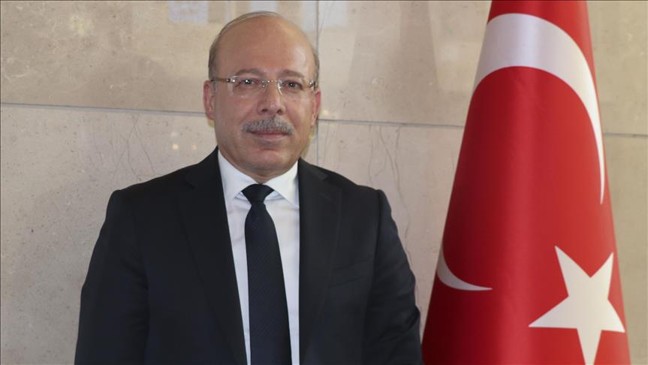
Turkey’s Ambassador to Tunisia Ömer Faruk Doğan (https://www.aa.com.tr/tr/10-buyukelciler-konferansi/tunus-fetonun-terk-etmek-zorunda-kaldigi-yegane-ulkelerden/1231820)
Subsequent public statements by Turkish officials and affiliated commentators confirm that the institutions in question were incorporated into the Maarif network, with the Foundation assuming operational control and reopening them under its own branding. The Tunisian case therefore illustrates an alternative model of transfer, in which legal ownership changes and administrative licensing decisions are used to facilitate institutional reassignment, without the visible use of coercive enforcement mechanisms.
Country Case 4. Chad: pre-agreed transfer through bilateral arrangements and coordinated administrative action
In Chad, the closure and transfer of educational institutions linked to the Gülen movement followed a pre-arranged bilateral framework, combining diplomatic engagement, formal agreements, and administrative implementation. Prior to their transfer, four schools operated under the Baskent Foundation, employing approximately 132 personnel—including 13 Turkish teachers—and serving around 600 students.

One of the four schools in Chad
The process was preceded by sustained diplomatic efforts over a period of approximately two years. Public statements by Turkish officials in 2016 indicated that the schools would be closed, and in November 2016 a formal protocol agreement was signed between the Chadian Ministry of Education and representatives of the Turkish Maarif Foundation, including senior Foundation officials and the Turkish Ambassador. Under this agreement, the Chadian authorities undertook to revoke the licences of the existing schools and facilitate their transfer to the Foundation. Reports from the period suggest that senior Chadian officials acknowledged the existence of external pressure associated with these decisions.
Implementation accelerated in late 2017. On 29 November 2017, the Chadian President publicly confirmed that the transfer of the schools would be completed within weeks and indicated that individuals associated with the institutions would be required to leave the country. Shortly thereafter, the Ministry of Education appointed an interim trustee to oversee the schools and issued a temporary closure decision. These steps were followed by direct engagement by state security services, which summoned school leadership and communicated that Turkish staff and their families were required to depart within 48 hours.
The transfer was completed on 22 December 2017, when the schools were formally brought under the administration of the Turkish Maarif Foundation. The departure of Turkish personnel took place under restrictive conditions, with individuals reportedly leaving behind personal property and travelling with minimal belongings. Unlike some other cases, the process did not involve overt police raids or physical confrontation at school premises, but was instead implemented through administrative directives and security service involvement.
The timing of the transfer coincided closely with a high-level diplomatic visit. President Recep Tayyip Erdoğan visited Chad on 26 December 2017, shortly after the completion of the takeover, and publicly expressed appreciation to the Chadian authorities for both the designation of the Gülen movement as a terrorist organisation and the transfer of the schools to the Maarif Foundation. Reports indicate that the timing of the transfer may have been linked to diplomatic expectations surrounding this visit.
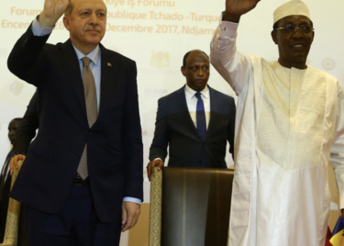
President Idriss Déby Itno of Chad hails with Turkish President Recep Tayyip Erdogan standing next to him in December 2017
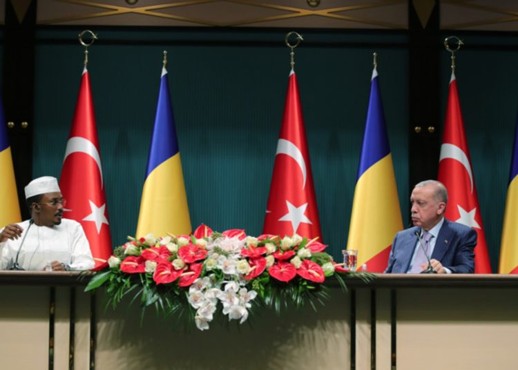
General Mahamat Idriss Deby Itno, the head of a 15-member military junta, visited Turkey and met Turkish President Recep Tayyip Erdoğan (R) on October 27, 2021.
Legal challenges were initiated domestically but did not result in reversal. An administrative appeal filed by the school management was ultimately declared inadmissible by the Supreme Court in April 2018. The events were covered in both local media and Turkish state-affiliated outlets, reflecting their political and diplomatic significance.
Subsequent developments suggest continuing transnational implications. Reports indicate that Turkish authorities had, prior to the transfer, sought the extradition of certain individuals associated with the schools, based on information gathered through diplomatic channels. In parallel, broader bilateral agreements between Turkey and Chad—covering areas such as security, military cooperation, and education—formed part of the wider context in which these events took place.
Overall, the Chad case illustrates a model of coordinated transfer through prior bilateral agreement, followed by administrative enforcement and personnel removal. It highlights the role of formal intergovernmental arrangements, alongside diplomatic engagement and security-sector involvement, in facilitating the reassignment of educational institutions to the Turkish Maarif Foundation.
Country Case 5. Afghanistan: sustained diplomatic pressure, administrative dissolution and phased enforcement through security operations
In Afghanistan, the transfer of educational institutions linked to the Gülen movement represents one of the most extensive and protracted cases, involving 11 schools, more than 200 Turkish teachers and their families, and a large network of Afghan personnel and students. These institutions, operating under the Afghan-Turk Çağ Educational NGO (ATÇE), had been active for several years and constituted a significant part of the country’s private education sector.
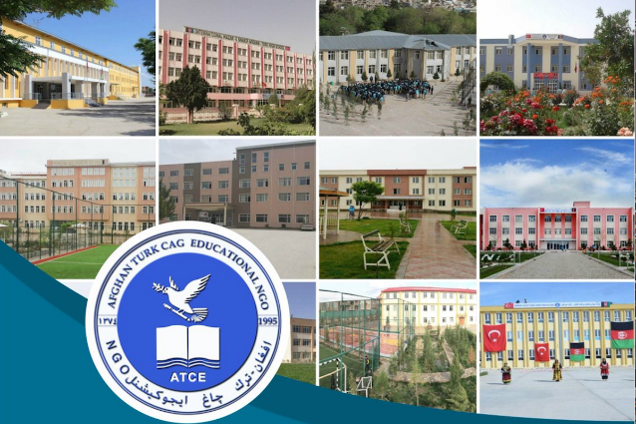
Turkish Schools belonging to Afghan-Turkish Çağ Educational Foundation (ATCE) in Afghanistan
Efforts to secure the closure and transfer of these schools reportedly began as early as 2014 and intensified significantly following July 2016. According to statements by Afghan officials, the Turkish government formally requested the transfer of the schools to the Turkish Maarif Foundation in September 2016. This request was accompanied by sustained diplomatic engagement at multiple levels, including high-level bilateral meetings. Reports from these interactions indicate that Afghan authorities perceived the issue as a priority in bilateral relations, with references made to broader areas of cooperation—including military presence, development assistance, scholarships, and migration-related arrangements—within the context of these discussions.
Following a high-level meeting between Turkish and Afghan officials in February 2017, the Afghan President ordered the establishment of a governmental commission tasked with developing a mechanism for transferring the schools within a short timeframe. Public statements by Afghan officials during this period sought to reassure stakeholders, including affirmations that Turkish teachers would not be expelled; however, contemporaneous accounts from school representatives and parent groups indicate that concerns regarding potential expulsions and transfers remained widespread.
The process subsequently moved into a formal administrative phase. A transfer agreement between the Afghan authorities and the Turkish Maarif Foundation was signed in February 2018, and a government commission proceeded to dissolve the ATÇE organisation. Attempts by the organisation’s management to challenge the dissolution through administrative and judicial channels were unsuccessful. Reports indicate that complaints were not accepted by relevant authorities, with reference made to the political sensitivity of the case. In parallel, regulatory changes were introduced requiring Turkish teachers in private educational institutions to obtain approval from the Turkish Embassy, effectively limiting their ability to continue employment outside the Maarif framework.
The transfer was implemented progressively between 2018 and 2019 and was accompanied, in several instances, by direct enforcement measures involving security forces. Schools in multiple cities—including Sheberghan, Herat, Mazar-i-Sharif, Jalalabad, Kandahar, and Kabul—were taken over through operations in which police and security personnel entered school premises. Reports indicate that these interventions were at times met with resistance from students, parents, and staff, and that force was used in certain instances, including arrests and detention of individuals present at the schools.
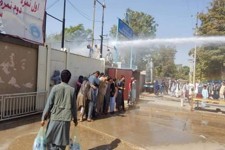
Afghan security forces raid Afghan-Turk Boys High School in Shibirghan
The impact on personnel was substantial. Turkish staff faced a combination of legal uncertainty, administrative restrictions, and security-related measures, including reported arrests, house detention, and the initiation of extradition-related procedures in some cases. Consular and administrative barriers were also reported, including difficulties in obtaining or renewing passports and identity documents, which affected the ability of individuals and their families to leave the country. Over time, all Turkish teaching staff departed Afghanistan, and none remained in the institutions following their transfer.
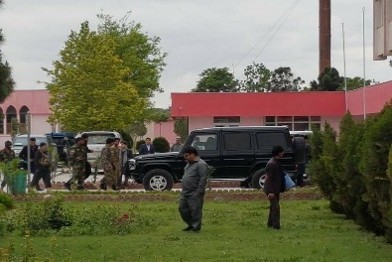
Afghan-Turk school raided by Turkish diplomats, soldiers in Afghanistan’s Mazar-e Sharif
The process also generated significant domestic reaction. Parent groups and civil society actors organised meetings and campaigns opposing the transfer, including reported large-scale signature collections. The events received broad media coverage, both domestically and internationally, reflecting their scale and political sensitivity.
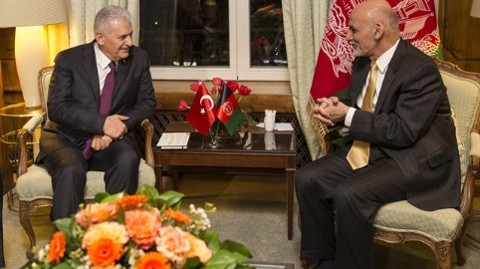
Turkish Prime Minister Binali Yıldırım met with Afghan President Ahmadzai in February 2017 (https://www.yenisafak.com/gundem/basbakan-yildirim-afganistan-cumhurbaskani-ahmedzai-ile-gorustu-2615288)
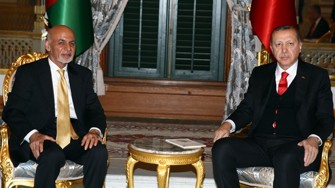
President Erdoğan met with Ashraf Ghani in December 2017 (https://www.yenisafak.com/gundem/cumhurbaskani-erdogan-esref-gani-ile-bir-araya-geldi-2926822)
Overall, the Afghanistan case illustrates a comprehensive and multi-phase model of institutional transfer, combining sustained diplomatic pressure, administrative dissolution of the operating entity, regulatory restrictions on personnel, and, in several instances, direct enforcement through security operations. It represents one of the most extensive examples of the reassignment of educational institutions to the Turkish Maarif Foundation and highlights the complex interaction between foreign policy, domestic administrative processes, and on-the-ground implementation.
Country Case 6. Venezuela: diplomatic engagement, administrative pressure and eventual state seizure followed by transfer
In Venezuela, the transfer of educational institutions linked to the Gülen movement followed a gradual, multi-stage process, combining diplomatic engagement, administrative pressure, and eventual state intervention. Two schools, established in 2008 and 2012, formed the basis of this case and employed approximately 12 Turkish teachers, alongside local staff.
Developments accelerated following high-level diplomatic contacts between Turkey and Venezuela. Bilateral meetings between Presidents Recep Tayyip Erdoğan and Nicolás Maduro in 2017 and 2018 were followed by inspections of the schools ordered by Venezuelan authorities. Reports from individuals involved indicate that these inspections were initiated at the direction of the executive and were linked to broader discussions between the two governments.
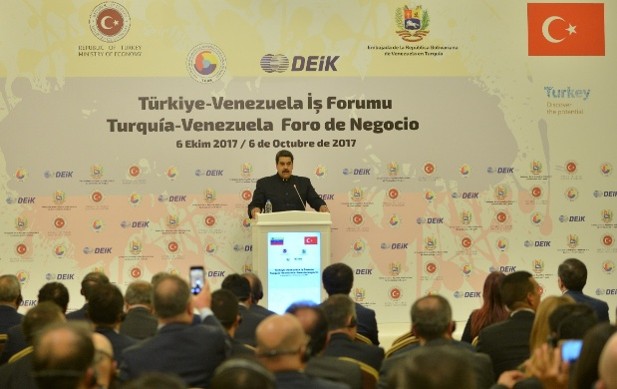
President Of Venezuela Maduro Convened With Turkish Business World Representatives In Ankara in October 2017 (https://www.deik.org.tr/press-releases-president-of-venezuela-maduro-convened-br-with-turkish-business-world-br-representatives-in-ankara)
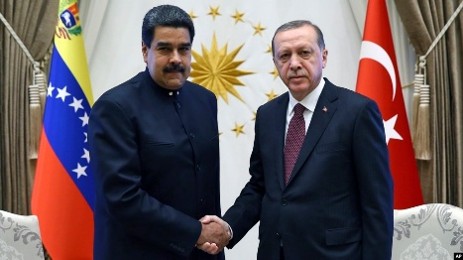
Turkey’s President Recep Tayyip Erdogan, right, shakes hands with Venezuela’s President Nicolas Maduro, left, prior to their meeting at the Presidential Palace in Ankara, Turkey, Oct. 6, 2017.
The process also involved transnational legal and diplomatic elements. In July 2018, Interpol notices were reportedly issued in relation to individuals associated with the schools, based on investigations initiated in Turkey. Around the same period, Venezuelan authorities summoned new local shareholders of the schools and warned them that licences could be revoked. These developments occurred in a context where ownership of the institutions had already been restructured, with shares transferred to Venezuelan nationals following earlier pressure associated with bilateral relations.
Accounts from school representatives suggest that Turkish diplomatic actors had actively engaged with Venezuelan authorities prior to these developments, including the provision of information concerning the schools and their staff. Statements attributed to participants in bilateral meetings indicate that the issue of school transfer formed part of high-level discussions between the two governments.
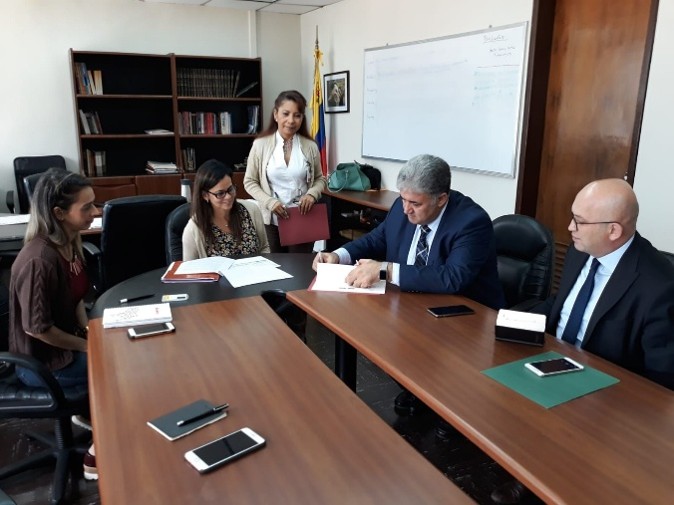
Ahead of President Recep Tayyip Erdoğan’s official visit to Latin America, FETÖ/PDY-affiliated schools in Venezuela were handed over to the Turkish Maarif Foundation.
According to the agreement signed with the Venezuelan Ministry of Education, two Gülen schools in Caracas were transferred to the Turkish Maarif Foundation. 30 November 2018. (https://turkiyemaarif.org/news/venezuelada-feto-okullari-turkiye-maarif-vakfina-devredildi)
The impact on personnel was immediate. All Turkish staff members and their families left the country during this period, reportedly due to concerns regarding security and legal exposure, including the existence of arrest warrants. Following the departure of staff, the Venezuelan Ministry of Education proceeded to seize the schools through administrative decision, placing them under the control of a temporary trustee. The institutions were subsequently transferred to the Turkish Maarif Foundation on 3 December 2018.
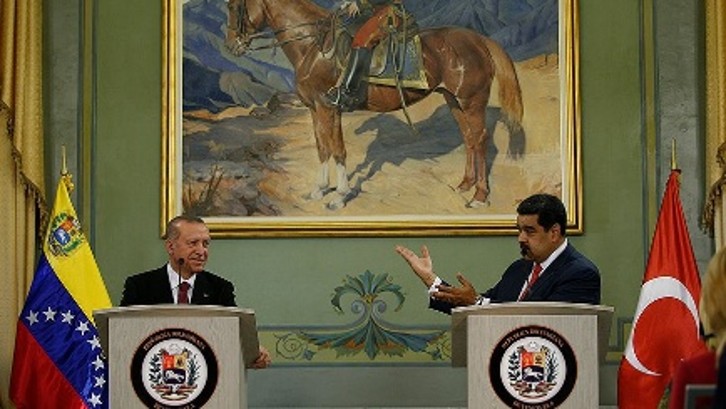
President Erdoğan and President Nicolas Maduro of Venezuela held a joint press conference at Miraflores Palace after their tete-a-tete meeting. 4 December 2018. (https://turkiyemaarif.org/news/cumhurbaskani-erdogan-venezuelada-2-feto-okulu-maarif-vakfina-devredildi)
Erdoğan said in the press meeting: “After I reported these schools to my dear friend, two schools were closed here and transferred to our Maarif Foundation recently.”
Subsequent developments point to broader patterns of transnational coordination. Reports indicate that Turkish diplomatic missions in Venezuela collected information on Turkish nationals residing in the country, which was later used in domestic legal proceedings in Turkey. In parallel, bilateral agreements between Turkey and Venezuela expanded to include security and intelligence cooperation, encompassing areas such as information-sharing, law enforcement collaboration, and counter-terrorism measures.
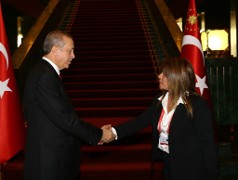
Turkish President Recep Tayyip Erdoğan and Ambassador Şule Öztunç (R).
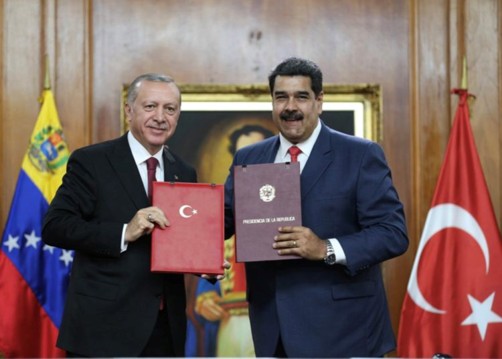
Turkey, Venezuela enter security deal that includes joint operations, intelligence sharing. June 2019.
Overall, the Venezuela case illustrates a model in which diplomatic engagement, administrative measures, and transnational legal instruments converge to facilitate the transfer of educational institutions. It also highlights the linkage between school transfers and wider bilateral cooperation frameworks, including in the security domain.
Country Case 7. Democratic Republic of the Congo: bilateral agreement, administrative revocation and coordinated transfer with diplomatic involvement
In the Democratic Republic of the Congo (DRC), the transfer of educational institutions linked to the Gülen movement was implemented through a combination of bilateral agreement, administrative licence revocation, and coordinated diplomatic engagement. The case centres on the Turkish International School “Şafak”, established in 2009 in Kinshasa, employing approximately 25 Turkish teachers alongside local staff.
The process intensified in 2018, following a series of high-level engagements between Congolese and Turkish authorities. During this period, senior Congolese officials, including the Ministers of Education and Foreign Affairs, undertook multiple visits to Turkey. Shortly thereafter, public statements by the Turkish Maarif Foundation and Congolese authorities confirmed that an agreement had been reached for the transfer of the schools. In July 2018, a formal cooperation protocol was signed in Istanbul between the Congolese Ministry of Education and the Foundation, providing the basis for subsequent administrative action.
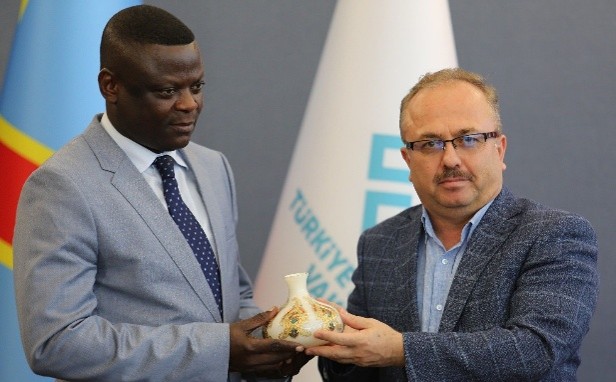

The agreement, which envisages the transfer of Gülen schools in the Democratic Republic of Congo to the Turkish Maarif Foundation, was signed between TMF President Prof. Dr. Birol Akgün and Democratic Congo Minister of Education Gaston Musemena Bongala at a ceremony held at TMF Headquarters in July 2018. (https://turkiyemaarif.org/news/demokratik-kongodaki-feto-iltisakli-okullar-turkiye-maarif-vakfina-devrediliyor)
Implementation proceeded rapidly. On 23 July 2018, the Congolese Minister of Education issued a decision revoking the operating licence of the Şafak school. This decision was followed by public announcements in national media indicating that the school had been confiscated by the state and transferred to the Turkish Maarif Foundation. School management reported that, in the period leading up to the formal notification, they were instructed informally not to enrol new students, without written justification, and that attempts to seek clarification from the authorities did not result in a formal response.
The transfer was completed in mid-August 2018. On 16 August, the Maarif Foundation publicly announced that multiple schools in Kinshasa had been handed over to its administration.
“As from today, four FETÖ-linked schools in the capital city Kinshasa have been handed over to the Turkish Maarif Foundation. We will put all our efforts with our team to provide the best and top-quality education for the citizens of Democratic Republic of Congo. I believe that our schools will present the mission of Turkey and contribute to the education in the country. Education will act as a permanent stand between two countries for the long term. I hereby thank Democratic Republic of Congo authorities for their support in our Foundation,” said the chairperson of TMV, Prof Dr Birol Akgün.
On the same day, parents of students held a press conference expressing opposition to the transfer and raising concerns regarding the role of national authorities in facilitating the process. Security forces were subsequently deployed to the school premises, and the following day, a formal handover ceremony took place in the presence of the Congolese Minister of Education and the Turkish Ambassador.
The involvement of security forces and diplomatic representatives formed part of the implementation phase. Reports indicate that police units were present at school premises during the transfer period, and that access to certain areas was temporarily restricted. At the same time, representatives associated with Turkish authorities conducted on-site inspections. The majority of Turkish teaching staff were not present in the country at the time, having departed during the summer period; those who remained subsequently left following the transfer.
Legal proceedings were initiated by the former school management, including recourse to higher courts; however, as of the available information, these proceedings have remained pending for several years without resolution. In parallel, reports based on leaked documents suggest that Turkish diplomatic missions had collected information on Turkish nationals associated with the schools prior to the transfer, which was later transmitted to authorities in Turkey.
Overall, the DRC case illustrates a model in which formal intergovernmental agreement is followed by swift administrative revocation and coordinated implementation, including the presence of diplomatic representatives and security forces at the point of transfer. It also highlights the limited effectiveness of subsequent legal challenges and the broader transnational dimension of the process.
Country Case 8. Gabon: transfer concurrent with removal of personnel and absence of formal legal procedure
In Gabon, the transfer of a Gülen-linked educational institution occurred in a highly compressed and atypical sequence, coinciding with the removal of associated personnel and without evidence of a formal administrative or judicial process. The case concerns a single institution, the École Privée Internationale Turco-Gabonaise, which had operated in the country since the early 2010s and employed a small number of Turkish teaching staff.
Prior to the events in question, bilateral educational cooperation between Turkey and Gabon had been publicly framed in positive terms. In 2012, the Gabonese President expressed support for the presence of Turkish-run educational institutions and encouraged their expansion. This position contrasts with subsequent developments following the deterioration of relations between the Turkish authorities and the Gülen movement.
The transfer of the school to the Turkish Maarif Foundation was effected on 7 April 2018. According to available information, this transfer occurred simultaneously with the removal of several Turkish nationals associated with the institution, who were taken from Gabon to Turkey on the same date. The circumstances surrounding these events are further detailed in related case files referenced elsewhere in this report.

TMF Deputy Chairman Ambassador Dr. Hasan Yavuz, in his statement to AA correspondent, stated that a memorandum of understanding was signed with Gabonese government officials regarding the transfer of Gülen schools in the country in December 2016. (https://www.aa.com.tr/tr/dunya/gabon-daki-feto-okullari-turkiye-maarif-vakfi-na-devrediliyor/710730)
No formal administrative decision, judicial ruling, or publicly available legal procedure has been identified in relation to the revocation of the school’s licence or its transfer to the Maarif Foundation. The process was nonetheless reported in local media and resulted in the effective reassignment of the institution to the Foundation’s control.
The Gabon case is therefore notable for the absence of a documented legal framework governing the transfer, as well as for its overlap with measures affecting individuals associated with the institution. It illustrates a model in which institutional transfer and the treatment of personnel are closely intertwined, occurring within a context of limited procedural transparency.
Country Case 9. Senegal: prolonged diplomatic engagement, administrative withdrawal of authorisation and contested judicial aftermath
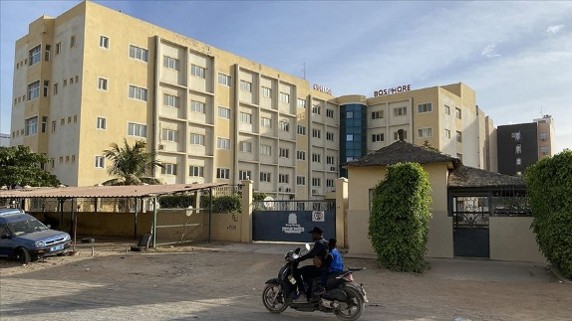
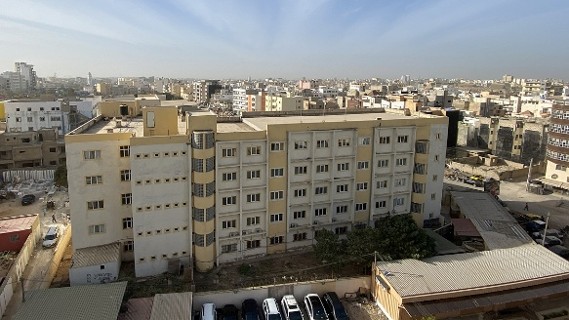
One of the Gülen schools, the Bosphore College complex in the capital Dakar
In Senegal, the closure and attempted transfer of a large network of educational institutions linked to the Gülen movement illustrates a protracted and contested process, combining sustained diplomatic engagement, administrative measures, and ongoing judicial proceedings. The case concerns the Yavuz Selim school network, established in 1997 and comprising 18 institutions, with approximately 3,000 students and over 500 employees, including around 90 Turkish teachers.
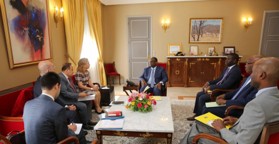
Hasan Yavuz in negotiation with Senegalese authorities for the transfer of Gülen schools to Maarif Foundation. November 2016. (https://x.com/H_Yavuz07/status/802927922696699904?s=20)
Requests by Turkish authorities to close or transfer these schools date back several years prior to 2016, but were initially resisted by Senegalese authorities. Following the events of July 2016, however, this position shifted. By late 2016, representatives of the Turkish Maarif Foundation publicly indicated that agreements had been reached with the Senegalese government for the transfer of the schools. This was accompanied by high-level diplomatic engagement, including meetings between Foundation officials and Senegalese leadership.
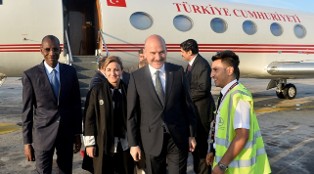
Turkish Minister of Interior Suleyman Soylu in Senegal, where he is on an official visit, stated that the education in these schools will become even higher quality with the Turkish Maarif Foundation taking over the Gülen schools. September 2017. (https://www.trthaber.com/haber/gundem/icisleri-bakani-soylu-senegalde-332160.html)
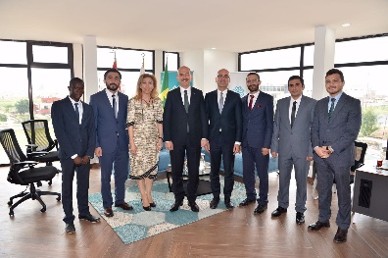
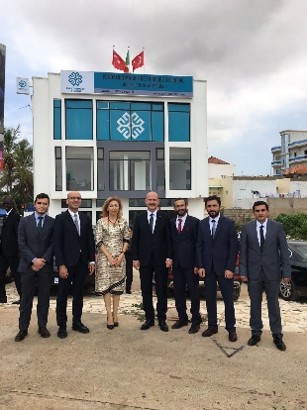
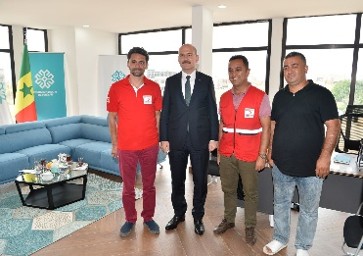
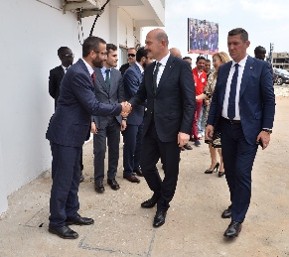
During his visit to the Turkey Maarif Foundation Center located in Dakar, the Minister was accompanied by the Turkish Ambassador Nilgün Erdem Arı.
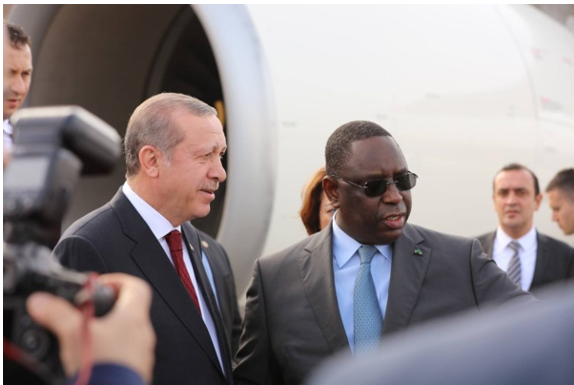
Senegalese President Macky Sall: “It was Erdogan who asked for the closure of these schools.” October 2017. (https://www.dakarposte.com/Macky-Sall-Oui-c-est-le-president-turc-Erdogan-qui-a-demande-la-fermeture-de-Yavuz-Selim_a21964.html)
Administrative action followed. In December 2016, the authorisation previously granted to the managing association of the schools was withdrawn by the Senegalese Ministry of Interior, with formal notification provided in early 2017. Subsequent steps included efforts to appoint the Turkish Maarif Foundation as a temporary administrator and the formal recognition of the Foundation within the Senegalese legal framework. However, implementation of the transfer encountered delays, and progress remained limited until renewed high-level engagement in September 2017.
A key turning point occurred during a visit by the Turkish Minister of Interior to Senegal in September 2017. Following this visit, Senegalese authorities publicly acknowledged that the closure of the schools had been requested by Turkey over several years. Reports from the period indicate that discussions included references to broader bilateral cooperation, including economic and infrastructure projects, within the context of the transfer process.
Shortly thereafter, the Senegalese authorities adopted a series of measures affecting the school network. The Ministry of Education withdrew authorisations for certain institutions and ordered the closure of others, including schools deemed to be operating without formal approval. Beginning in mid-September 2017, law enforcement personnel were deployed to enforce closures, with school premises sealed and access restricted. These measures were implemented progressively across the network and documented through formal reports.
On 3 October 2017, the government proceeded to close the Yavuz Selim schools in their entirety, with police presence maintained at affected sites. Public statements by Senegalese officials subsequently confirmed that the decision had been taken following requests from the Turkish authorities. The closure was followed by legal action initiated by the school network, including proceedings seeking compensation from the Senegalese state. These proceedings have remained ongoing over several years, with no definitive resolution at the time of reporting.
Unlike in some other jurisdictions, elements of the school network continued to operate through alternative legal strategies, including the establishment of new entities. This resulted in continued tension between the original operators and the Turkish Maarif Foundation, which formally raised objections to the authorities regarding the continued activity of these institutions.
The impact on personnel was substantial. Approximately 90 Turkish teachers and their families left Senegal over an extended period, with many subsequently obtaining refugee status in third countries. In addition, approximately 400 local employees were affected by the closures. Reports also indicate that Turkish diplomatic missions compiled information on individuals associated with the schools, which was later transmitted to prosecutorial authorities in Turkey for the purpose of initiating legal proceedings.
Overall, the Senegal case demonstrates a multi-year process characterised by diplomatic engagement, administrative action, enforcement through security forces, and prolonged judicial contestation. It highlights both the scale of institutional restructuring and the potential for partial resistance and legal continuity, distinguishing it from cases involving more immediate and complete transfer.
Country Case 10. Jordan: administrative closure, judicial intervention and subsequent re-closure under alternative legal grounds
In Jordan, the closure of a Gülen-linked educational institution illustrates a layered administrative process, involving initial regulatory action, partial judicial intervention, and subsequent re-closure through alternative legal mechanisms. The case concerns the Burj Jordan Turkish School, which had been operating for approximately nine years and employed around 110 personnel, including 28 Turkish teachers.
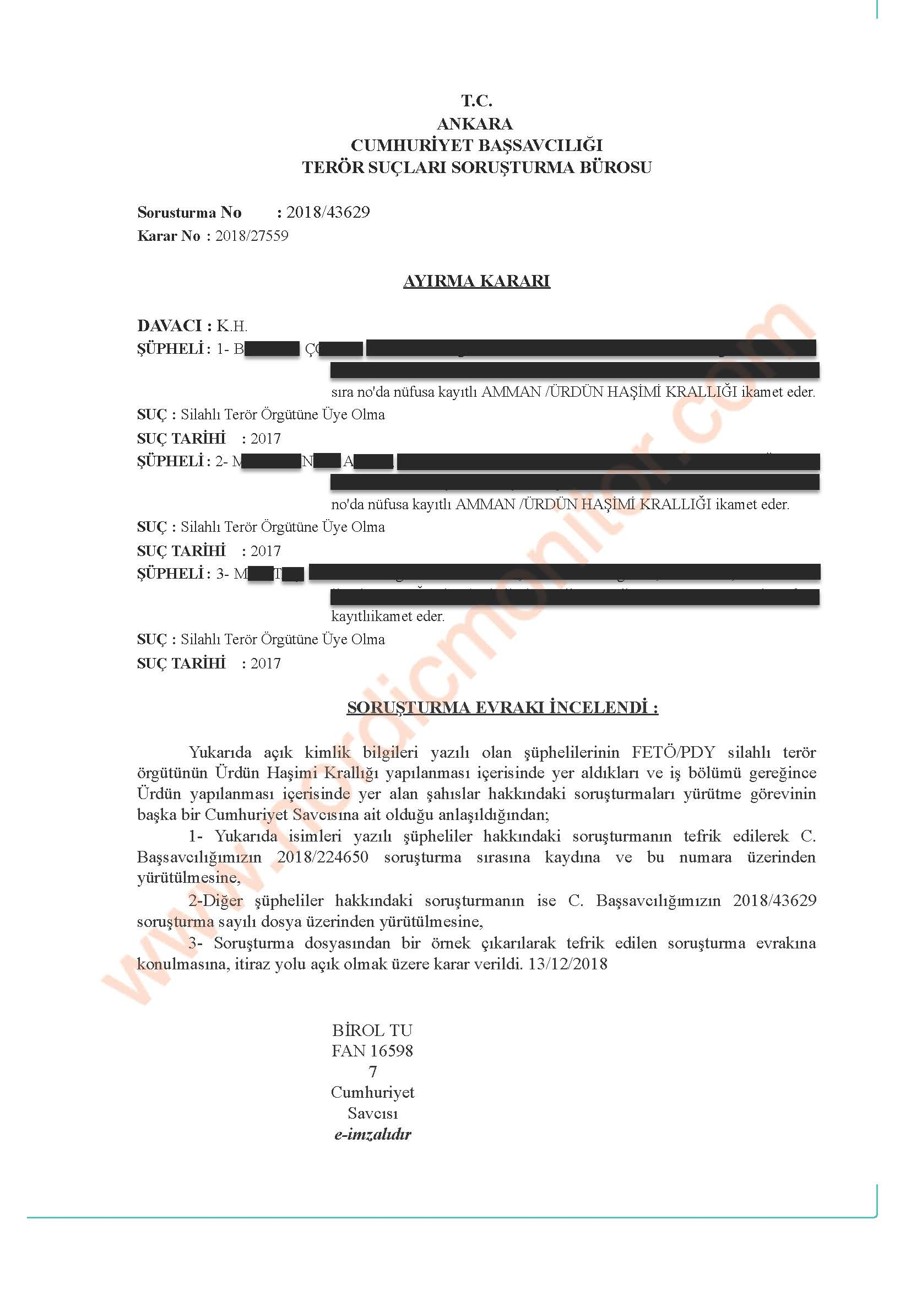
Judicial document dated December 13, 2018 reveals spying on teachers working at Gülen schools in Jordan by the Turkish diplomatic missions. (The addresses and names of the Turkish nationals have been redacted for security reasons.)
In the period preceding its closure, the school had undergone routine inspection by the Ministry of Education, which identified certain administrative deficiencies. According to school representatives, these issues were subsequently addressed and communicated to the authorities, without further follow-up. Nevertheless, on 11 July 2016, the Ministry of Education revoked the school’s operating licence and ordered its immediate closure. This decision was implemented shortly thereafter by local authorities.
Official explanations cited administrative violations, including issues related to accreditation; however, other accounts indicate that the closure was linked to requests from Turkish authorities. Reports suggest that multiple Turkish actors—including diplomatic representatives and senior officials—were involved in raising concerns about the institution with Jordanian authorities prior to the decision.
The closure was subject to judicial review. An initial appeal was rejected by the Administrative Court, but on 15 August 2016, the Supreme Administrative Court accepted a subsequent appeal and ordered a temporary suspension of the closure, subject to the provision of a financial guarantee. The Court’s reasoning referred to the risk of irreversible harm should the administrative decision be implemented.
Despite this judicial intervention, the closure was ultimately maintained through alternative administrative grounds. Correspondence from the Ministry of Foreign Affairs indicates that the Turkish Embassy in Amman continued to engage actively with Jordanian authorities following the court’s decision, expressing concern regarding the potential reopening of the school and requesting further review. Shortly thereafter, the Jordanian Ministry of Labour issued a separate decision to close the institution on the basis of alleged violations of labour law, effectively overriding the suspension ordered by the court.
The enforcement of the closure involved direct administrative action. Police sealed the school premises, and when a representative of the institution declined to sign official documentation, he was reportedly detained. Subsequent efforts by the school’s management to reopen the institution or regularise the status of staff were unsuccessful.
The impact on personnel was significant. Prior to the closure, approximately 28 Turkish teachers, together with their families, were employed at the school; however, this number had already declined due to difficulties in obtaining work permits. Following the closure, remaining Turkish staff were dismissed and instructed to leave the country within a short timeframe. While requests for extradition of certain individuals were reportedly made, these were not carried out by the Jordanian authorities.
As in other jurisdictions, there are indications that Turkish diplomatic missions compiled information on individuals associated with the school, which was subsequently transmitted to prosecutorial authorities in Turkey for the purpose of initiating legal proceedings.
Overall, the Jordan case illustrates a model in which initial administrative closure is subject to judicial scrutiny but ultimately upheld through alternative regulatory measures, in a context shaped by sustained diplomatic engagement. It highlights the potential for executive adaptation in response to judicial intervention, as well as the role of multiple administrative channels in achieving closure.
Country Case 11. Zambia: property acquisition, security cooperation framework and administrative removal of personnel
In Zambia, the reassignment of educational institutions linked to the Gülen movement was implemented through a combination of property acquisition measures, bilateral security cooperation, and administrative enforcement, rather than through direct licence revocation or formal transfer agreements. The case concerns the Ve Horizon School network, established in 2011 and comprising nursery, primary, and secondary education facilities, employing a small number of Turkish staff alongside local personnel.
The process took place within a broader context of intensified bilateral relations. In July 2018, a high-level Turkish delegation—including senior political and intelligence officials—visited Zambia, during which a series of agreements were concluded between the two countries. Among these was a security cooperation agreement, which formed part of an expanding framework of bilateral engagement. Subsequent official statements highlighted the strengthening of cooperation between the two states in multiple sectors.
Administrative measures targeting the school emerged in 2019. On 25 September 2019, notice was issued of the Zambian President’s intention to acquire the land on which the school campus was located. This was followed by a formal decision by the Minister of Lands and Natural Resources in October 2019 to proceed with the acquisition, with implementation scheduled by the end of the year. The land in question had been leased to the school’s managing entity under a long-term arrangement, and its reversion to state control effectively removed the legal basis for the school’s continued operation. Legal proceedings relating to compensation for this acquisition remain ongoing.
The enforcement phase occurred in 2020. Following additional notices to vacate the premises, police units escorted Turkish staff from the school, reportedly without allowing them to retrieve personal belongings or re-enter the campus. The institution was subsequently placed under new management, operating under a different name, with most local personnel retained but leadership replaced.
The consequences for personnel were significant. All seven Turkish teachers were dismissed and required to leave the country. While requests for arrest and extradition of certain individuals were reportedly issued, these were not carried out. Instead, the authorities engaged with international organisations and facilitated the relocation of affected individuals to third countries. As in other cases, Turkish diplomatic missions are reported to have compiled information on individuals associated with the institutions, which was subsequently transmitted to prosecutorial authorities in Turkey.
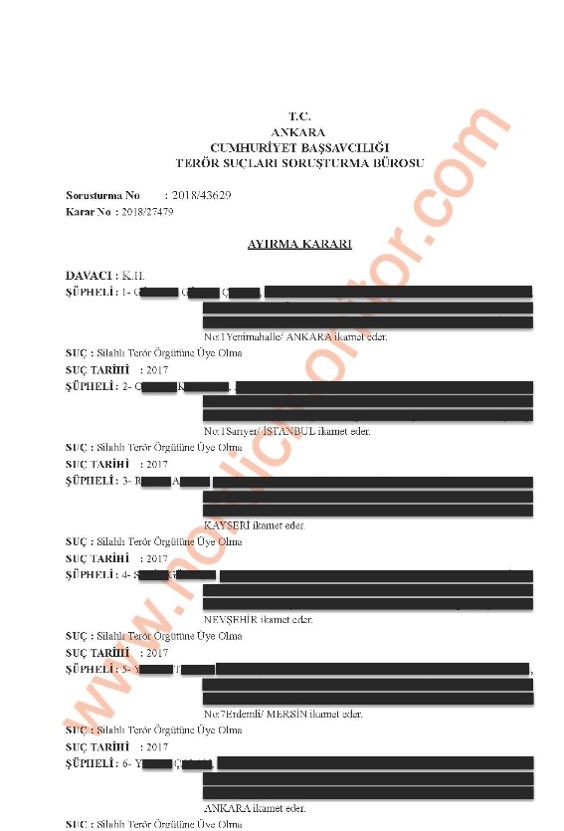
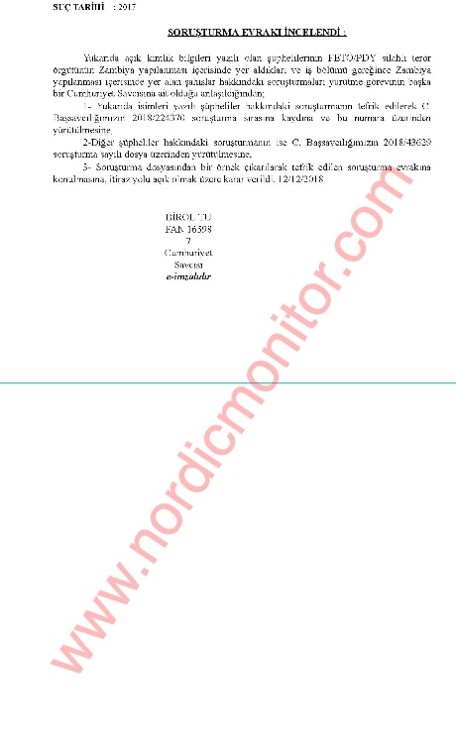
Judicial document dated December 12, 2018 reveals spying on Gülen school teachers in Zambia by Turkish diplomatic missions. (The addresses and names of the Turkish nationals have been redacted for security reasons)
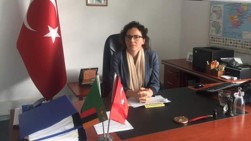
Ambassador Şebnem İncesu
The Zambia case is also linked to broader developments in bilateral security cooperation. Reports indicate that agreements between Turkey and Zambia included provisions related to intelligence sharing and cooperation in addressing security-related matters, forming part of the wider context in which the reassignment of educational institutions took place.
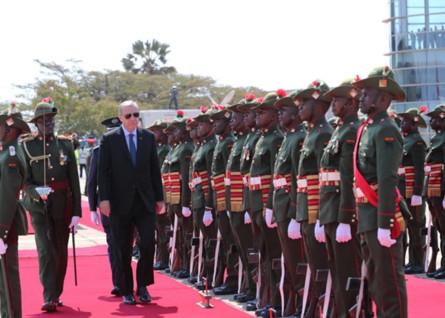
President Recep Tayyip Erdoğan visited Zambia on July 28, 2018. The government of Turkish President Recep Tayyip Erdoğan has signed a security cooperation agreement with Zambia.
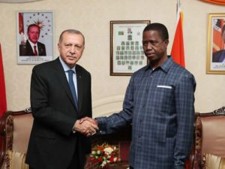
Turkish President Recep Tayyip Erdoğan and Zambian President Edgar Chagwa Lungu.
Overall, the case illustrates a model in which property law mechanisms and state acquisition powers are used to effect institutional transfer, combined with administrative enforcement and personnel removal. It highlights the role of broader bilateral agreements, including in the security domain, in shaping the conditions under which such measures are implemented.
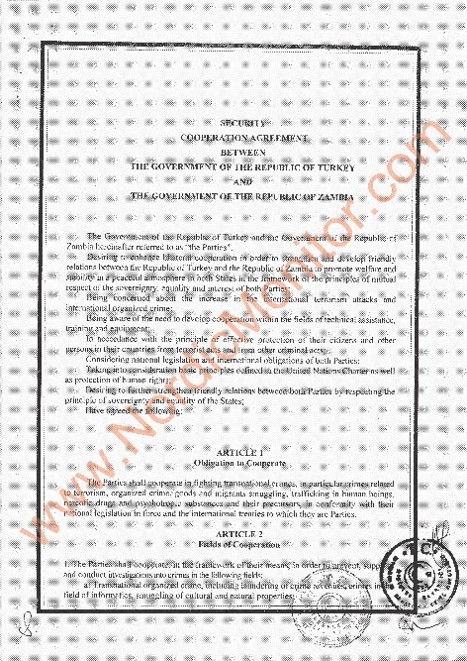
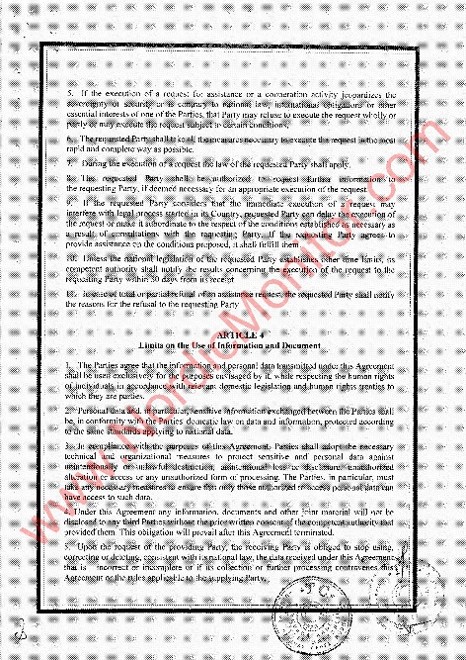
The security cooperation agreement that the government of Turkish President Recep Tayyip Erdoğan has signed with Zambia to expand its crackdown on government critics and to facilitate political persecution and intelligence operations in Zambia. (full text: https://nordicmonitor.com/2019/12/security-agreement-aims-at-expanding-turkeys-crackdown-on-govt-critics-in-zambia/)
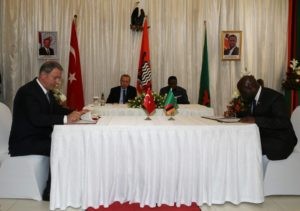
The agreement was signed in July 2018 by Turkish Defense Minister Hulusi Akar and Zambian Home Affairs Minister Stephen Kampyongo.
Country Case 12. Liberia: intelligence-led intervention, forced deportation of personnel and closure without formal judicial process
In Liberia, the closure of educational institutions linked to the Gülen movement followed a security-led and extra-procedural pathway, characterised by the involvement of intelligence services, the deportation of personnel, and the absence of effective legal remedies. The case concerns two schools operating under the Light International School System (LISS), active in the country since 2006.
Requests by Turkish authorities to close these institutions reportedly date back several years, including at least to 2017. However, decisive action occurred in April 2022, when a series of coordinated inspections and interventions were initiated by Liberian authorities. Officials from the Ministries of Labour and Education, followed by immigration personnel, conducted visits to the schools. During these operations, passports and residence documentation belonging to staff and their family members were confiscated. Notably, individuals involved in these inspections reportedly presented credentials linked to national security services, indicating the involvement of intelligence structures in the process.
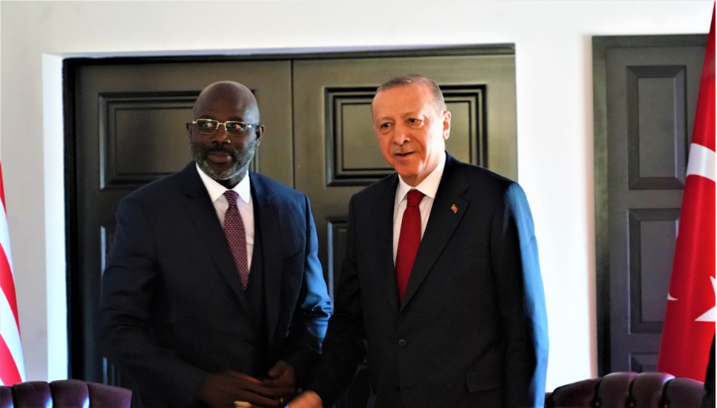
The deportation of the Turks happened just a month after President Weah returned from Turkey where he and President Erdogan met in March 2022. (https://frontpageafricaonline.com/news/liberia-turks-were-deported-in-exchange-for-turkish-investments-in-liberia-new-details-reveal%EF%BF%BC/)
Events escalated rapidly. On 18 April 2022, senior school administrators were summoned to the headquarters of the National Security Agency (NSA), although the summons lacked formal legal basis. The following day, security personnel arrived at staff residences and instructed individuals and their families to prepare to leave immediately, reportedly under the pretext of returning confiscated documents. Instead, staff members—some of whom were under international protection—were transported under supervision to the airport and held for several hours before being placed on outbound flights.
On 20 April 2022, a group of school staff and family members were deported from Liberia without prior judicial or administrative proceedings, and without the opportunity to challenge the decision. Upon arrival in Ghana, some individuals sought international protection, while others continued to third countries. Local stakeholders, including parents and legal representatives, attempted to initiate legal action; however, no effective judicial process was pursued, reportedly due to the inability to secure legal representation willing to take on the case.
Public reporting in Liberia suggested that the deportations and closure of the schools may have been linked to broader bilateral considerations, including economic cooperation and investment. Media commentary highlighted the contrast between earlier official support for the schools and the subsequent decision to dismantle them. In parallel, communications attributed to individuals acting in a diplomatic or quasi-diplomatic capacity indicated that the closure was viewed as part of a coordinated effort aligned with Turkish government policy objectives.
Unlike several other cases, there is no clear evidence that the institutions were formally transferred to the Turkish Maarif Foundation following closure. Instead, the Liberian case appears to reflect a model focused on institutional dismantlement through the removal of personnel, rather than structured reassignment of school operations.
Overall, the Liberia case illustrates a highly coercive model involving security-sector intervention and deportation, with limited procedural safeguards and no effective judicial oversight. It also highlights the potential linkage between such measures and broader bilateral political and economic considerations.
Country Case 13. Congo-Brazzaville: state intervention justified by “reasons of state” and restructuring of governance through ministerial decision
In the Republic of Congo (Congo-Brazzaville), the reassignment of a Gülen-linked educational institution followed a state-directed restructuring process, grounded in administrative decision-making explicitly justified by considerations of national interest and bilateral cooperation. The case concerns the La Cascada school, which had been operating since 2012 and employed a small number of Turkish staff.
Initial interactions between the school and the authorities in early 2017 were conducted in a routine administrative context. A senior official from the Ministry of Education responsible for private education visited the school and indicated that the Turkish Embassy had requested its closure. According to available accounts, an initial assessment report prepared by the administration concluded that there were no substantiated grounds for closure, and recommended that any allegations be clarified formally. However, subsequent information suggests that this report was later returned with instructions to revise its conclusions in a negative direction.
In parallel, developments affecting the ownership structure of the school were underway. In April 2017, the Ministry of Education was informed that the company operating the school had been acquired by a foreign entity, with plans for a gradual transition in management. Shortly thereafter, the Ministry issued a formal administrative decision establishing a new governance structure for the institution.
This decision, adopted on 7 April 2017, placed the school under the authority of an Executive Committee composed of representatives from the Ministry of Education, the Turkish Maarif Foundation, school personnel, and parents. Notably, the Ministry-appointed representative assumed the role of director, while the Maarif Foundation representative was designated as deputy director. The decision explicitly referred to “reasons of state” and to existing bilateral cooperation agreements between Turkey and the Republic of Congo as the basis for this restructuring. At the same time, the incumbent school director was replaced by a Congolese national appointed by the authorities.
Turkish deputy PM inaugurates a Turkish investment, a conference center in Congo on 20 June 2017. (https://www.aa.com.tr/en/africa/turkish-deputy-pm-opens-conference-center-in-congo/845754)
Visiting Turkish Deputy Prime Minister Numan Kurtulmus on 21 June 2017 announced in Congo that the two countries would be holding joint economic cooperation talks in the near future. (https://www.aa.com.tr/en/africa/turkish-deputy-pm-hails-turkey-congo-relations/846424)
These measures were contested by the new owners of the operating company, who formally objected to the decision through administrative and legal channels. The dispute was subsequently brought before the Supreme Court, where proceedings remain pending. In parallel, several Turkish nationals associated with the school departed the country, reportedly due to concerns regarding their personal security.
The Congo-Brazzaville case is notable for the explicit invocation of “reasons of state” as a legal justification for intervention, as well as for the introduction of a hybrid governance model incorporating both national authorities and the Turkish Maarif Foundation. Unlike cases involving outright closure, this approach involved the reconfiguration of institutional control, rather than immediate termination of operations.
Overall, the case illustrates a model in which administrative restructuring, grounded in political considerations and bilateral agreements, is used to alter the governance of educational institutions, with limited scope for effective legal challenge in practice.
Country Case 14. Rwanda: closure following diplomatic engagement without transfer to the Maarif Foundation
In Rwanda, the closure of a Gülen-linked educational institution followed a distinct trajectory compared to other jurisdictions, characterised by diplomatic engagement, an explicit proposal by the Turkish government to transfer the institution, and a unilateral decision heavily influenced by a foreign state, Turkey, by the Rwandan authorities to shut down the school rather than implement the proposed transfer.
The case concerns Hope Academy Rwanda (also referred to as the Turkish International School of Kigali), a private educational institution operating in Gisozi, Gasabo District, which provided nursery, primary, and secondary education under the Cambridge curriculum. Established in the early 2010s, the school was among the more prominent international education providers in the country and employed Turkish, international and local staff. The school community represented 30 nationalities.
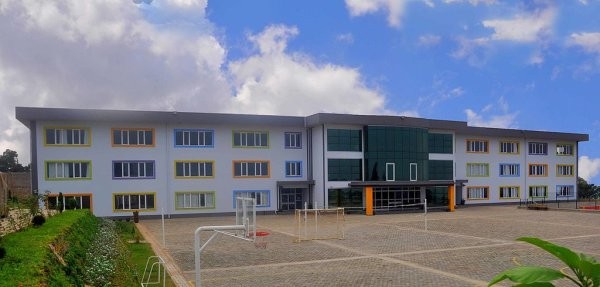
Hope Academy Rwanda in its Kigali campus
Developments leading to the closure took place in the broader context of strengthened bilateral relations between Rwanda and Turkey following the events of July 2016. In May 2017, senior Rwandan officials publicly affirmed their willingness to cooperate with Turkey in addressing activities linked to the Gülen movement, emphasising that Rwanda would not permit such activities within its territory and would work closely with Turkish authorities in this regard.

Foreign Minister Çavuşoğlu’s visit to Rwanda in May 2016. (https://www.mfa.gov.tr/foreign-minister-cavusoglu_s-visit-to-rwanda.en.mfa)
At the same time, Turkish officials publicly acknowledged Rwanda’s actions concerning Gülen-linked institutions. Statements by the Turkish Foreign Minister confirm that Rwanda had taken steps to shut down such schools and indicated that preparations were envisaged for their reopening under the Turkish Maarif Foundation, reflecting the broader policy objective pursued by Turkey in multiple jurisdictions.
The formal decision to close the school is documented in a ministerial order issued by the Rwandan Ministry of Education and signed by Minister Dr Papias Musafiri Malimba on 29 May 2017. This document provides a clear account of the reasoning underpinning the decision. It explicitly refers to a proposal by the Government of Turkey requesting that the school be transferred to a Turkish foundation. The Rwandan authorities, however, determined that such a transfer would give rise to “potential related complications” and, on that basis, opted to close the institution instead.
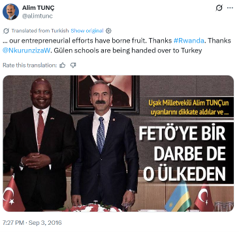
In September 2016, AKP MP Alim Tunc declares on his X (then Twitter) account that the Gülen school in Rwanda is being handed over to Turkey. (https://x.com/alimtunc/status/772123927153868802?s=20)
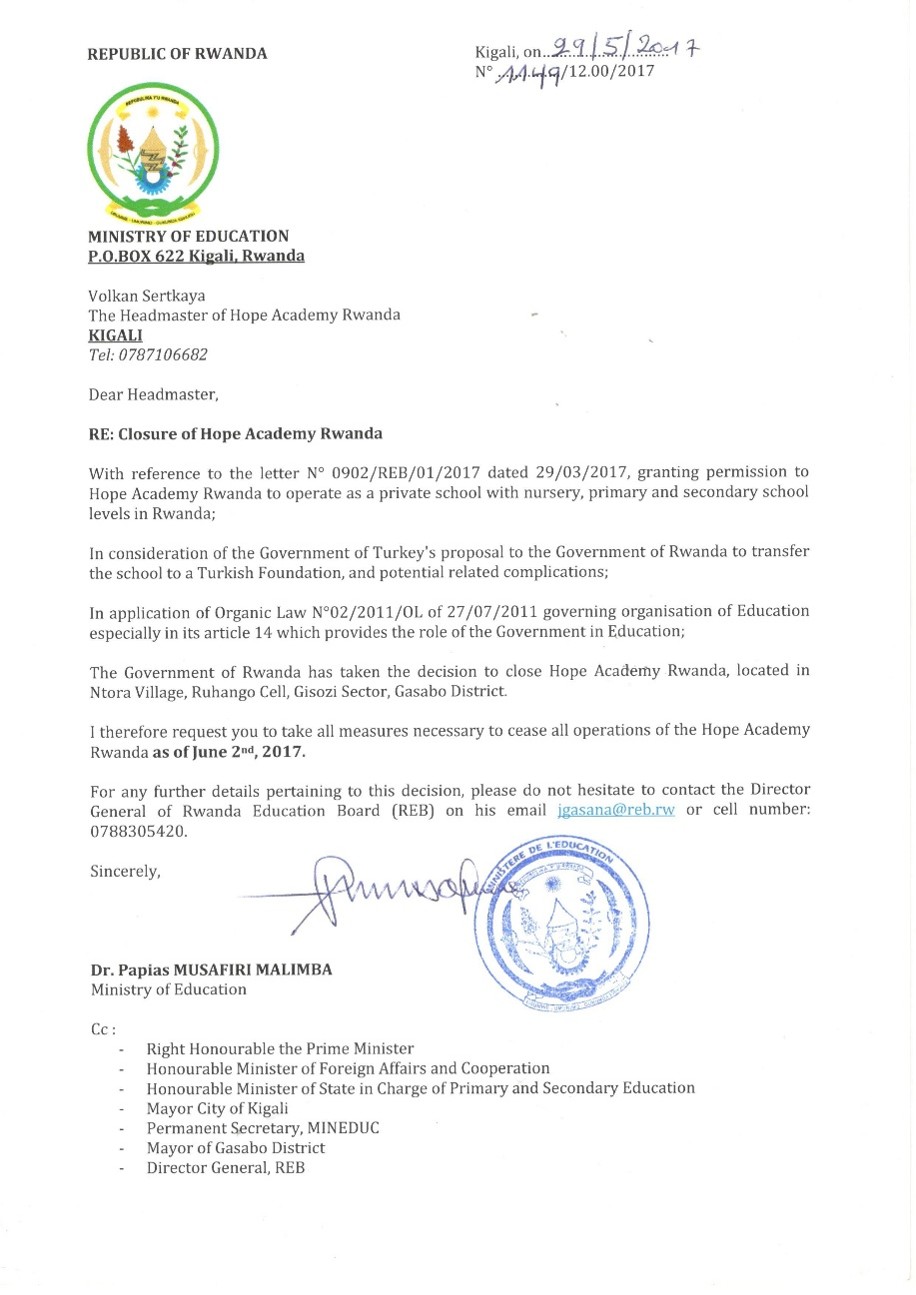
Ministerial order issued by the Rwandan Ministry of Education and signed by Minister Dr Papias Musafiri Malimba on 29 May 2017.
Prior to the closure decision, the school had been subjected to a series of inspections by officials from relevant authorities. These inspections did not reveal any deficiencies; on the contrary, the school received exceptionally high evaluation results. According to the official inspection score sheets, Hope Academy Rwanda achieved 1360 points out of a maximum of 1380, reflecting near-perfect compliance across all assessed criteria. The inspectors themselves explicitly commended the institution’s high standards in areas such as organisation, infrastructure, security, and educational quality, and even suggested that the school could serve as a model institution at the national level. These findings clearly indicate that the school was not closed due to any breach of regulations, administrative shortcomings, or failure to meet educational standards.
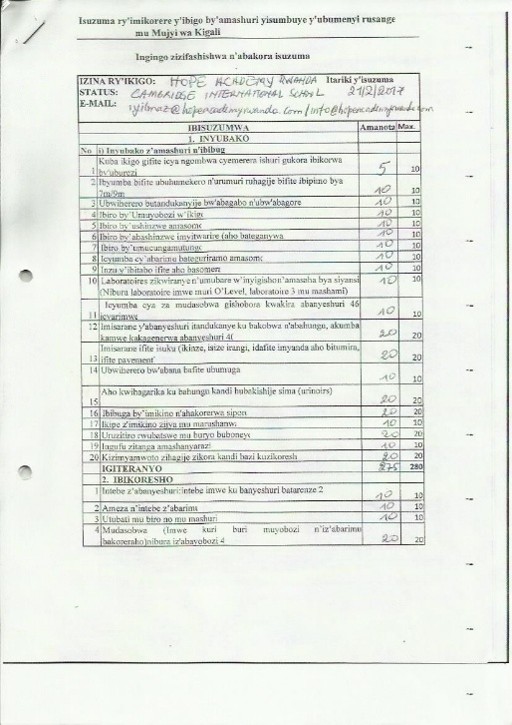
The result report of February 2017 inspection
Notwithstanding these positive evaluations, the decision was grounded in domestic law, specifically Organic Law No. 02/2011/OL governing the organisation of education, and particularly Article 14, which defines the role of the Government of Rwanda in the regulation of the education sector. Acting under this legal framework, the Ministry ordered the immediate cessation of all activities of Hope Academy Rwanda, with a deadline set for 2 June 2017.
Contemporaneous reporting further confirms that the closure was directly linked to the request made by the Turkish government and to the broader post-2016 campaign against institutions associated with the Gülen movement. Statements attributed to the Ministry of Education indicate that the decision was taken “having regard to the request made by the Turkish Government,” reinforcing the causal connection between bilateral engagement and administrative action. Additional reporting similarly describes the closure as having been carried out following consultations with Turkish authorities and in response to Ankara’s position regarding Gülen-linked institutions.
At the same time, public statements by the Turkish Ambassador to Rwanda introduced a degree of ambiguity regarding the nature of Turkish involvement. While acknowledging that Turkish authorities had shared information concerning the Gülen movement with Rwandan counterparts, the Ambassador denied that a formal request for closure had been made and stated that the decision was taken independently by the Rwandan government.

Turkish Ambassador to Rwanda Mehmet Raif Karaca |
“We didn’t come up to the Rwandan Government with any official demand (For the school to be closed) and I don’t believe the Rwandan Government is the type of Government that will accept to do something just because the other government is asking.”(Turkey-Rwanda Relations for New heights-Ambassador, 2017, interview available at https://en.igihe.com/news/article/turkey-rwanda-relations-for-new-heights)
This apparent inconsistency highlights the complex dynamics of diplomatic engagement, in which formal requests may coexist with indirect forms of influence, including the transmission of information and the framing of security concerns of Erdogan government.
Unlike in several other jurisdictions examined in this report, the Rwandan case did not result in the transfer of the institution to the Turkish Maarif Foundation. Although such a transfer appears to have been proposed by the Turkish government and anticipated in public statements, the Rwandan authorities chose not to proceed with this model. Instead, the school was closed outright, and no subsequent reopening under Maarif administration has been documented in the available sources.
From a comparative perspective, the Rwanda case illustrates a distinct implementation model within the broader pattern of post-2016 measures targeting Gülen-linked educational institutions. While the underlying objective—removal of the institution—aligns with developments observed in other countries, the mechanism differs in that the proposed institutional substitution was rejected and replaced by full closure. This positions Rwanda as an example of what may be described as a “closure without transfer” model, in which compliance with external requests is achieved through elimination of the institution rather than its reassignment.
Turkish Foreign Minister Mevlut Cavusoglu with his Rwandan counterpart Louise Mushikiwabo in capital Kigali in June 2016 (https://www.aa.com.tr/en/africa/turkish-visit-a-turning-point-in-rwanda-relations/581838)
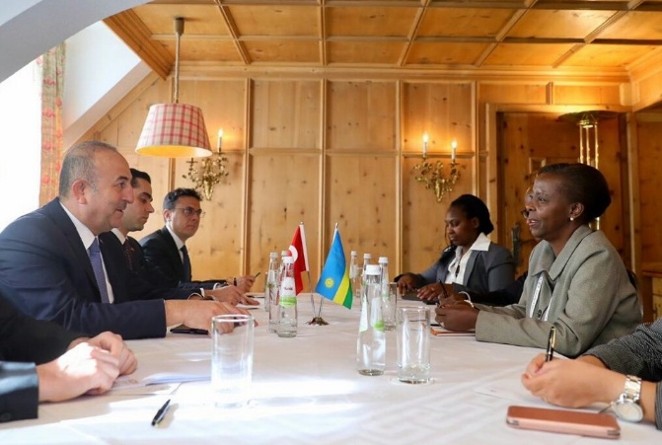
Foreign Minister Çavuşoğlu meets Foreign Minister of Rwanda Louise Mushikiwabo in February 2017. (https://www.mfa.gov.tr/disisleri-bakan%C4%B1-cavusoglunun-ziyareti-munih-konf_en.en.mfa)
The case also underscores the role of high-level political alignment and bilateral cooperation in shaping outcomes in the education sector. The sequence of events—from public commitments of cooperation, to diplomatic signalling, to formal administrative action—demonstrates how foreign policy considerations can intersect with domestic regulatory frameworks in the governance of educational institutions.
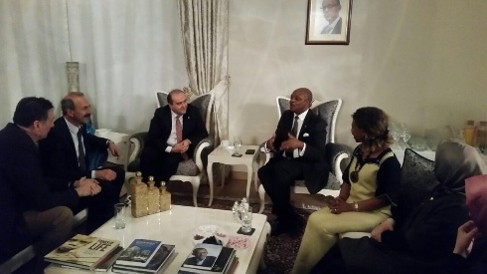
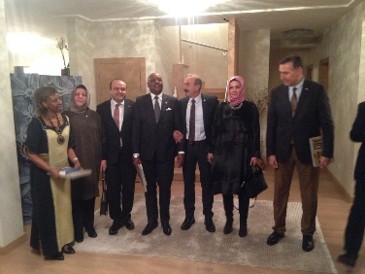
AKP MP Alim Tunc visits and leads negotiations to transfer the Gülen school to Maarif Foundation with the Rwandan Ambassador to Turkey Williams Nkurunziza. 17 February 2017. (https://x.com/alimtunc/status/832633355103412224?s=20)
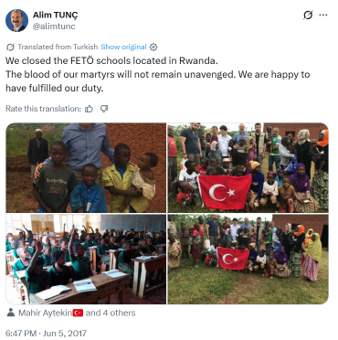
X post of AKP MP Alim Tunc on 5 June 2017. (https://x.com/alimtunc/status/871770382298230785?s=20)
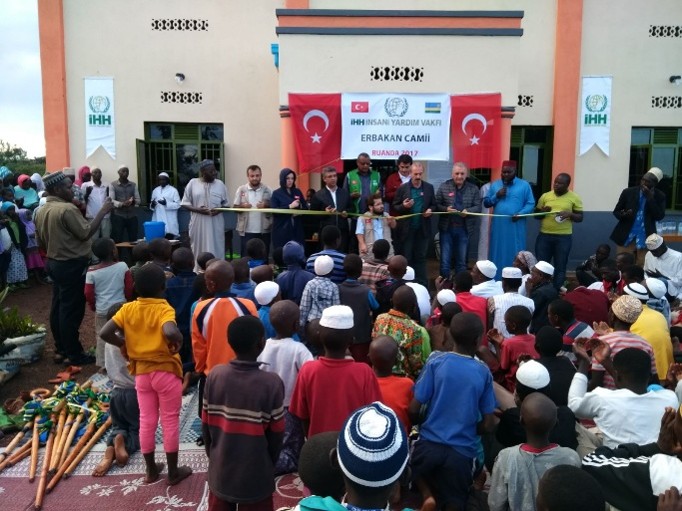
AKP MP Alim Tunc inaugurates a new mosque in Rwanda in December 2017. (https://x.com/alimtunc/status/937635648076439552?s=20)
Foreign Minister Mevlüt Çavuşoğlu poses after signing agreements with his Rwandan counterpart Vincent Biruta in Ankara, Turkey, Sept. 7, 2021. (AA Photo) (https://www.dailysabah.com/politics/diplomacy/rwandan-fms-visit-to-enhance-turkey-rwanda-ties-diplomat-says)
Minister Mevlut Çavuşoğlu and Dr. Vincent Biruta signed several cooperation agreements in January 2023. (https://www.ktpress.rw/2023/01/cavusoglu-visit-rwanda-turkiye-agree-to-strengthen-ties/)
Turkey, Rwanda sign four cooperation agreements in January 2025. (https://www.ktpress.rw/2025/01/turkey-rwanda-sign-four-cooperation-agreements/)
4. International legal assessment: potential qualification as persecution under the Rome Statute
The patterns observed across the country cases raise questions regarding their qualification under international criminal law, in particular within the framework of the Rome Statute of the International Criminal Court. On the basis of the documented cases (13 out of 14 are state parties to the Rome Statute), there are grounds to examine whether the closure, confiscation, and transfer of educational institutions, together with associated measures affecting personnel, may fall within the scope of crimes against humanity, specifically the crime of persecution under Article 7(1) of the Statute.
4.1. Severe deprivation of fundamental rights
Across multiple jurisdictions, the measures described involve the substantial impairment of internationally protected rights. These include, in particular, the right to property, the right to work, the right to freedom of movement, and the right of access to justice.
In numerous cases, school licences were revoked without meaningful procedural safeguards or adversarial proceedings, directly affecting the economic interests of owners and operators. In some jurisdictions, institutions were transferred to the Turkish Maarif Foundation or other entities, while in others they were closed or subjected to state acquisition measures. In certain instances, including Mali, property and assets were reportedly damaged during enforcement operations. In Zambia, land was expropriated through state acquisition mechanisms.
Limitations on access to justice are also evident. In several cases, judicial remedies were either unavailable or ineffective. Proceedings were not admitted or could not be initiated (Afghanistan, Liberia), judicial decisions were not implemented (Niger, Jordan), or cases have remained pending for extended periods without resolution (Democratic Republic of the Congo, Senegal).
In addition, employment rights were affected on a large scale. Personnel were dismissed without individualised assessments, and decisions were generally based on institutional affiliation rather than demonstrated individual conduct. This was accompanied in many cases by restrictions on freedom of movement, including deportations, expulsions, or administrative obstacles preventing lawful residence or re-entry.
Further, public characterisations of individuals associated with these institutions as linked to terrorism, in the absence of substantiated findings in the cases reviewed, raise concerns regarding the protection of reputation and moral integrity. Reports of threats directed at individuals opposing closures also suggest potential interference with freedom of expression and assembly.
4.2. Targeting on political grounds
The available material indicates that the measures were directed at institutions and individuals on the basis of their perceived association with the Gülen movement. Public statements by Turkish officials and representatives of the Maarif Foundation consistently frame the objective as the removal or replacement of this network globally.
Importantly, in the cases examined, the measures do not appear to have been based on individualised determinations of criminal responsibility, nor on substantiated findings relating to terrorism financing or other criminal conduct. Rather, the defining criterion appears to have been institutional or perceived affiliation, suggesting that the targeting may have been grounded in political considerations within the meaning of international criminal law doctrine.
4.3. Connection to other underlying acts and broader patterns
The closure and transfer of schools are closely linked, in several cases, to additional coercive measures affecting individuals, including arrests, detention, deportation, and the initiation of criminal investigations. In a number of jurisdictions, individuals associated with the schools were subject to arrest warrants or threatened with prosecution in Turkey, based on information collected through diplomatic channels.
These elements indicate a connection between the institutional measures and other acts potentially falling within Article 7 of the Rome Statute, including arbitrary detention or imprisonment in violation of fundamental rules of international law. The overlap between institutional closures and individual coercive measures reinforces the systemic character of the conduct.
4.4. Widespread or systematic nature
The geographical spread of the cases—across Africa, the Middle East, Central Asia, and Latin America—together with the consistency of methods observed, supports the characterisation of the conduct as widespread. At the same time, the recurring patterns of diplomatic engagement, administrative action, and transfer to a designated entity (the Turkish Maarif Foundation) suggest a systematic approach.
Official statements by senior Turkish authorities and Foundation leadership situate these actions within a broader policy framework directed at dismantling Gülen-linked networks globally. This reinforces the conclusion that the measures are not isolated incidents, but part of a coordinated transnational policy.
4.5. Knowledge and intent
The involvement of senior state officials, diplomatic representatives, and institutional actors in the planning and implementation of these measures indicates that the conduct was undertaken with awareness of its broader context. Public statements and documented actions suggest that the objective was not limited to individual institutions, but formed part of a wider strategy targeting a specific group.
Taken together, the available material provides a reasonable basis to examine whether the elements of persecution as a crime against humanity are met, within the meaning of Article 7(1) of the Rome Statute. This assessment is necessarily preliminary and subject to further evidentiary development; however, the convergence of widespread deprivation of fundamental rights, targeted action on political grounds, and systematic implementation across multiple jurisdictions warrants careful consideration by policymakers and relevant international actors.
5. Conclusion
This report has examined the establishment, structure, and operations of the Turkish Maarif Foundation (TMV), situating it within the broader post-2016 international campaign targeting educational institutions linked to the Gülen movement. The analysis demonstrates that TMV is not merely an educational actor operating abroad, but a structurally state-embedded entity whose legal mandate, governance framework, funding model, and operational practice align closely with the foreign policy and security objectives of the Turkish state.
Across the jurisdictions examined, a consistent pattern emerges. Educational institutions were closed, transferred, or restructured through a combination of diplomatic engagement, executive or administrative measures, and, in certain cases, coercive enforcement. While the modalities differed—from negotiated handovers to security-led interventions—the underlying policy objective remained constant: the removal of Gülen-linked institutions and their replacement, in many cases, by TMV. These processes frequently occurred in contexts where procedural safeguards were limited or ineffective, raising serious concerns regarding due process, judicial independence, and the protection of property and employment rights.
The comparative country cases—although non-exhaustive—demonstrate that these developments were not confined to a particular region or legal system, but instead formed part of a broader, multi-regional pattern. The scale of the measures, affecting at least 162 institutions and thousands of individuals across 29 countries, underscores both the operational reach of the Foundation and the extent of host-state cooperation required to implement such measures.
At the institutional level, TMV’s hybrid legal character—formally a foundation, but functionally integrated within the state apparatus—has enabled it to operate with both flexibility and authority across diverse legal environments. Its capacity to receive substantial public funding, engage directly with foreign governments, and assume control over educational institutions positions it as a central instrument in the externalisation of domestic political objectives. In this sense, TMV represents a model through which state policy can be projected transnationally via ostensibly civilian structures.
The legal assessment set out in this report further indicates that the documented acts, when considered cumulatively, may meet the threshold of persecution under Article 7(1) of the Rome Statute. The evidence points to severe and systematic deprivation of fundamental rights—including property rights, the right to employment, freedom of movement, and access to justice—targeting a specific group on political grounds. These acts appear to be linked to a broader pattern of conduct directed against individuals associated with the Gülen movement, extending beyond national borders and involving coordinated action across multiple states.
From a policy perspective, these findings raise broader questions about the interaction between diplomacy, development cooperation, and rule-of-law standards in the context of international education. The involvement of host states—whether through active cooperation or acquiescence—highlights the role of bilateral relations, economic dependencies, and political considerations in shaping responses to such requests. It also underscores the potential vulnerability of regulatory and judicial systems to external pressure where institutional safeguards are limited.
In conclusion, the activities of the Turkish Maarif Foundation, as documented in this report, reflect a sustained and coordinated effort to restructure a global network of educational institutions through mechanisms that extend beyond conventional education policy. The evidence supports the characterisation of these developments as part of a broader pattern of transnational repression, in which education has functioned as a key operational domain. This raises important implications for international legal accountability, the protection of fundamental rights, and the governance of cross-border educational activities in an increasingly interconnected geopolitical environment.
[1] Türkiye Maarif Vakfı Kanunu. (n.d.). https://turkiyemaarif.org/page/tmv-kanunu
[2] TBMM Tutanak Dergisi. (2016). https://cdn.tbmm.gov.tr/TbmmWeb/Tutanak/26/1/104/Basilmis/8424c453-d77a-4067-9653-d216d67fa8fd.pdf
[3] See footnote 1.
[4] Ibid.
[5] Ibid.
[6] Bozkurt, A. (2022, September 28). Tukey’s Maarif, Erdoğan’s long arm in exporting political Islam, granted huge funding – Nordic Monitor. Nordic Monitor. https://nordicmonitor.com/2022/09/tukeys-maarif-erdogans-long-arm-in-exporting-political-islam-granted-huge-funding/
[7] Bildircin, M. (2026, January 21). Maarif Vakfı’na aslan payı. birgun.net. https://www.birgun.net/haber/maarif-vakfi-na-aslan-payi-685869
[8] See footnote 6.
[9] Başbakan Yardımcısı Numan Kurtulmuş Kongo’daki okulumuzu ziyaret etti. (2017, June 22). https://turkiyemaarif.org/news/basbakan-yardimcisi-numan-kurtulmus-kongodaki-okulumuzu-ziyaret-etti; see also Merkezi, H. (2021, January 13). 15 Temmuz’dan 1 ay önce kuruldu: Türkiye Maarif Vakfı. soL Haber. https://haber.sol.org.tr/haber/15-temmuzdan-1-ay-once-kuruldu-turkiye-maarif-vakfi-23764
[10] Anadolu Ajansı. (2016, December 15). Nijer’deki FETÖ okulları Maarif Vakfına devrediliyor. https://aa.com.tr/tr/dunya/nijerdeki-feto-okullari-maarif-vakfina-devrediliyor/706857; see also Timeturk. (2017, April 6). Kongo Cumhuriyeti FETÖ okullarını Maarif Vakfına devretti. Timeturk. https://www.timeturk.com/ajans/kongo-cumhuriyeti-feto-okullarini-maarif-vakfina-devretti/haber-570459; Aktaş, T. (2017, March 11). Madagaskar FETÖ okullarını devrediyor. Anadolu Ajansı. https://aa.com.tr/tr/dunya/madagaskar-feto-okullarini-devrediyor/768541; Mali’deki FETÖ Okulları Türkiye Maarif Vakfı’na devredildi. (2017, August 12). https://turkiyemaarif.org/news/malideki-feto-okullari-turkiye-maarif-vakfina-devredildi
[11] Ibid.
[12] Kaplan, E. (2019, July 1). Japan: Erdogan slams FETO-linked schools, organizations. Anadolu. https://www.aa.com.tr/en/politics/japan-erdogan-slams-feto-linked-schools-organizations/1519540; see also Maarif Bülten 1. (2019, February 01). https://turkiyemaarif.org/editions/maarif-bulten-1; Maarif Bülten 2. (2019, February 07). https://turkiyemaarif.org/editions/maarif-bulten-2; Maarif Bülten 3. (2019, March 25). https://turkiyemaarif.org/editions/maarif-bulten-3; Maarif Bülten 4. (2019, June 27). https://turkiyemaarif.org/editions/maarif-bulten-4
[13] Mevlüt Çavuşoğlu: “Türkiye Maarif Vakfı; bayrağımızı, dilimizi ve kültürümüzü her yerde dalgalandırıyor.” (n.d.). https://turkiyemaarif.org/news/mevlut-cavusoglu-turkiye-maarif-vakfi-bayragimizi-dilimizi-ve-kulturumuzu-her-yerde-dalgalandiriyor; see also Türkiye Maarif Vakfı Okulları ile Afganistan’daki eğitime katkı sağlamaya çalışıyoruz. (n.d.). https://turkiyemaarif.org/news/bakan-cavusoglu-turkiye-maarif-vakfi-okullari-ile-afganistandaki-egitime-katki-saglamaya-calisiyoruz; Maarif Vakfı i̇le i̇yi eğitimi taahhüt ediyoruz. (n.d.). https://turkiyemaarif.org/news/maarif-vakfi-ile-iyi-egitimi-taahhut-ediyoruz; Dışişleri Bakanı Çavuşoğlu, Tunus’ta Türkiye Maarif Vakfı okulunu ziyaret etti. (n.d.). https://turkiyemaarif.org/news/disisleri-bakani-cavusoglu-tunusta-turkiye-maarif-vakfi-okulunu-ziyaret-etti; Emine Erdoğan, Gambiya’da Maarif okulunu açtı. (n.d.). https://turkiyemaarif.org/news/emine-erdogan-gambiyada-maarif-okulunu-acti; Kazakistan Cumhurbaşkanı Nazarbayev ziyaretinde Türkiye Maarif Vakfı gündeme geldi. (n.d.). https://turkiyemaarif.org/news/kazakistan-cumhurbaskani-nazarbayev-ziyaretinde-turkiye-maarif-vakfi-gundeme-geldi; Bakan Çavuşoğlu Gine Bissau’da Türkiye Maarif Vakfına dikkat çekti. (n.d.). https://turkiyemaarif.org/news/bakan-cavusoglu-gine-bissauda-turkiye-maarif-vakfina-dikkat-cekti; Dışişleri Bakanı Mevlüt Çavuşoğlu’ndan Maarif Okulları için Ekvator Ginesi Hükümetine Teşekkür. (n.d.). https://turkiyemaarif.org/news/disisleri-bakani-mevlut-cavusoglundan-maarif-okullari-icin-ekvator-ginesi-hukumetine-tesekkur
[14] See footnotes 9, 10, 12, 13.
[15] See footnote 1. See also Türkiye Maarif Vakfı Mütevelli Heyeti. (n.d.). https://turkiyemaarif.org/page/mutevelli-heyeti
[16] Ibid.
[17] T.C. Dışişleri Bakanlığı – Bakü Büyükelçiliği – Büyükelçinin özgeçmişi. (n.d.). https://baku-be.mfa.gov.tr/Mission/Biography
[18] Board of Trustees. (Retrieved on 2026, April 09). https://turkiyemaarif.org/page/board-of-trustees
[19] See some examples in footnote 10.
[20] Constitutional Court. (2019, January 10). Press release concerning the decision dismissing the request for annulment of certain provisions of the Turkish Maarif Foundation law | Anayasa Mahkemesi. (C) 2018 T.C. Anayasa Mahkemesi. https://www.anayasa.gov.tr/en/news/constitutionality-review/press-release-concerning-the-decision-dismissing-the-request-for-annulment-of-certain-provisions-of-the-turkish-maarif-foundation-law/
[21] Constitutional Court Decision. (2018, December 06). https://www.anayasa.gov.tr/media/4995/2018-108.pdf. The case was brought to the court by Engin Altay, Özgür Özel, and 131 other Members of Parliament from the main opposition Republican People’s Party (CHP).
[22] See footnote 1.
[23] See footnote 18.
[24] TRT Haber. (2023, April 5). Türkiye Maarif Vakfına kaynak aktarılması hakkında karar Resmi Gazete’de. https://www.trthaber.com/haber/gundem/turkiye-maarif-vakfina-kaynak-aktarilmasi-hakkinda-karar-resmi-gazetede-758444.html
[25] Dünya Gazetesi. (2024, May 29). Türkiye Maarif Vakfına MEB’den bu yıl 5 milyar 702 milyon lira aktarılabilecek. Dünya Gazetesi. https://www.dunya.com/gundem/turkiye-maarif-vakfina-mebden-bu-yil-5-milyar-702-milyon-lira-aktarilabilecek-haberi-729454
[26] Ayhan, B. (2025, May 21). Türkiye Maarif Vakfına kaynak aktarılması hakkında karar Resmi Gazete’de. Anadolu Ajansı. https://www.aa.com.tr/tr/gundem/turkiye-maarif-vakfina-kaynak-aktarilmasi-hakkinda-karar-resmi-gazetede-/3574683
[27] Dha. (2022, May 26). Türkiye Maarif Vakfına kaynak aktarılması hakkındaki karar resmi gazetede. DHA | Demirören Haber Ajansı. https://www.dha.com.tr/yerel-haberler/ankara/turkiye-maarif-vakfina-kaynak-aktarilmasi-hakki-2075362
[28] See footnote 23.
[29] Suat Özçağdaş on X: “Türkiye Maarif Vakfı’na bütçe var; okul yemeğine, güvenliğe yok! Resmi Gazete’de yayınlanan Cumhurbaşkanı kararı ile Türkiye Maarif Vakfı’na 6,7 Milyar lira bütçe ayrıldı. Bugüne kadar vakfa toplam 20,6 milyar lira kaynak aktarılmış oldu. Milli Eğitim Bakanlığı yurt dışında da https://t.co/THO7lyUcC4” / X. (n.d.). X (Formerly Twitter). https://x.com/Suat_Ozcagdas/status/1925161481252810917
[30] Toprak, V. (2026, February 5). Maarif Vakfı holding oldu – Sözcü Gazetesi. https://www.sozcu.com.tr/maarif-vakfi-holding-oldu-p291190; see also BoldMedya. (2025, May 21). Bütçede kara deliğe dönüştü: Maarif Vakfı’na bu yıl 6,7 milyar TL aktarılacak. BoldMedya. https://boldmedya.com/2025/05/21/butcede-kara-delige-donustu-maarif-vakfina-bu-yil-67-milyar-tl-aktarilacak/
[31] Turkish Minute. (2026, January 22). State funding for Turkish Maarif Foundation surges to record levels. Turkish Minute. https://www.turkishminute.com/2026/01/22/state-funding-for-turkish-maarif-foundation-surges-to-record-levels/
[32] Sheikh, A. (2016, July 30). Turkey’s anti-Gulen crackdown ripples far and wide. Reuters. https://www.reuters.com/article/world/turkeys-anti-gulen-crackdown-ripples-far-and-wide-idUSKCN10A0AW/
[33] Freedom House. (n.d.). Turkey: Transnational Repression Origin Country case study. In Freedom House. https://freedomhouse.org/report/transnational-repression/turkey; see also Solidarity With OTHERS. (2026). Turkey’s use of enforced disappearances as a tool of transnational repression. https://www.ohchr.org/sites/default/files/documents/cfi-subm/disap-tn-repression/subm-enforced-disappearances-context-cso-14-solidarity-others.pdf; Country policy and information note: Gülenist movement, Turkey, August 2025 (accessible). (2025, August 8). GOV.UK. https://www.gov.uk/government/publications/turkey-country-policy-and-information-notes/country-policy-and-information-note-gulenist-movement-turkey-february-2022-accessible-version#Transnational_repression
[34] See footnote 30.
[35] Turkey and the Gulen movement: Erdogan seizes the school initiative | Qantara.de. (n.d.). Qantara.de – Dialog Mit Der Islamischen Welt. https://qantara.de/en/article/turkey-and-gulen-movement-erdogan-seizes-school-initiative
[36] Chedia, A. R. (2023, December 15). Activities of the Turkish Maarif Educational Foundation in Confrontation with the Hizmet Movement. Vestnik RUDN. International Relations. https://journals.rudn.ru/international-relations/article/view/37252/22931
[37] Petesch, C. (2018, March 18). Senegal closes schools linked to Turkish cleric in exile | AP News. AP News. https://apnews.com/general-news-a482d24970784efbb3e3a232936d1ddb
[38] Sheikh, A. (2016, July 30). Turkey’s anti-Gulen crackdown ripples far and wide. Reuters. https://www.reuters.com/article/world/turkeys-anti-gulen-crackdown-ripples-far-and-wide-idUSKCN10A0AW/
[39] Rfe/Rl. (2018, February 26). Turkey takes control of schools linked to Gulen in Afghanistan. RadioFreeEurope/RadioLiberty. https://www.rferl.org/a/afghanistan-turkey-gulen-schools-handed-over/29063915.html
[40] Petesch, C. (2018, March 18). Senegal closes schools linked to Turkish cleric in exile | AP News. AP News. https://apnews.com/general-news-a482d24970784efbb3e3a232936d1ddb
[41] Guner, E. (2020). NGOization of Islamic Education: the Post-Coup Turkish State and Sufi orders in Africa South of the Sahara. Religions, 12(1), 24. https://doi.org/10.3390/rel12010024
[42] SudanTribune, & SudanTribune. (2017, May 15). Sudan hands over Gulen-linked schools to Turkish gov’t. Sudan Tribune. https://sudantribune.com/article/60645
[43] See footnote 38. See also Bozkurt, A. (2022, May 18). Turkey to cooperate with Chad on military, intelligence and joint operations – Nordic Monitor. Nordic Monitor. https://nordicmonitor.com/2022/05/turkey-to-cooperate-with-chad-on-military-intelligence-and-joint-operations/; Stockholm Center for Freedom. (2018, April 18). Afghan-Turk school raided by Turkish diplomats, soldiers in Afghanistan’s Mazar-e Sharif. Stockholm Center for Freedom. https://stockholmcf.org/afghan-turk-school-raided-by-turkish-diplomats-in-afghanistans-mazar-e-sharif/
[44] See footnote 38.
[45] Alexander, P. (2017, September 2). Turkey on diplomatic push to close schools linked to influential cleric. Voice of America. https://www.voanews.com/a/turkey-erdogan-gulen-schools/4010073.html
[46] Turkey’s fight against Gülen in the South Caucasus. (n.d.). openDemocracy. https://www.opendemocracy.net/en/odr/turkeys-fight-against-gulen-in-south-caucasus/
[47] Sekretariat Kabinet Republik Indonesia. (2016, July 29). Indonesia Rejects Turkey’s Request to Close Schools Allegedly Linked with Terrorist Organization. https://setkab.go.id/en/indonesia-rejects-turkeys-request-to-close-schools-allegedly-linked-with-terrorist-organization/
[48] Turkey and the Gulen movement: Erdogan seizes the school initiative | Qantara.de. (n.d.). Qantara.de – Dialog Mit Der Islamischen Welt. https://qantara.de/en/article/turkey-and-gulen-movement-erdogan-seizes-school-initiative
[49] Cespi. (2025, September). Turkish Influence In Africa: Diplomacy, Trade And Security In Relations Between Ankara And The Continent. Opportunities And Challenges For Italy?. https://www.esteri.it/wp-content/uploads/2025/10/CeSPI-Linfluenza-turca-in-Africa-MAECI-UAP-2024_compressed.pdf
[50] See footnote 33.
[51] Turkey Rights Monitor. Closed and Seized Institutions. https://turkeyrightsmonitor.com/en/closed-institutions
[52] Stockholm Center for Freedom. (2018, October 6). Turkish gov’t cancels licenses of 20,000 teachers due to alleged Gülen links. Stockholm Center for Freedom. https://stockholmcf.org/turkish-govt-cancels-licenses-of-20000-teachers-due-to-alleged-gulen-links/
[53] Yıldırım, Ö. (2021, October 18). Turkey’s Maarif Foundation educating over 17,000 students in Africa. Anadolu. https://www.aa.com.tr/en/africa/turkey-s-maarif-foundation-educating-over-17-000-students-in-africa/2395480
[54] Altas, M. (2021, November 25). Turkey’s Maarif Foundation undoing destruction caused by FETO: Erdogan. Anadolu. https://www.aa.com.tr/en/education/turkey-s-maarif-foundation-undoing-destruction-caused-by-feto-erdogan/2430934
[55] Maarif News Bulletin, Year 5 (2022), Issue 21 (July), p.19: https://turkiyemaarif.org/editions/maarif-bulten-21
[56] Ibid.
[57] Mali: https://www.turkiyemaarif.org/post/7-malideki-feto-okullari-turkiye-maarif-vakfina-devredildi-210?lang=tr; Niger: https://www.aa.com.tr/tr/dunya/nijerdeki-feto-okullari-maarif-vakfina-devrediliyor/706857; Tunisia: https://www.aa.com.tr/tr/egitim/tunusta-feto-okullari-maarif-vakfina-gecti/1015084; Chad: https://www.memurlar.net/haber/717595/cad-daki-feto-okullari-maarif-vakfina-devredildi.html and https://www.aa.com.tr/tr/dunya/turkiye-maarif-vakfi-caddaki-feto-okullarini-devraldi/1013636; Afghanistan: https://turkiyemaarif.org/post/7-afganistanda-feto-okulu-turkiye-maarif-vakfina-devredildi-639?lang=tr; Venezuela: https://turkiyemaarif.org/post/7-Cumhurbaskani-Erdogan-Venezuelada-2-FETO-okulu-Maarif-Vakfina-devredildi-584; Democratic Republic of Congo: https://turkiyemaarif.org/post/7-demokratik-kongo-cumhuriyeti-feto-okullarini-turkiye-maarif-vakfina-devretti-496?lang=tr; Gabon: https://www.aa.com.tr/tr/dunya/gabon-daki-feto-okullari-turkiye-maarif-vakfi-na-devrediliyor/710730; Senegal: https://www.aa.com.tr/tr/turkiye/fetoden-senegalde-kapatilan-okullarinin-turkiye-maarif-vakfina-devrini-onleme-manevrasi/1701870; Albania: https://www.aa.com.tr/tr/dunya/arnavutluk-ta-feto-iltisakli-ana-okulu-ve-kolej-kapatildi/2692382; Guinea: https://www.yee.org.tr/tr/haber/ginedeki-tum-feto-okullari-devralindi; Somalia: https://www.aa.com.tr/tr/pg/foto-galeri/somalide-maarif-vakfina-devredilen-okullar-ilk-mezunlarini-verdi/0/355218; Sudan: https://www.aa.com.tr/tr/dunya/sudanda-feto-okullari-maarif-vakfina-teslim-edildi/817744; Mauritania: https://turkiyemaarif.org/post/7-moritanya-maarif-okullari-basariyla-yoluna-devam-ediyor-767?lang=tr; Ethiopia: https://turkiyemaarif.org/post/7-turkiye-maarif-vakfi-etiyopyadaki-fetoye-ait-tum-okullari-devraldi-1698?lang=tr; Togo: https://www.aa.com.tr/tr/dunya/turkiyenin-girisimleri-sonucu-togoda-fetoye-ait-okul-kapatildi/2261437 and https://turkiyemaarif.org/post/7-togodaki-feto-okullari-kapatildi-1610?lang=tr; Pakistan: https://turkiyemaarif.org/post/7-pakistandaki-feto-okullarinin-tamaminin-turkiye-maarif-vakfina-devri-tamamlandi-612?lang=tr; Equatorial Guinea: https://maarifschools.edu.ba/post/7-ekvator-ginesindeki-feto-okulu-turkiye-maarif-vakfina-devredildi-517?lang=tr and https://turkiyemaarif.org/post/7-ekvator-ginesindeki-feto-okulu-turkiye-maarif-vakfina-devredildi-517?lang=tr; Cameroon: https://www.aa.com.tr/tr/dunya/kamerundaki-feto-okullari-tmvye-teslim-edildi-/1194519; Ivory Coast: https://www.aa.com.tr/tr/15-temmuz-darbe-girisimi/fildisi-sahillerindeki-feto-okullari-tmvye-devredildi/1220570; Rwanda: https://www.aa.com.tr/tr/dunya/fetonun-ruandadaki-okulu-kapatildi-/834699; Azerbaijan: https://www.dailysabah.com/diplomacy/2016/07/20/azerbaijan-closes-gulen-linked-qafqaz-university-in-baku
[i] The following endnotes provide the principal documentary and media sources underpinning each country case, offering evidentiary support for the factual narratives and facilitating verification of the events, timelines, and statements referenced throughout this section.
Country Case 1. Mali: executive closure, legislative amendment and transfer to the Maarif Foundation
- Anadolu Ajansı. (2015, February 4). Le Mali ouvre une ambassade en Turquie. Anadolu. https://www.aa.com.tr/fr/turquie/le-mali-ouvre-une-ambassade-en-turquie/77796
- Türkiye Maarif Vakfı on X: “#TürkiyeMaarifVakfı bugün Mali Hükümeti ile FETÖ iltisaklı okulların devrine ilişkin mutabakat anlaşması imzaladı. Hayırlı olsun. https://t.co/4lDVmn9OgN” / X. (n.d.). X (Formerly Twitter). https://x.com/TMaarifVakfi/status/896334900718182400?s=20&t=4Q09y-RL96yZxx50V3rrTw
- Mali’deki FETÖ Okulları Türkiye Maarif Vakfı’na devredildi. (n.d.). https://turkiyemaarif.org/news/malideki-feto-okullari-turkiye-maarif-vakfina-devredildi
- (n.d.). Enseignement scolaire privé: le collège horizon change de tutelle | Bamada.net. https://bamada.net/enseignement-scolaire-prive-le-college-horizon-change-de-tutelle
- (2017, September 10). Transfert du Collège Horizon à La Fondation Maarif, les parents d’élèves s’inquiètent – Studio Tamani – Informations, débats, magazines : toute l’actualité du Mali, en 5 langues. Studio Tamani – Informations, Débats, Magazines : Toute L’actualité Du Mali, En 5 Langues. https://www.studiotamani.org/86153-transfert-du-college-horizon-a-la-fondation-maarif-les-parents-d-eleves-s-inquietent
- net. (n.d.). Situation de Collège Horizon Mali : Le ministre de l’Education s’explique sans convaincre | Bamada.net. https://bamada.net/situation-de-college-horizon-mali-le-ministre-de-leducation-sexplique-sans-convaincre
- (n.d.). DR AMINATA TRAORE KOITA, ASSOCIATION DES PARENTS D’ELEVES DES COLLEGES HORIZON (APECH) « Pourquoi nous sommes révoltés et en colère » | Bamada.net. https://bamada.net/dr-aminata-traore-koita-association-des-parents-deleves-des-colleges-horizon-apech-pourquoi-nous-sommes-revoltes-et-en-colere
- (2017, September 30). Mali: des militaires pour sécuriser les écoles du réseau Gülen à Bamako. RFI. https://www.rfi.fr/fr/afrique/20170930-mali-turquie-ecoles-colleges-horizon-bamako-gulen-fethullah-turc-erdogan
- (n.d.). COLLEGE HORIZON : La fondation Maarif accusée de pillage | Bamada.net. https://bamada.net/college-horizon-la-fondation-maarif-accusee-de-pillage
- Hasan Yavuz on X: “Fetö hainleri ve Haşhaşileri yalan talan alçaklık ve hainliklerinizle Senegal,Mali her yerde yok olacaksınız.https://t.co/ItXOlQXG1A” / X. (n.d.). X (Formerly Twitter). https://x.com/H_Yavuz07/status/915521421341859840?s=20&t=bAS0_BC3Z6saSONvKFoukg
- Pays, L. (2017, October 2). Report de la rentrée scolaire au lundi 9 octobre : Les non-dits d’un report de dernières heures. Maliweb. https://www.maliweb.net/education/report-de-rentree-scolaire-lundi-9-octobre-non-dits-dun-report-de-dernieres-heures-2564912.html
- (2017, October 7). Mali: une administration provisoire dans les collèges ex-Horizon. RFI. https://www.rfi.fr/fr/afrique/20171007-mali-turquie-horizon-gulen-college-ecole-administration-provisoire-ex-maarif-rentre
- Kenez, L. (2023, November 17). Turkish diplomats spied on 65 Erdoğan critics in Mali – Nordic Monitor. Nordic Monitor. https://nordicmonitor.com/2021/12/turkish-diplomats-spied-on-critics-in-mali/
Country Case 2. Niger: executive decision, judicial contestation and transfer under diplomatic pressure
- Hasan Yavuz on X: “Dost ve Kardeş Niger. Başbakan ve Milli Eğitim Bakanı ile birlikte görüştük.İki ülke ve millet arasındaki ilişkilerimiz herşeyin üstündedir. https://t.co/G5s5h8zANl” / X. (n.d.). X (Formerly Twitter). https://x.com/H_Yavuz07/status/808754558293987328
- Hasan Yavuz on X: “Kadim dost/kardeş ülke Niger’e geldik.Yetkililer ile görüşmelere başladık hayırlı netice alıp milletimize hediyemiz ile döneriz inş” / X. (n.d.). X (Formerly Twitter). https://x.com/H_Yavuz07/status/808575299948609536
- (20+) Büyükelç. . . – T.C. Niamey Büyükelçiliği/ Ambassade de Türkiye à Niamey | Facebook. (n.d.). https://www.facebook.com/TCNiameyBE/posts/b%C3%BCy%C3%BCkel%C3%A7i-dr-hasan-yavuz-ba%C5%9Fkanl%C4%B1%C4%9F%C4%B1ndaki-t%C3%BCrkiye-maarif-vakf%C4%B1-heyeti-13-aral%C4%B1k-2/1338062479571101/
- Anadolu Ajansı. (2016, December 15). Nijer’deki FETÖ okulları Maarif Vakfına devrediliyor. Anadolu Ajansı. https://aa.com.tr/tr/dunya/nijerdeki-feto-okullari-maarif-vakfina-devrediliyor/706857?fbclid=IwY2xjawRdVyZleHRuA2FlbQIxMABzcnRjBmFwcF9pZBAyMjIwMzkxNzg4MjAwODkyAAEeGxT7gLomU2nkPfkpM2tOnjDJ6v-a-olSGrUqGsTQpSMygLtW9Y7ixGTpzzU_aem_p3PbcLfwHQ4UpU4UV5Fo3g
- Anadolu Ajansı. (2017, January 19). Erdoğan’ın Afrika turunda FETÖ okulları kıskaca alınacak. Anadolu Ajansı. https://www.aa.com.tr/tr/turkiye/erdoganin-afrika-turunda-feto-okullari-kiskaca-alinacak/730503
- FETÖ’nün yurt dışı okulları yakın markajda. (2017, February 9). Anadolu Ajansı. https://www.aa.com.tr/tr/info/infografik/3850
Country Case 3. Tunisia: indirect transfer through ownership restructuring and administrative licence revocation
- Net. (2017, June 15). ‘Tunus’ta FETÖ iltisaklı okullardan biri kapatıldı’ Memurlar.Net. https://www.memurlar.net/haber/674860/tunus-ta-feto-iltisakli-okullardan-biri-kapatildi.html
- Anadolu Ajansı. (2017, December 26). “Tunus’ta FETÖ okulları Maarif Vakfı’na geçti.” Anadolu Ajansı. https://www.aa.com.tr/tr/egitim/tunusta-feto-okullari-maarif-vakfina-gecti/1015084
- Maarif Vakfı. Türkiye’nin “eğitim köprüsü” yurt dışındaki FETÖ tekelini kırdı. (2018, April 12). https://turkiyemaarif.org/news/turkiyenin-egitim-koprusu-yurt-disindaki-feto-tekelini-kirdi
- Sayın Bakanımızın Tunus’u ziyareti, 22-24 Aralık 2018 / T.C. Dışişleri Bakanlığı. (n.d.). Türkiye Cumhuriyeti Dışişleri Bakanlığı. https://www.mfa.gov.tr/sayin-bakanimizin-tunus-u-ziyareti.tr.mfa
- Anadolu Ajansı. (2019, November 7). “Tunus, FETÖ’nün terk etmek zorunda kaldığı yegane ülkelerden.” Anadolu Ajansı. https://www.aa.com.tr/tr/10-buyukelciler-konferansi/tunus-fetonun-terk-etmek-zorunda-kaldigi-yegane-ulkelerden/1231820
Country Case 4. Chad: pre-agreed transfer through bilateral arrangements and coordinated administrative action
- Anadolu Ajansı. (2016, August 22). Çad’daki FETÖ okulları kapatılacak. Anadolu Ajansı. https://www.aa.com.tr/tr/15-temmuz-darbe-girisimi/caddaki-feto-okullari-kapatilacak/633252
- Le Tchadanthropus-tribune | #TCHAD #Turquie # Éducation : Que cache la fermeture de l’école Tchado-Turque de N’Djamena. (n.d.). Le Tchadanthropus-tribune. https://www.letchadanthropus-tribune.com/tchad-turquie-education-que-cache-la-fermeture-de-lecole-tchado-turque-de-ndjamena/
- Daily Sabah. (2017, November 29). Chad to transfer FETÖ-linked schools to Maarif Foundation. Daily Sabah. https://www.dailysabah.com/war-on-terror/2017/11/29/chad-to-transfer-feto-linked-schools-to-maarif-foundation
- (20+) 13/12/2017 : #TCHAD #Turquie #. . . – Le tchadanthropus-tribune | Facebook. (n.d.). https://www.facebook.com/letchadanthropus/posts/13122017-tchad-turquie-%C3%A9ducation-que-cache-la-fermeture-de-l%C3%A9cole-tchado-turque-/940384896111620/
- Mahamat, A. T. (2026, April 6). Education : La Turquie veut violer l’inviolable au Tchad. Alwihda Info. https://www.alwihdainfo.com/education-la-turquie-veut-violer-l-inviolable-au-tchad-a60115/
- Anadolu Ajansı. (2017, December 25). Türkiye Maarif Vakfı Çad’daki FETÖ okullarını devraldı. Anadolu Ajansı. https://www.aa.com.tr/tr/dunya/turkiye-maarif-vakfi-caddaki-feto-okullarini-devraldi/1013636
- Turkish Minute. (2021, December 15). Armed with drones, Turkey explores African arms sales. Turkish Minute. https://turkishminute.com/2021/12/15/med-with-drones-turkey-explores-african-arms-sales/
- Nordic Research Monitoring Network. (2019, January 15). Turkey approves agreement with Chad for defense industry cooperation – Nordic Monitor. Nordic Monitor. https://nordicmonitor.com/2019/01/turkey-to-use-chad-territory-for-arms-development/
- Bozkurt, A. (2022, May 18). Turkey to cooperate with Chad on military, intelligence and joint operations – Nordic Monitor. Nordic Monitor. https://nordicmonitor.com/2022/05/turkey-to-cooperate-with-chad-on-military-intelligence-and-joint-operations/
Country Case 5. Afghanistan: sustained diplomatic pressure, administrative dissolution and phased enforcement through security operations
- Yeni Şafak. (2017, February 18). Başbakan Yıldırım, Afganistan Cumhurbaşkanı Ahmedzai ile görüştü. Yeni Şafak. https://www.yenisafak.com/gundem/basbakan-yildirim-afganistan-cumhurbaskani-ahmedzai-ile-gorustu-2615288
- Yeni Şafak. (2017, December 13). Cumhurbaşkanı Erdoğan Eşref Gani ile bir araya geldi. Yeni Şafak. https://www.yenisafak.com/gundem/cumhurbaskani-erdogan-esref-gani-ile-bir-araya-geldi-2926822
- Stockholm Center for Freedom. (2024, March 7). Turkey’s Erdoğan allegedly blackmailed Afghan gov’t for detention of Turkish teachers. Stockholm Center for Freedom. https://stockholmcf.org/turkeys-erdogan-allegedly-blackmailed-afghan-govt-for-detention-of-turkish-teachers/
- (2017, December 12). Afganistan Gizli Servisi Türk öğretmenleri gözaltına aldı. Euronews. https://tr.euronews.com/2017/12/12/afganistan-gizli-servisi-turk-ogretmenleri-gozaltina-aldi
- Turkish Minute. (2017, December 17). Turkish teachers linked to Gülen movement detained in Afghanistan. Turkish Minute. https://turkishminute.com/2017/12/12/turkish-teachers-linked-to-gulen-movement-detained-in-afghanistan/
- Stockholm Center for Freedom. (2018, July 30). Afghan security forces raid Afghan-Turk Boys High School in Shibirghan. Stockholm Center for Freedom. https://stockholmcf.org/afghan-security-forces-raid-afghan-turk-boys-high-school-in-shibirghan/
- Stockholm Center for Freedom. (2018, November 12). Afghan-Turk School students and teachers detained in Herat. Stockholm Center for Freedom. https://stockholmcf.org/afghan-turk-school-students-and-teachers-detained-in-herat/
- Stockholm Center for Freedom. (2018, April 18). Afghan-Turk school raided by Turkish diplomats, soldiers in Afghanistan’s Mazar-e Sharif. Stockholm Center for Freedom. https://stockholmcf.org/afghan-turk-school-raided-by-turkish-diplomats-in-afghanistans-mazar-e-sharif/
- Mosavi, N. (2017, December 21). Afghan-Turk teachers call their extradition illegal. TOLOnews. https://tolonews.com/afghanistan/afghan-turk-teachers-call-their-extradition-illegal
- Sahak, A. M. (2019, January 26). Afghan police raid school Turkey says is linked to Erdogan foe. Reuters. https://www.reuters.com/article/idUSKCN1PK0LE/
- (2017, March 6). Afghanistan moves against Turkish schools linked to Erdogan foe. Reuters. https://www.reuters.com/article/us-afghanistan-turkey-schools-idUSKBN16D1H8/
Country Case 6. Venezuela: diplomatic engagement, administrative pressure and eventual state seizure followed by transfer
- Dei̇K. (2017, October 06). President Of Venezuela Maduro Convened With Turkish Business World . . . https://www.deik.org.tr/press-releases-president-of-venezuela-maduro-convened-br-with-turkish-business-world-br-representatives-in-ankara
- “Venezuela and Turkey can create much stronger partnerships.” (2017, October 06). https://tobb.org.tr/Sayfalar/Eng/Detay.php?rid=22352&lst=MansetListesi
- Associated Press. (2017, October 6). Venezuela’s Maduro meets Turkey’s Erdogan on European Tour. Voice of America. https://www.voanews.com/a/venezuela-nicolas-maduro-turkey-recep-tayyip-erdogan-meet-european-tour/4059398.html
- Rfe/Rl. (2017, October 3). Venezuelan President Maduro to visit Russia, Belarus, Turkey. RadioFreeEurope/RadioLiberty. https://www.rferl.org/a/venezuela-maduro-visit-russia-belarus/28771552.html
- (2018, September 18). Turkish steak for crisis-hit Venezuelan President Maduro draws opponents’ fury. The Indian Express. https://indianexpress.com/article/world/turkish-steak-delight-for-crisis-hit-venezuelas-president-maduro-draws-opponents-fury-5361853/
- Venezuela’da FETÖ okulları Türkiye Maarif Vakfına devredildi. (2018, November 30). https://turkiyemaarif.org/news/venezuelada-feto-okullari-turkiye-maarif-vakfina-devredildi
- Cumhurbaşkanı Erdoğan: Venezuela’da 2 FETÖ okulu Maarif Vakfına devredildi. (2018, December 04). https://turkiyemaarif.org/news/cumhurbaskani-erdogan-venezuelada-2-feto-okulu-maarif-vakfina-devredildi
- Kenez, L. (2025, September 21). Judicial documents reveal Turkish Embassy spied on Erdoğan critics in Venezuela – Nordic Monitor. Nordic Monitor. https://nordicmonitor.com/2021/08/18946/
- Bozkurt, A. (2019, July 21). Turkey expands presence in Caribbean with controversial new agreement with OECS – Nordic Monitor. Nordic Monitor. https://nordicmonitor.com/2019/07/turkey-expands-presence-in-caribbean-with-new-a-controversial-deal-with-oecs/
- Nordic Research Monitoring Network. (2020, March 9). Turkey, Venezuela agree on security cooperation that covers joint operations – Nordic Monitor. Nordic Monitor. https://nordicmonitor.com/2020/03/turkey-venezuela-agree-on-security-cooperation-that-covers-joint-operations/
- Bozkurt, A. (2019, June 23). Turkey, Venezuela enter security deal that includes joint operations, intelligence sharing – Nordic Monitor. Nordic Monitor. https://nordicmonitor.com/2019/06/turkey-venezuela-enter-security-deal-including-joint-operation-intelligence-sharing/
Country Case 7. Democratic Republic of the Congo: bilateral agreement, administrative revocation and coordinated transfer with diplomatic involvement
- (20+) Türkiye Maarif Vakfı | Facebook. (2018, July 17). https://www.facebook.com/page/434442279991135/search/?q=Demokratik%20Kongo%20Cumhuriyeti%27ndeki
- Demokratik Kongo’daki FETÖ iltisaklı okullar Türkiye Maarif Vakfı’na devrediliyor. (2018, July 17). https://turkiyemaarif.org/news/demokratik-kongodaki-feto-iltisakli-okullar-turkiye-maarif-vakfina-devrediliyor
- BETO on X: “#RDC : l’école turque SAFAK en voie d’être confisquée au profit de la fondation MAARIF https://t.co/7PgLCZnJHS https://t.co/01coGnYZXo” / X. (2018, July 24). X (Formerly Twitter). https://x.com/betordc/status/1021656914646560768
- Demokratik Kongo Cumhuriyeti, FETÖ okullarını Türkiye Maarif Vakfına devretti. (n.d.). https://turkiyemaarif.org/news/demokratik-kongo-cumhuriyeti-feto-okullarini-turkiye-maarif-vakfina-devretti
- Kinshasa : les parents d’élève de SAFAK dénoncent « la tentative. (2018, August 14). Radio Okapi. https://www.radiookapi.net/2018/08/14/actualite/societe/kinshasa-les-parents-deleve-de-safak-denoncent-la-tentative
- (20+) Türkiye Maarif Vakfı | Facebook. (2018, August 16). https://www.facebook.com/page/434442279991135/search/?q=demokratik%20kongo%20cumhuriyeti%27nde%20bulunan
Country Case 8. Gabon: transfer concurrent with removal of personnel and absence of formal legal procedure
- Hn, & Hn. (2013, July 12). Gabon is very satisfied with Turkish school. Hizmet News. https://hizmetnews.com/559/gabon-is-very-satisfied-with-turkish-school/
- Stockholm Center for Freedom. (2024, March 7). 3 detained Turkish educators and their families handed over to Turkey by Gabon. Stockholm Center for Freedom. https://stockholmcf.org/3-detained-turkish-educators-and-their-families-handed-over-to-turkey-by-gabon/
- Dikme, C. (2018, April 10). 3 senior FETO members brought to Turkey from Africa. Anadolu. https://www.aa.com.tr/en/africa/3-senior-feto-members-brought-to-turkey-from-africa/1113531
- Turkish Minute. (2020, November 19). 28 detained on allegations of funding Gülen-linked schools in Gabon. Turkish Minute. https://turkishminute.com/2020/11/19/28-detained-on-allegations-of-funding-gulen-linked-schools-in-gabon/
- (2018, April 10). Turkey flies 3 suspected Gulenists from Gabon in covert swoop. France 24. https://www.france24.com/en/20180410-turkey-flies-3-suspected-gulenists-gabon-covert-swoop-0
- Turkish Minute. (2020, November 19). 28 detained on allegations of funding Gülen-linked schools in Gabon. Turkish Minute. https://www.turkishminute.com/2020/11/19/28-detained-on-allegations-of-funding-gulen-linked-schools-in-gabon/
- Turkish Minute. (2018, April 10). Erdoğan praises Gabon abductions, vows new operations. Turkish Minute. https://turkishminute.com/2018/04/10/erdogan-praises-gabon-abductions-vows-new-operations/
- Ajansı, A. (2016, December 21). Gabon’daki FETÖ okulları Türkiye Maarif Vakfı’na devrediliyor. Anadolu Ajansı. https://www.aa.com.tr/tr/dunya/gabon-daki-feto-okullari-turkiye-maarif-vakfi-na-devrediliyor/710730
- Ajansı, A. (2018, April 20). Turkish court remands 3 senior FETO members. Anadolu. https://www.aa.com.tr/en/turkey/turkish-court-remands-3-senior-feto-members/1123353
- Kenez, L. (2021, May 8). Turkish Embassy in Gabon spied on Erdoğan critics – Nordic Monitor. Nordic Monitor. https://nordicmonitor.com/2021/04/16532/
- Stockholm Center for Freedom. (2024, March 7). Wives and children of 3 detained Turkish educators in Gabon also taken into police custody. Stockholm Center for Freedom. https://stockholmcf.org/wives-and-children-of-3-detained-turkish-educators-in-gabon-also-taken-into-police-custody/
Country Case 9. Senegal: prolonged diplomatic engagement, administrative withdrawal of authorisation and contested judicial aftermath
- Macky Sall : « Oui, c’est le président turc Erdogan qui a demandé la fermeture de Yavuz Selim ». (2017, October 12). Dakarposte.com – Le Site Des Scoops. https://www.dakarposte.com/Macky-Sall-Oui-c-est-le-president-turc-Erdogan-qui-a-demande-la-fermeture-de-Yavuz-Selim_a21964.html
- Hasan Yavuz on X: “Senegal de Fetö okulları TMV devrinde mutabakat tmm. Tüm Şehidlerimize Gazilerimize ve Kahraman Milletimize ve Devletimize hayırlı olsun. https://t.co/dviS2faowm” / X. (2016, November 27). X (Formerly Twitter). https://x.com/H_Yavuz07/status/802927922696699904?s=20&t=LimyUzhRmwBjHDzYce57tA
- Haber, T. (2017, September 6). İçişleri Bakanı Soylu Senegal’de. TRT Haber. https://www.trthaber.com/haber/gundem/icisleri-bakani-soylu-senegalde-332160.html
- Süleyman Soylu on X: “Senegal’in başkenti Dakar’da bulunan Türkiye Maarif Vakfı Merkezi’ni ziyaretimizde vatandaşlarımızla. . . https://t.co/xb18V6KokO” / X. (2017, September 6). X (Formerly Twitter). https://x.com/suleymansoylu/status/905458208189423617
- Stockholm Center for Freedom. (2018). Erdoğan’s Long Arm: The Case Of Senegal. https://stockholmcf.org/wp-content/uploads/2018/12/Erdogans-long-arm-the-case-of-Senegal_dec_2018.pdf
- Doğru, A. (2020, January 15). FETÖ’den Senegal’de kapatılan okullarının Türkiye Maarif Vakfına devrini önleme manevrası. Anadolu Ajansı. https://www.aa.com.tr/tr/turkiye/fetoden-senegalde-kapatilan-okullarinin-turkiye-maarif-vakfina-devrini-onleme-manevrasi/1701870
- Kenez, L. (2021, June 19). Documents show Turkish diplomats spied on Erdoğan critics in Senegal – Nordic Monitor. Nordic Monitor. https://nordicmonitor.com/2021/06/documents-show-turkish-diplomats-spied-on-erdogan-critics-in-senegal/
Country Case 10. Jordan: administrative closure, judicial intervention and subsequent re-closure under alternative legal grounds
- Kenez, L. (2021, May 8). Spying by Turkish diplomats in Jordan triggered criminal investigation in Turkey, documents reveal – Nordic. Nordic Monitor. https://nordicmonitor.com/2021/03/spying-by-turkish-diplomats-in-jordan-triggered-criminal-investigation-in-turkey-documents-reveal/
- Jordan closes school funded by Fethullah Gülen. (2016, July 21). Middle East Monitor. https://www.middleeastmonitor.com/20160721-jordan-closes-school-funded-by-fethullah-gulen/
Country Case 11. Zambia: property acquisition, security cooperation framework and administrative removal of personnel
- (2018, July 23). Zambia : Turkish leader Erdogan to visit to Zambia this week. Lusaka Times-Zambia’s Leading Online News Site – LusakaTimes.com. https://www.lusakatimes.com/2018/07/23/turkish-leader-erdogan-to-visit-to-zambia-this-week/
- (2019, December 16). Zambia : Horizon School – Rumors and Truths. Lusaka Times-Zambia’s Leading Online News Site – LusakaTimes.com. https://www.lusakatimes.com/2019/12/16/horizon-school-rumors-and-truths/
- Nkomesha, U. (2020, October 8). Govt forcibly takes over Horizon School – Zambia: News Diggers! Zambia: News Diggers! https://diggers.news/local/2020/10/08/govt-forcibly-takes-over-horizon-school/
- Daily Sabah. (2019, December 19). Zambian government seizes 3 FETÖ-linked schools. Daily Sabah. https://www.dailysabah.com/investigations/2019/12/17/zambian-government-seizes-3-feto-linked-schools
- Kenez, L. (2021, October 29). Spying by Turkish diplomats in Zambia triggered criminal investigation in Turkey, documents reveal – Nordic. Nordic Monitor. https://nordicmonitor.com/2021/10/spying-by-turkish-diplomats-in-zambia-triggered-criminal-investigation-in-turkey-documents-reveal/
- Nordic Research Monitoring Network. (2019, December 22). Security agreement is aimed at expanding Turkey’s crackdown on gov’t critics in Zambia – Nordic Monitor. Nordic Monitor. https://nordicmonitor.com/2019/12/security-agreement-aims-at-expanding-turkeys-crackdown-on-govt-critics-in-zambia/
Country Case 12. Liberia: intelligence-led intervention, forced deportation of personnel and closure without formal judicial process
- Dodoo, L. (2022, April 27). LibErIa: Turks were deported in exchange for Turkish investments in Liberia, new details reveal. FrontPageAfrica. https://frontpageafricaonline.com/news/liberia-turks-were-deported-in-exchange-for-turkish-investments-in-liberia-new-details-reveal%EF%BF%BC/
- (2022, April 28). Liberya, Birleşmiş Milletler koruması altındaki Türk öğretmenleri sınır dışı etti. BoldMedya. https://www.boldmedya.com/2022/04/28/liberya-birlesmis-milletler-korumasi-altindaki-turk-ogretmenleri-sinir-disi-etti/
- Liberya, Işık Koleji öğretmenlerini BM korumasına rağmen sınır dışı etti. (2022, April 28). Samanyolu Haber. https://m2.samanyoluhaber.com/liberya-isik-koleji-ogretmenlerini-bm-korumasina-ragmen-sinir-disi-etti/1390833
- (20+) MONROVIA – Activities at the Turkish Light. . . – Smart News Liberia | Facebook. (2022, April 28). https://www.facebook.com/permalink.php?story_fbid=2125949057568033&id=311675508995406
- Liberia: Light Int’l School’s Turkish officials deported for “Security reasons”. – Free online library. (2022, April 28). https://www.thefreelibrary.com/Liberia%3A+Light+Int%27l+School%27s+Turkish+Officials+Deported+for…-a0701933865
- (2022, April 28). Why is Liberia crying ‘Terrorists’ Wolf; meddling in politics in Turkey?. https://frontpageafricaonline.com/editorial/why-is-liberia-crying-terrorists-wolf-meddling-in-politics-in-turkey%EF%BF%BC/
- ADEM YAVUZ ARSLAN on X: “Bunlar da ‘Türk tipi Taliban!’ Liberya’da bulunan Türk Okulu kapatılmış.
Okul kapatmakla övünen ve @RTErdogan’a mektup yazarak ‘aferin’ bekleyen bu kişi bir işadamıymış.
Erdoğan döneminin ‘utanç müzesi’ yapılırken kullanmak lazım bunları. https://t.co/2vUO7A7sKq” / X. (2022, April 28). X (Formerly Twitter). https://x.com/ademyarslan/status/1519456427747815427?s=20&t=q9zIHV9MLWvl0K0iWBHBRA
- Selahattin Yilmaz Official on Instagram. (2022, April 22). https://www.instagram.com/p/Ccp2KOEqNDU/?utm_source=ig_web_copy_link&igsh=MzRlODBiNWFlZA==
Country Case 13. Congo-Brazzaville: state intervention justified by “reasons of state” and restructuring of governance through ministerial decision
- Kongo Maarif Okullarından Bilim, Sanat ve Mutfak Şöleni. (n.d.). https://turkiyemaarif.org/news/kongo-maarif-okullarindan-bilim-sanat-ve-mutfak-soleni-20250528051857
- Anadolu Ajansı. (2017, June 22). Turkish deputy PM opens conference center in Congo. Anadolu. https://www.aa.com.tr/en/africa/turkish-deputy-pm-opens-conference-center-in-congo/845754
- Anadolu Ajansı. (2017, June 22). Turkish deputy PM hails Turkey-Congo relations. Anadolu. https://www.aa.com.tr/en/africa/turkish-deputy-pm-hails-turkey-congo-relations/846424
Country Case 14. Rwanda: closure following diplomatic engagement without transfer to the Maarif Foundation
- Alim TUNÇ on X: “. . . ve girişimlerimiz sonuç verdi. Teşekkürler #Ruanda. Teşekkürler @NkurunzizaW. Fetö okulları Türkiye’ye veriliyor https://t.co/7pDbJmLCu2” / X. (n.d.). X (Formerly Twitter). https://x.com/alimtunc/status/772123927153868802
- Alim TUNÇ on X: “EkoBakYar @FatihMetinBolu vebizleri evlerinin sıcaklığında ağırlayan Ruanda Büyükelçisi @NkurunzizaW ve Leonia Nukirinziza’ya teşekkürederim https://t.co/DTLjPkoJbJ” / X. (n.d.). X (Formerly Twitter). https://x.com/alimtunc/status/832633355103412224
- Foreign Minister Çavuşoğlu’s visit to Rwanda / Republic of Türkiye Ministry of Foreign Affairs. (n.d.). Republic of Türkiye Ministry of Foreign Affairs. https://www.mfa.gov.tr/foreign-minister-cavusoglu_s-visit-to-rwanda.en.mfa
- Tih, F. N. (2016, June 8). Cavusoglu: Turkey sees real, reliable partners in Africa. Anadolu. https://www.aa.com.tr/en/africa/turkish-visit-a-turning-point-in-rwanda-relations/581838
- Daily Sabah. (2017, May 20). Rwanda pledges full cooperation with Turkey against FETÖ. Daily Sabah. https://www.dailysabah.com/diplomacy/2017/05/20/rwanda-pledges-full-cooperation-with-turkey-against-feto
- Girinema, P. (2017, May 30). Ishuri Hope Academy Rwanda ryafunzwe ku mpamvu zifitanye isano na Coup d’état yageragejwe muri Turikiya. IGIHE. https://mobile.igihe.com/amakuru/muri-afurika/u-rwanda/article/ishuri-hope-academy-rwanda-ryafunzwe-ku-mpamvu-zifitanye-isano-na-coup-d-etat?url_reload=30&debut_forum=20
- L’école turque Hope Academy Rwanda forcée d’arrêter ses activités. (2017, May 31). IGIHE. https://fr.igihe.com/l-ecole-turque-hope-academy-rwanda-forcee-d.html
- Anadolu Ajansı. (2017, June 5). FETÖ’nün Ruanda’daki okulu kapatıldı. Anadolu Ajansı. https://www.aa.com.tr/tr/dunya/fetonun-ruandadaki-okulu-kapatildi-/834699
- (2017, June 5). Ruanda’daki FETÖ okulu kapatıldı. https://www.sabah.com.tr/gundem/2017/06/05/ruandadaki-feto-okulu-kapatildi
- Gazetesi, B. H. (2017, June 5). Ruanda’dan FETÖ’ye darbe. Bursa Hayat Gazetesi. https://www.bursahayat.com.tr/dunya/ruanda-dan-feto-ye-darbe-75161
- (2017, June 5). FETÖ’nün o ülkedeki okulu kapatıldı. Star.com.tr. https://www.star.com.tr/dunya/fetonun-o-ulkedeki-okulu-kapatildi-haber-1224551/
- Güler, S. (2019, June 25). Turkey hails Rwanda quickly closing FETO terror school. Anadolu. https://www.aa.com.tr/en/politics/turkey-hails-rwanda-quickly-closing-feto-terror-school/1514417
- Turkey-Rwanda relations for new heights-Ambassador. (2017, July 21). IGIHE. https://en.igihe.com/news/article/turkey-rwanda-relations-for-new-heights
- Anadolu Agency. (2021, September 8). Rwandan FM’s visit to enhance Turkey-Rwanda ties, diplomat says. Daily Sabah. https://www.dailysabah.com/politics/diplomacy/rwandan-fms-visit-to-enhance-turkey-rwanda-ties-diplomat-says
- Kagire, E., & Kagire, E. (2023, January 13). Çavuşoğlu visit: Rwanda, Türkiye agree to strengthen ties. KT PRESS. https://www.ktpress.rw/2023/01/cavusoglu-visit-rwanda-turkiye-agree-to-strengthen-ties/
- Zorlu, F. (2023, January 12). Türkiye, Rwanda agree to boost cooperation on security, defense industry. Anadolu. https://www.aa.com.tr/en/africa/turkiye-rwanda-agree-to-boost-cooperation-on-security-defense-industry/2786117
- Türkiye-Rwanda Relations / Republic of Türkiye Ministry of Foreign Affairs. (n.d.). Republic of Türkiye Ministry of Foreign Affairs. https://www.mfa.gov.tr/relations-between-turkiye-and-rwanda.en.mfa