

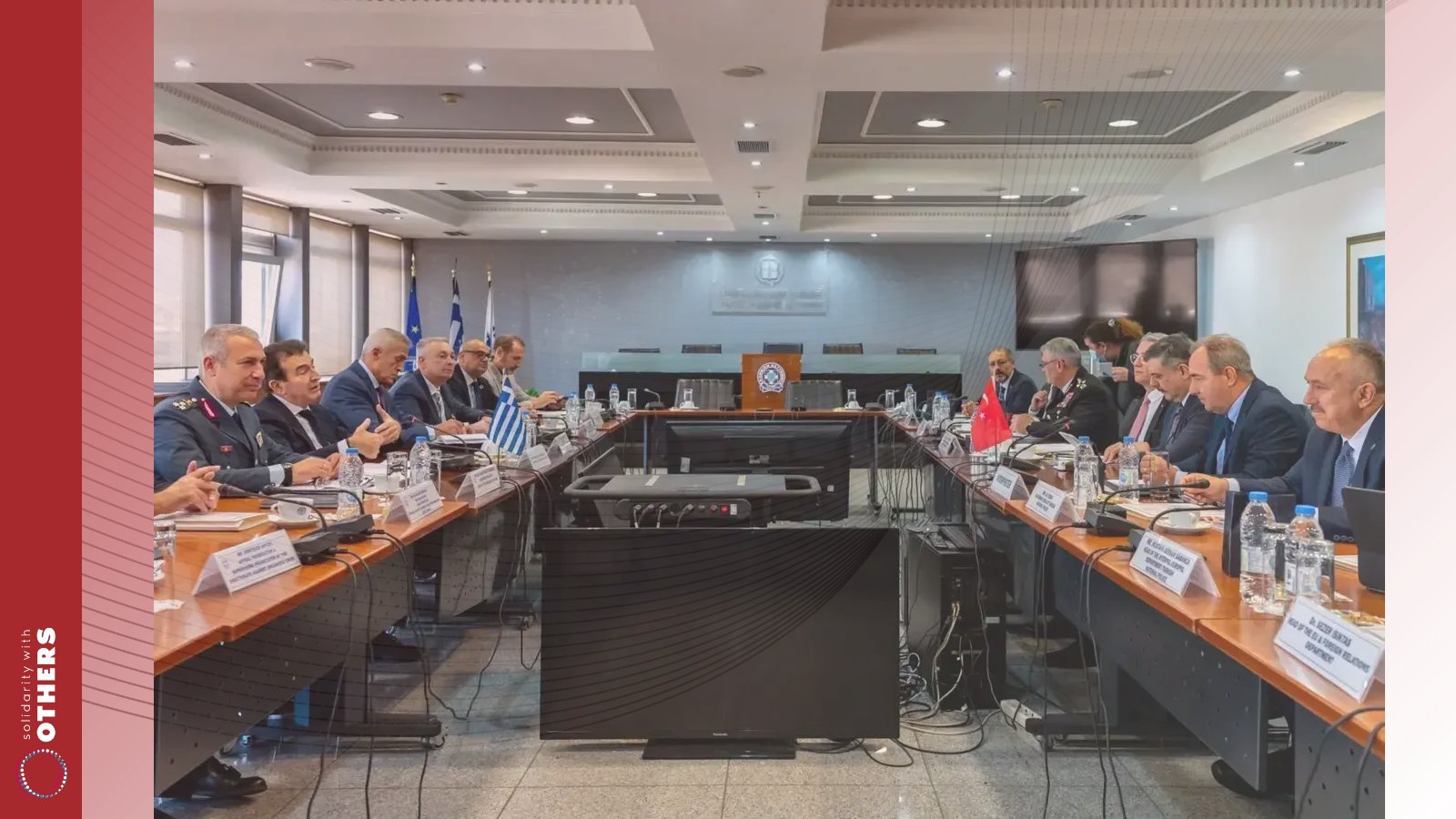
Turkish Interior Minister Mustafa Çiftçi travelled to Athens on 8 October and asked the Greek government to speed up extradition proceedings for 60 people he said were in Greece, and to return members of the Gülen movement, whom he accused of abusing refugee protections. He met Citizen Protection Minister Michalis Chrysochoidis and Migration and Asylum Minister Thanos Plevris.
No list of the 60 has been published. It is therefore not possible to establish which of the cases concern criminal offences and which concern people claiming political persecution. Nor, the Greek news site iefimerida notes, does it follow from Türkiye’s public statements that all 60 are linked to the Gülen movement.
Sources at the Greek Citizen Protection Ministry rejected the claim that an organised branch of the movement operates in Greece, and rejected equating Turkish nationals who have sought international protection with a criminal organisation.
A source familiar with the extradition files told iefimerida that no recent formal request appears to have been submitted for anyone prosecuted over Gülen links or on other political grounds. The requests Greece has received concern homicide, robbery and kidnapping.
The same source set out why a ministerial meeting cannot produce a return. An extradition requires a formal request, examined by prosecutors and the courts, with the possibility of appeal to the Areios Pagos; only after a final judicial decision does the justice minister act. The Citizen Protection Ministry’s competence covers police cooperation and cross-border crime, not the determination of extradition requests. An INTERPOL Red Notice may trigger location and provisional arrest, but does not of itself require extradition.
On that basis, iefimerida’s source reads Çiftçi’s public demands as an exercise of political pressure rather than an indication that any specific process is under way.
The Greek position as reported goes further than procedure. That Türkiye designates the Gülen movement a terrorist organisation is not by itself sufficient to establish a corresponding charge in the Greek legal order. Each case must be examined on its own facts and in the light of Greece’s international obligations.
Greece also told Çiftçi that its asylum procedures have been tightened compared with earlier years and that international protection must not be abused — while making clear that the grant of asylum cannot depend on Ankara’s political objectives.
The question has a precedent. Eight Turkish officers who flew a helicopter to Alexandroupoli after the July 2016 coup attempt were the subject of extradition requests that the Areios Pagos refused in January 2017, citing concerns for their safety and their prospects of a fair trial. They are now in various European countries, holding passports. Nothing connects them to the present list of 60.
A separate case runs alongside. Türkiye is seeking the return of the businessman Murat Gülibrahimoğlu, whom it describes as the “secret treasury” of the jailed İstanbul mayor Ekrem İmamoğlu. He applied for international protection in July and his application is under review. Greek police have denied Turkish reports that he was arrested, while confirming that extradition documents were received. He says the case against him is politically motivated. His case is not connected to the Gülen movement.
The United States and the European Union do not recognise Türkiye’s designation of the movement.
What Ankara asked for in Athens was faster proceedings. What the Greek account describes is proceedings that have not begun.
Sources:
1- iefimerida, “Η Τουρκία ζητά την έκδοση Γκιουλενιστών από την Ελλάδα: Το παρασκήνιο των πιέσεων – Τι απαντά η Αθήνα – Η λίστα των 60 προσώπων”, Antonis Telopoulos, 12 October 2026: https://www.iefimerida.gr/politiki/toyrkia-ekdosi-gkioyleniston-ellada-paraskinio-pieseon
2- Turkish Minute, “Turkey presses Greece to extradite Gülen-linked people”, 12 October 2026: https://www.turkishminute.com/2026/10/12/turkey-presses-greece-to-extradite-gulen-linked-people/