

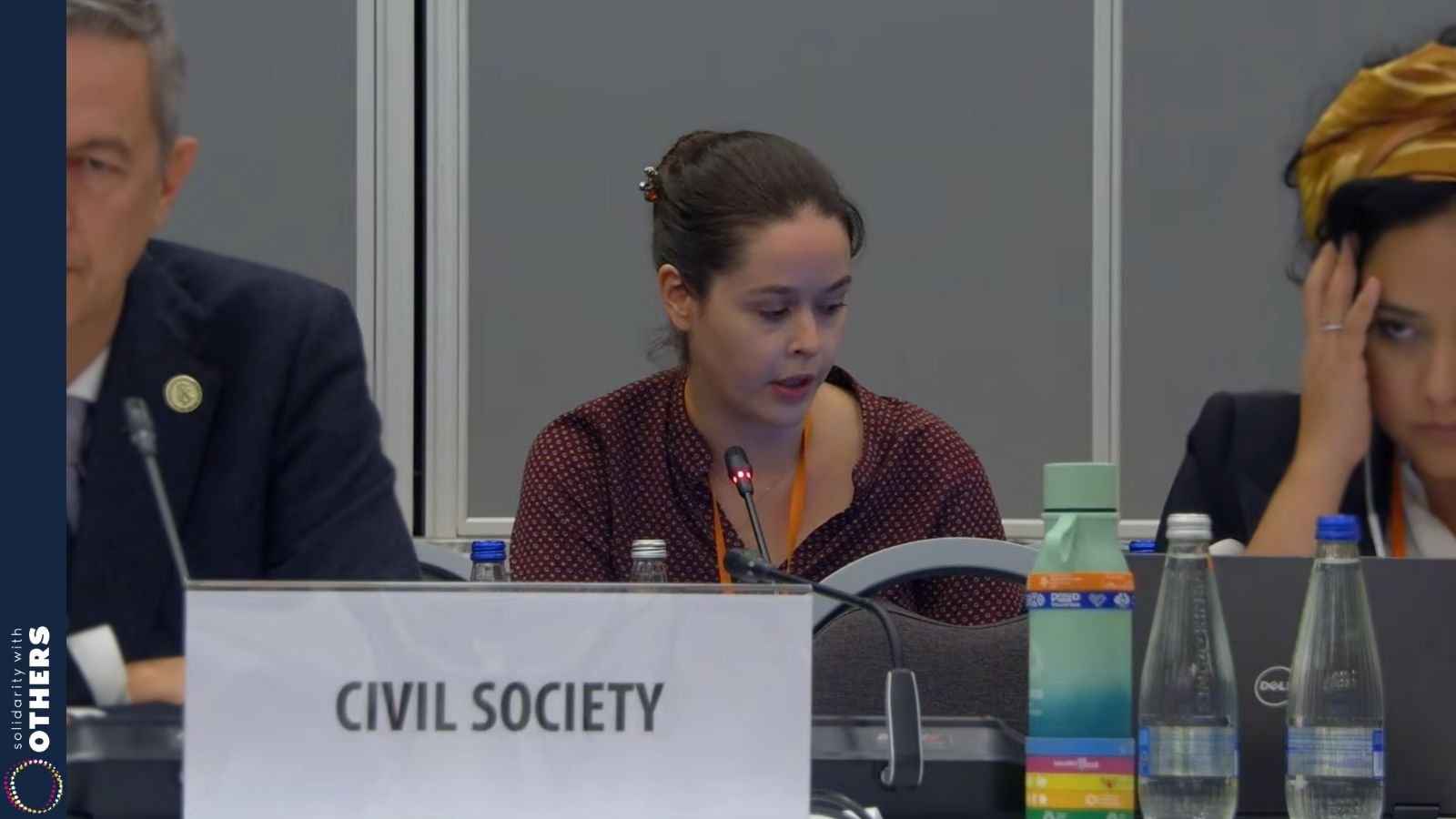
On 8 October 2026, during the fourth day of the OSCE Warsaw Human Dimension Conference in Poland, Ms. Claire DUNYACH, representing Solidarity With OTHERS, delivered an intervention urging participating States to prioritise combating hate speech as an essential part of addressing xenophobia, Islamophobia, antisemitism and religious intolerance.
The intervention took place during the plenary session on Tolerance and Non-discrimination, which focused on racism, xenophobia, discrimination and intolerance targeting religious communities.
Ms. Dunyach emphasised that hate speech should not be regarded as a secondary concern in efforts to combat intolerance. Beyond reflecting existing prejudices, hate speech actively contributes to spreading discrimination, normalising exclusion and creating conditions in which violence becomes easier to justify.
“We cannot meaningfully combat xenophobia, Islamophobia, antisemitism and religious intolerance while treating hate speech as a secondary concern.”
Artificial Intelligence Is Amplifying the Challenge
The intervention also addressed the growing role of artificial intelligence in generating and disseminating hateful content. AI technologies enable the rapid production of hateful messages and fabricated images, while algorithmic recommendation systems can significantly amplify their reach.
Ms. Dunyach warned that technological developments are transforming the scale and speed at which discriminatory narratives circulate, making effective prevention and accountability increasingly urgent.
As highlighted during our panel on AI, Hate Speech and Counter-Speech, organised at the same conference on 7 October, responding to these developments requires cooperation among public authorities, civil society and technology companies.
Three Priorities for OSCE Participating States
On behalf of Solidarity With OTHERS, Ms. Dunyach called for action in three key areas.
First, stronger cooperation between law enforcement authorities, civil society organisations and affected communities. Establishing dedicated contact points, accessible reporting mechanisms and joint training initiatives would help connect hate speech monitoring with appropriate investigations and victim support. Such cooperation must also protect victims’ confidentiality and the independence of NGOs.
Second, effective and proportionate accountability. Where hateful expression meets the legal threshold for criminal liability, authorities should ensure appropriate investigation and accountability, including when artificial intelligence is involved. However, measures against hate speech must respect freedom of expression and distinguish legitimate criticism of governments, religions or beliefs from unlawful incitement against individuals or communities. This distinction is also reflected in the United Nations Rabat Plan of Action.
Third, greater investment in prevention. Governments should support education, independent monitoring and community-led counter-speech initiatives. Technology companies should also assess how their systems generate or amplify hateful content, ensuring transparency and meaningful human oversight.
These priorities complement the OSCE/ODIHR’s work on combating hate crime, particularly its efforts to strengthen cooperation between institutions and civil society, improve victim protection and promote effective prevention.
Protecting Human Rights Through Prevention and Accountability
Concluding the intervention, Claire stressed that addressing hate speech is inseparable from protecting freedom of religion or belief and ensuring that everyone can participate in society without fear of discrimination or violence.
“Protecting freedom of religion or belief means ensuring that people can live openly and safely—not simply promising a response after they have been attacked.”
Solidarity With OTHERS reaffirmed its commitment to combating hate speech, promoting tolerance and advocating for human rights-based policies that combine prevention, accountability and the protection of fundamental freedoms.
The intervention formed part of the 2026 Warsaw Human Dimension Conference, held from 5 to 15 October and organised by the Swiss OSCE Chairpersonship with the support of the OSCE Office for Democratic Institutions and Human Rights (ODIHR).