

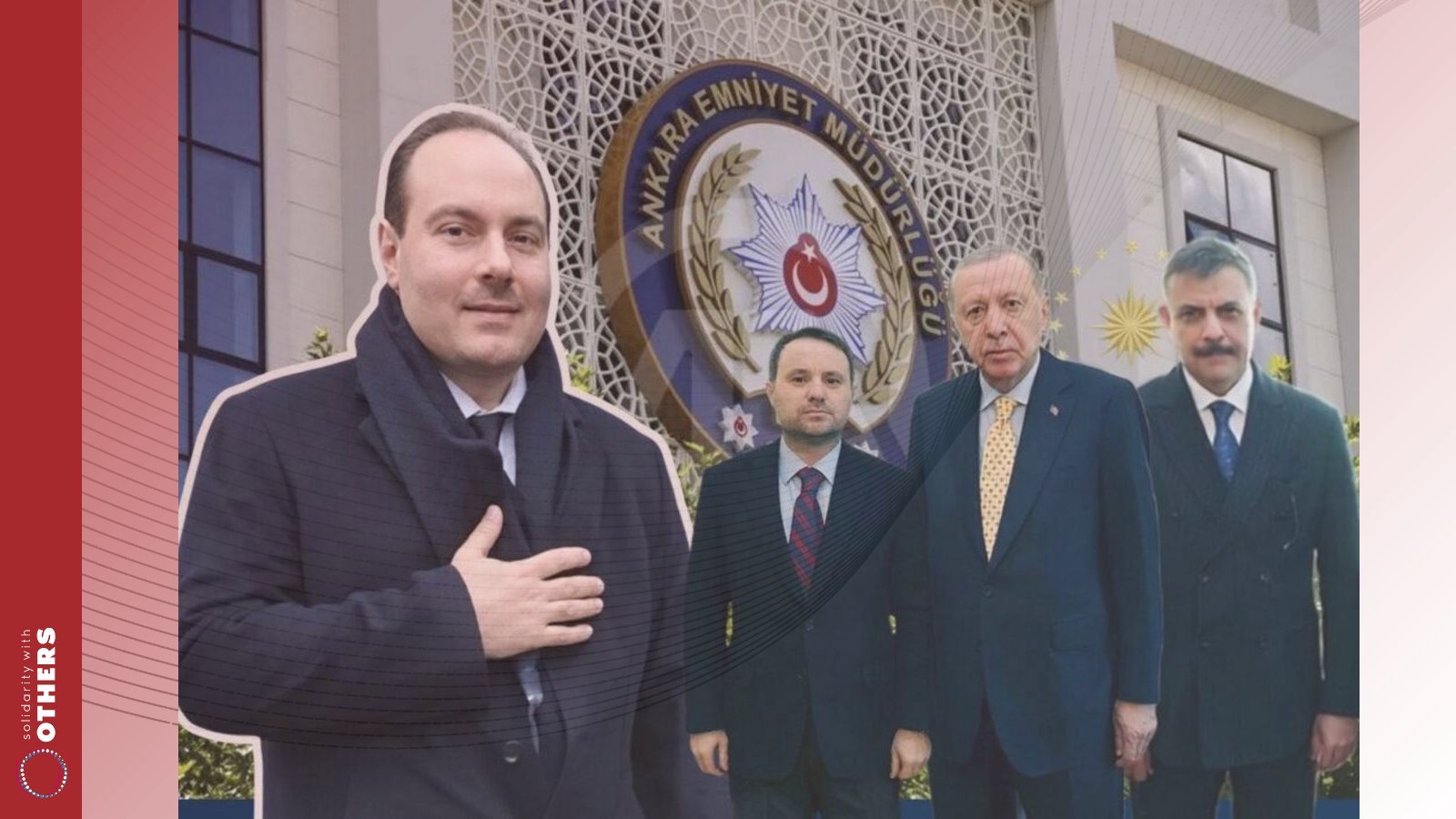
The Ankara Chief Public Prosecutor’s Office issued two press releases three days apart. On 19 October it announced an operation across twelve provinces, centred on Ankara, at twenty-eight homes and sixteen workplaces. Detention was ordered for thirty-eight people in investigation 2026/153745. Twenty-two were caught. Fourteen were established to be abroad. Two were still being sought.
On 22 October it announced the outcome. Twenty-four suspects were brought before the prosecutor in custody and referred to the Criminal Judgeship of Peace. Nineteen were remanded in custody. Five were placed under judicial control.
The second statement opens by describing “the 38 suspects taken into custody.” Thirty-eight were not taken into custody. The same office had written three days earlier that twenty-two were caught and fourteen were abroad. The figure of twenty-four is consistent with the two remaining suspects having been found after 19 October, and nineteen plus five does come to twenty-four. The arithmetic holds. The sentence describing it does not, and it is the sentence the wires reproduced.
The charges are not terrorism charges, and that distinction should be stated plainly rather than blurred. They are founding and directing a criminal organisation, membership of one, laundering the proceeds of crime, fraud against public institutions, and breaches of the Tax Procedure Law. The investigation opened on a report by MASAK, the financial crimes board, alleging an unusual rise in transactions since 2020, new high-capital companies in unrelated sectors, and more than 100 billion lira moved abroad. These are allegations and no court has ruled on them. Justice Minister Akın Gürlek has said the case targets financial structures and not religious views or communities.
What has been built since August is nonetheless a sequence.
On 13 August police searched eighty addresses belonging to thirty-three companies and forty-three suspects’ addresses across seventeen provinces. Alihan Kuriş, who has led the community since 2016 and is a grandson of its founder, was detained and remanded on 16 August. A second wave followed on 21 August in four provinces. A third on 25 August brought detention orders for fifty-four people and the appointment of trustees to eleven companies and three associations. His brother and ten others were remanded on 26 August. Five more companies were seized on 4 September. On 20 September detention was ordered for twenty-nine more people and trustees were appointed to twenty-three companies.
By 29 August, proceedings had been opened against 124 people. Eighty-one were in pre-trial detention, ten under judicial control, two in custody, twenty-seven still sought. Fifty companies and four associations had been seized and trustees appointed to fifty companies. No consolidated figure has been published since. Whatever the total is now, it is higher than that.
Three of the entities placed under trustees are associations, not companies. This community’s associations run Quran courses and student dormitories. Neither the prosecutor’s office nor any ministry has published how many dormitories are affected or how many students are in them.
The community was founded by Süleyman Hilmi Tunahan, who died in 1959. It passed to his son-in-law Kemal Kacar, an MP in 1965, 1969 and 1977, then in 2000 to his grandson Arif Ahmet Denizolgun, who was elected for Antalya in 1995 and served briefly as transport minister, and in 2016 to Alihan Kuriş. It was historically aligned with the centre right. After 2002 it remained outside the governing coalition. It backed the CHP in Antalya from 2009; under Kuriş it backed the İYİ Party in 2018 and opposition candidates in subsequent local elections. A branch of the founder’s family went the other way: Mehmet Beyazıt Denizolgun was an AKP founding member and MP, and his son Fatih Süleyman Denizolgun sat as an AKP MP from 2018 to 2023 and has publicly criticised Kuriş’s leadership. In 2025 President Erdoğan spoke of an “octopus” with reach into “some religious communities”; the journalist Ruşen Çakır read that as a reference to this one. That reading is his. No official document connects the community’s political choices to the investigation, and this post does not assert one. The chronology is set out because it is a matter of record.
One further element belongs in a European file.
On 19 October the pro-government newspaper Aydınlık reported that five “F-series one-dollar bills” had been recovered from a safe at a jeweller’s in Amasya part-owned by one of the detained suspects, and that “investigation units” assess the Kuriş structure as operating with a secrecy, hierarchy and regional leadership resembling FETÖ. The suspect is reported as saying he did not remember the notes and had received them from customers. No prosecutor is quoted for either proposition. No named official is quoted. The significance attributed to the banknotes is introduced with the words “it is alleged”, and the comparison is sourced to unnamed investigation units.
The marked dollar bill is the most criticised single item in the body of evidence used against the Gülen movement for a decade. It has been the subject of findings by the European Court of Human Rights about how Turkish courts treat such material. It has now appeared in a money-laundering and tax file against a different religious community, carried by a newspaper rather than by a prosecutor, three days before nineteen people were remanded.
Fourteen of the five waves’ targets were abroad on 19 October alone, and the case has already crossed a border by another route. On 10 September Gürlek confirmed: “We requested judicial assistance from Germany.” The community’s German federation, VIKZ, founded in Cologne in 1973 and one of the three principal Turkish-Muslim mosque networks in the country, is building a new headquarters there. Çiftçi described the project as a \$70 million investment. VIKZ says it costs €37.5 million, is financed by German bank loans, donations and volunteer labour, and that it has received no money from Türkiye. It called the coverage a smear campaign and said it would go to law in both countries.
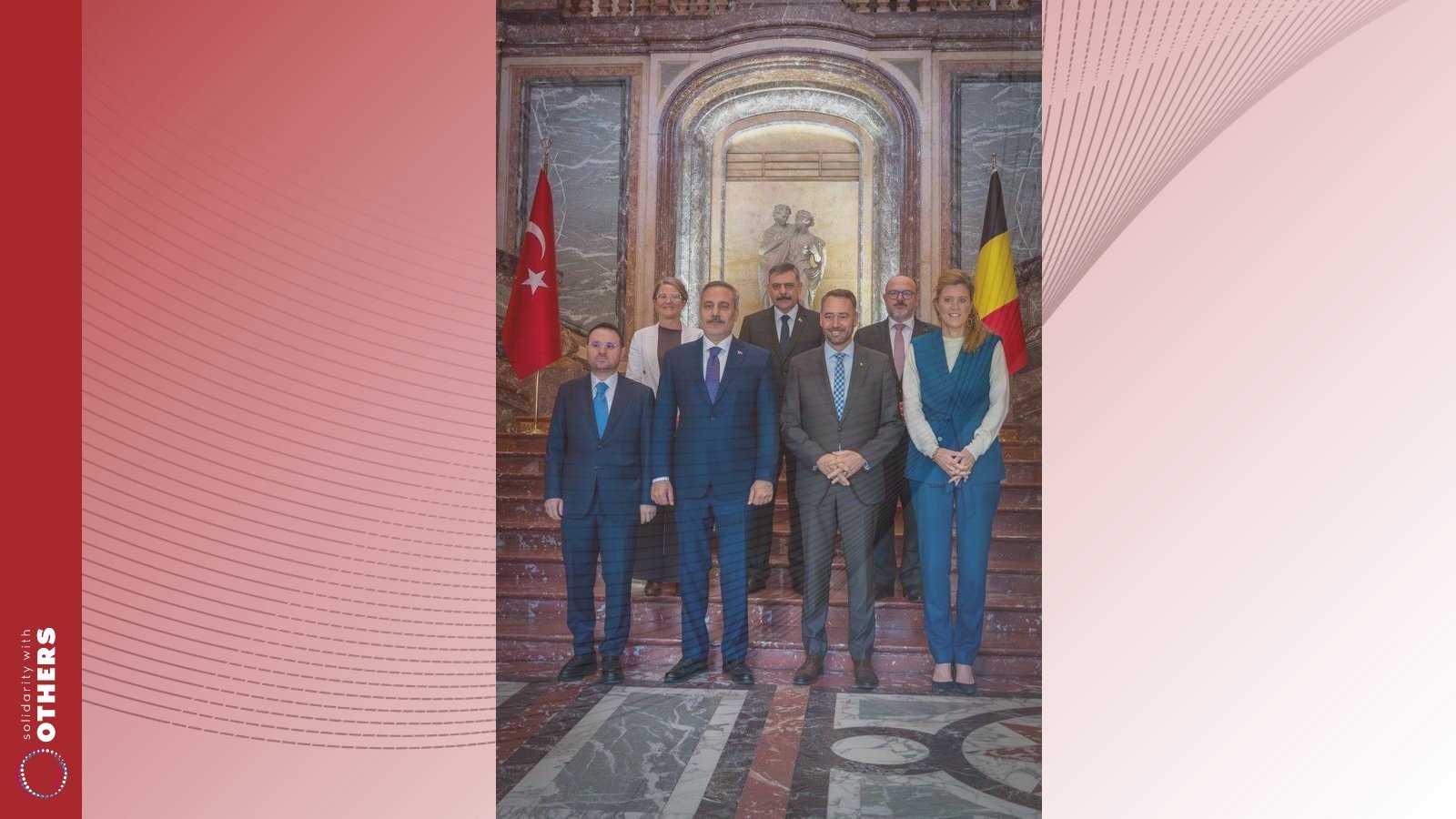
Six weeks later, in Brussels, the same justice minister asked Belgium for timely responses to judicial assistance requests.
A state that has spent ten years asking Europe to accept its characterisation of one religious community has begun building a second file, with different charges, the same instruments, and some of the same evidence.
Source-language note: The term “FETÖ” appears in this post as it was used in statements by Turkish ministers and in reporting by pro-government outlets. That designation is not adopted by our organisation, and it is not used by the United Nations, the European Court of Human Rights, the Council of Europe or the European Union.
Sources:
1- Ankara Chief Public Prosecutor’s Office, Media Communication Bureau, press statement, 19 October 2026: https://x.com/ankaracbs/status/2112051958244581423
2- Ankara Chief Public Prosecutor’s Office, Media Communication Bureau, press statement, 22 October 2026: https://x.com/ankaracbs/status/2113360741772255495