


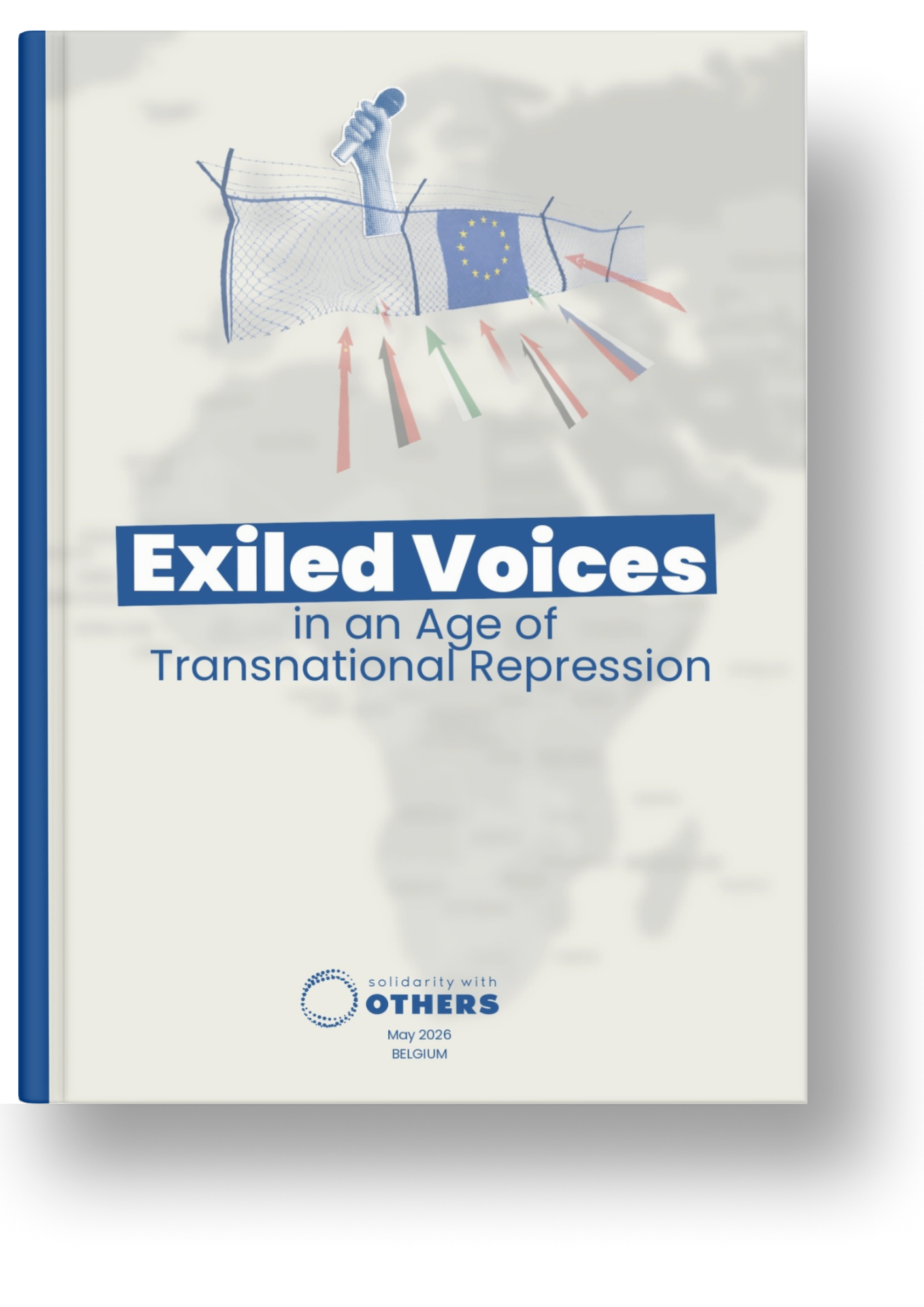
The report examines how exile reshapes journalism for reporters, editors, filmmakers, cartoonists, bloggers, and other media workers forced to leave their countries because of their work. Based on 25 interviews with exiled, displaced, and at-risk media workers from 15 countries across 9 displacement or host-country settings in the EU, the report shows that exile rarely brings either safety or professional stability: most participants continued reporting after displacement, yet almost all described ongoing transnational repression, online harassment, legal insecurity, financial precarity, and profound psychological strain. By centring the experiences of journalists themselves, the report highlights how repression travels across borders and identifies the protection gaps that leave exiled journalists struggling to remain safe, visible, and professionally active.
Dr. Fikret DEMIRCIVI
Irem SECKIN
1. Introduction
1.1 Background and Context
In many parts of the world, independent journalism is carried out under growing pressure. Journalists who report on corruption, human rights abuses, conflict, or politically sensitive issues increasingly face censorship, criminalisation, intimidation, and violence. For some, these pressures escalate to the point where remaining in the country is no longer possible. Exile has therefore become an increasingly common consequence of public-interest journalism.
Yet exile rarely brings journalism to an end. As this report shows, many journalists continue to report after displacement, often with a strong sense of professional duty and public responsibility. At the same time, exile fundamentally changes the conditions under which that work is done. Journalism that was once rooted in familiar newsrooms and professional networks must often continue through unstable legal status, limited income, weak institutional support, and fragmented publishing spaces.
Exile also does not bring a clean end to danger. The interviews show that many journalists continue to face threats abroad, including online harassment, pressure on relatives, document-related coercion, and other forms of transnational repression. In this sense, exile often shifts rather than ends vulnerability. This study was developed to examine that reality through the experiences of exiled journalists themselves: how they continue their work, what challenges they face in doing so, and what kinds of protection and support are needed in response.
1.2 Objectives of the Report
This report was conceived in response to a growing need to document and analyse the conditions under which exiled and displaced journalists continue to work. Its first aim is to map the professional profiles and pathways into exile of the interviewees, highlighting both the diversity of their backgrounds and the recurrent patterns that emerge across cases. Its second aim is to examine how journalistic practice is reconfigured in exile, including the determination to keep reporting, the editorial priorities that persist or shift, and the growing importance of diaspora media and alternative publishing platforms.
The report was also shaped by Solidarity with Others’ broader human rights work on transnational repression. As part of that work, exiled journalists emerged as a group facing particularly acute forms of cross-border pressure, including online harassment, digital threats, pressure on relatives, document-related coercion, and ongoing fear linked to return, surveillance, or exposure abroad. For that reason, the research was designed to ask not only how journalists flee, survive, and continue working in exile, but also how repression persists after departure and how these cross-border pressures reshape journalistic practice, safety, and everyday life.
A third objective is to identify the forms of threat and constraint that shape journalists’ lives after displacement, including transnational repression, legal insecurity, financial precarity, digital harassment, professional exclusion, and the psychosocial toll of separation from home and family. Finally, the report draws on these findings to assess the adequacy of existing protection and support mechanisms and to propose recommendations for policy makers, media organisations, journalist networks, and civil society actors seeking to support displaced media workers more effectively.
In pursuing these goals, the report does more than compile testimony. It situates individual experiences within wider structural dynamics: the shrinking space for civic participation, the misuse of legal and technological instruments to silence criticism, and the gaps between asylum systems, press-freedom initiatives, and human-rights frameworks. By foregrounding the voices of journalists themselves, the report seeks to move beyond abstract debate and provide evidence-based analysis that can inform advocacy, programming, and institutional reform. Its purpose is not to romanticise resilience, but to understand the conditions under which journalism persists in exile and the structural changes needed to protect it.
1.3 Methodology
The findings presented here are based on a qualitative research design centred on semi-structured interviews with exiled, displaced, and otherwise at-risk media workers. Between November 2025 and April 2026, 25 in-depth interviews were conducted with exiled journalist/media workers originating from 15 countries and situated across 9 displacement or host-country settings in the EU. Participants were selected through purposive sampling in order to ensure diversity in gender, geography, professional role, country of origin, and context of displacement.
The interview sample includes journalists working across a range of media forms and professional positions, including reporters, editors, broadcasters, documentary filmmakers, photojournalists, cartoonists, bloggers, and journalist-activists. While the report focuses primarily on exiled journalists, the broader sample also includes participants experiencing internal relocation, prolonged displacement, or acute risk while still located in or near their countries of origin.
The interviews were conducted in two formats. Some participants took part in live interviews through video-conferencing platforms, while others provided written responses to the interview questions. This flexible format was used to accommodate participants’ safety concerns, availability, language preferences, and personal circumstances. Where participants submitted written answers in languages other than English, these responses were translated into English by the research team for the purposes of analysis. No external interpretation service was used during the interviews.
All live interviews were conducted with the informed consent of participants. Where interviews were recorded, this was done only after permission had been obtained. Written responses were likewise collected with participants’ consent and used solely for the purposes of this research. Throughout the research process, particular attention was paid to minimising risk. Identifying details were removed or altered where necessary, and all quotations in the report are attributed by interview number rather than by name in order to reduce the risk of retaliation.
Quantitative descriptors derived from this coding process are used in later sections to illustrate recurring patterns across the sample; they are intended as analytical indicators within a qualitative study and do not imply statistical representativeness.
This methodology has several limitations. The sample is purposive and not statistically representative of all exiled journalists. The use of both live and written interview formats also means that the depth, tone, and spontaneity of responses vary across cases. In addition, security concerns may have affected what some participants felt able to disclose, especially on questions relating to family members, documentation, digital threats, and ongoing pressure from home-country authorities. Nevertheless, the testimonies collected provide rich and detailed insight into a phenomenon that remains under-documented and urgently requires more coherent policy attention.
|
Interviews in total |
35 |
|
Interviews for consideration of this report |
25 |
|
Origin countries |
15 |
|
Host countries in the EU |
9 |
2. Profiles of Journalists and Pathways into Exile
|
ð The interviewees came from diverse professional and political contexts, but their pathways into displacement were structurally similar.
ð Exile was typically triggered by an accumulation of pressures rather than a single isolated incident, with immediate threat recorded in 24 of the 25 interviews.
ð Their pathways into displacement were shaped by repression, and that repression frequently began with acts of journalism that, in democratic settings, would be understood as ordinary public service.
|
The interviews reveal a diverse but analytically coherent group of exiled and displaced media workers. They come from a wide range of political, linguistic, and professional contexts, yet their testimonies converge around a recognisable pattern: journalism placed them in direct confrontation with repression, and exile emerged not as a private lifestyle decision but as a consequence of that confrontation. Across the sample, participants described careers rooted in public-interest reporting, often in environments where exposing corruption, documenting abuses, or amplifying marginalised voices could quickly become life-threatening.
According to the interview data, the sample spans 15 countries of origin and 9 host-country settings, underscoring that the dynamics described in this report are not limited to a single region or regime type. Rather, they reflect recurring patterns across authoritarian, conflict-affected, and severely polarised contexts. The interviewees include reporters, editors, broadcasters, documentary filmmakers, photojournalists, cartoonists, bloggers, and journalist-activists. Some worked in mainstream national media before exile; others built careers in independent outlets, local platforms, or hybrid spaces between journalism, rights advocacy, and cultural production. What unites them is not institutional similarity, but the fact that journalistic work exposed them to escalating pressure.
2.1 Backgrounds and Professional Profiles
The professional profiles in the interviews are strikingly varied, but several common features stand out. First, many participants were already established journalists before displacement. They had worked for national or local newspapers, television and radio stations, independent digital outlets, documentary projects, or international media partners. Some held formal journalism degrees; others entered the profession through practice, freelancing, or community media. Several had spent years building expertise in politically sensitive areas such as corruption, protests, women’s rights, state violence, minority issues, migration, or social justice.
Their work was often closely tied to accountability reporting. A number of interviewees focused on state abuses, unlawful detention, censorship, torture, corruption, or violence against women and minorities. These were not incidental or occasional topics. For many, they formed the core of their professional identity.
“My work mainly focused on corruption, governance, women’s rights, domestic violence, and social injustice.”
— Interview 6
“My main activities also included covering human rights issues… collecting information about political detainees, execution statistics, arrests, and political prisoners.”
— Interview 1
The interviews also show that many participants occupied hybrid professional roles even before exile. Some combined reporting with producing, editing, translating, teaching, documenting, or advocacy work. This was particularly visible in conflict or low-resource settings, where professional survival already required adaptability. Exile intensified this hybridity but did not create it from nothing. Several participants had long navigated blurred boundaries between journalism, human rights documentation, and public-interest communication.
At the same time, the sample includes important internal differences. Some interviewees had worked inside recognised news organisations with some degree of editorial infrastructure, while others operated in freelance, informal, or politically exposed environments with very limited institutional protection. This matters because it shaped how exile was experienced. For journalists already working precariously, exile often deepened existing insecurity. For those coming from more formal media institutions, exile often meant a sharp fall from recognised professional status into fragmented and uncertain modes of work.
Another notable pattern concerns the political meaning of journalism itself. In a number of cases, participants stressed that the issues they covered were not automatically “political” in a narrow sense when they began their careers. Reporting on women’s rights, local corruption, public services, legal rights, or social inequality became politically explosive because the governing environment made independent reporting intolerable. In that sense, the interviews show that journalism did not become dangerous only when participants covered elections, opposition parties, or overtly political conflict. In many settings, ordinary public-interest reporting was enough to trigger repression.
2.2 Triggers and Decisions to Flee
The interviews made clear that decisions to flee were rarely impulsive or arbitrary. In most cases, leaving followed a cumulative process in which pressure intensified over time until remaining became untenable. Journalists described escalating threats, arrests, interrogations, raids, smear campaigns, professional bans, family intimidation, and repeated warnings to stop reporting. For some, one event crystallised the danger. For others, the decision came after years of mounting persecution.
One interviewee described this process in particularly clear terms:
“My decision to leave was not a spur-of-the-moment escape; it was the culmination of years of persecution.”
— Interview 11
According to the interview statistics, immediate threat was recorded in 24 of 25 cases (96%), indicating that decisions to flee were most often driven by acute danger rather than by long-term career frustration or economic aspiration. At the same time, complex journeys to safety were recorded in 8 cases (32%), showing that flight itself was frequently prolonged, unstable, and dangerous rather than swift or linear.
The interviews reveal two principal triggers for flight – exposure of corruption and state abuses, and immediate threats to life and liberty – as well as a third recurring pattern: complex and uncertain pathways to safety.
2.2.1. Exposure of corruption and state abuses
A recurring trigger across the interviews was the act of documenting corruption, impunity, or abuse by state and quasi-state actors. In several cases, journalists described how investigations into misconduct, political patronage, illicit financial flows, torture, prison conditions, or violence against civilians directly provoked retaliation. In such contexts, public-interest reporting was treated not as a legitimate profession, but as a hostile act.
For some, the danger arose from exposing corruption in state institutions. For others, it came from documenting violence by security forces or politically protected actors. What these cases share is a common mechanism: journalism became intolerable when it threatened powerful interests.
“At the time I was working undercover on a story about illegal money flows; my cover had been blown.”
— Interview 13
“One particular cartoon satirised a minister accused of corruption.”
— Interview 22
In other interviews, the trigger lay in documenting structural abuse rather than financial corruption as such. Reporting on torture, disappearances, unlawful arrests, violence against women, or the repression of protest movements exposed journalists to the same logic of retaliation. In these settings, the state or dominant political actors treated scrutiny itself as subversion.
“The raid on our association and the arrest of colleagues convinced me that there was no safe space left.”
— Interview 19
This pattern is analytically significant because it shows that exile was a response to the closure of civic and institutional space. Journalists fled not simply because they were personally disliked by public, but because the political environment had narrowed to the point where accountability reporting itself became punishable.
2.2.2. Immediate threats to life and liberty
If exposure of abuse formed one layer of the trigger, immediate threat formed another. In the dataset, almost all interviewees – 24 out of 25 (96%) – were coded as having faced an immediate threat. In other words, exile was rarely a distant precaution. It was usually a response to danger that had already become concrete: arrest, detention, beatings, torture, raids, death threats, physical attack, or credible warnings of imminent harm.
The evidence here is direct and often stark. Participants described being arrested during protests, detained after publication, beaten by security forces, threatened by armed actors, or warned that they would be killed if they continued. In several cases, these threats clearly crossed the threshold from professional intimidation into the realm of survival.
“They sent me a message: you have to cut your tongue or we will cut it.”
— Interview 10
“When my mother said, ‘They’re going to kill you, you have to go,’ I packed my bag and boarded a flight to Brussels.”
— Interview 14
“The arrest and beating I suffered at the hands of security forces… was the clearest sign that I was no longer safe in my own country.”
— Interview 11
“First, I had already been imprisoned. Second, I was facing the risk of being imprisoned again.”
— Interview 24
“We kept seeing people being taken away to be tortured and then brought back. We were waiting for our turn.”
— Interview 24
“They cancelled my press card, my passport, and my credit cards. In short, they condemned me and my family to hunger, and then they imprisoned us.”
— Interview 25
These accounts suggest that exile was not merely pre-emptive or precautionary for most participants. It followed concrete exposure to violence, detention, or a credible threat of either.
The interviews also show that immediate threat came from a wider range of actors, including militias, extremist groups, regime supporters, armed political movements, and other non-state actors acting with impunity or informal political backing. Another dimension is the gendered character of some threats, as women journalists and LGBTQ+ journalists were targeted as critics and as people marked for punishment and/or shame.
2.2.3. Complex journeys to safety
The pathways into exile were often neither immediate nor orderly. Reaching safety could involve internal relocation, prolonged hiding, repeated border crossings, insecure transit, detention in third countries, or months and years spent in legal limbo before stable protection was secured. Exile, in other words, was often a process rather than a moment.
According to the current interview statistics, 8 interviewees (32%) experienced a complex journey to safety. These journeys included repeated movement between countries, periods of undocumented or irregular status, internal displacement, and extended stays in transit environments where safety remained partial or uncertain.
“I spent in Lebanon like one year and two months hiding because I don’t have visa.”
— Interview 10
For some, leaving the country did not immediately mean reaching protection. Instead, it meant entering a second period of insecurity shaped by informal routes, temporary shelter, repeated relocation, or fear of arrest in neighbouring states. One participant described a journey that should have taken hours but stretched into days under conditions of danger and uncertainty. Others moved house repeatedly, hid for months, or relied on emergency assistance and improvised networks to avoid being returned.
The interviews also show that “exile” did not always mean straightforward international displacement. One participant described repeated internal relocation and hiding within Iraq rather than permanent departure abroad. Another remained in Afghanistan despite acute danger, describing the impossibility of safe departure and the refusal of authorities to issue passports. These cases complicate any narrow distinction between exile, displacement, and internal flight.
Complex journeys also shaped later experiences in exile. Those who reached host countries after long periods of transit, hiding, or unstable documentation often arrived already exhausted, indebted, traumatised, or socially isolated. In this sense, the pathway to safety was not separate from the later experience of exile. It formed part of it.
3. Journalism in Exile: Continuity, Practice and Editorial Priorities
|
ð Exile rarely ended journalism outright: 24 of the 25 interviewees continued journalistic work either actively or occasionally after displacement.
ð Reporting remained strongly oriented toward the country of origin: 15 interviewees identified home-country politics and rights as their main focus, and 20 did so across either their main or secondary focus.
ð Journalism in exile emerged as a decentralised and hybrid practice, sustained through diaspora media, social media, host-country outlets, and advocacy platforms rather than through a single stable institutional pathway. |
Exile did not bring journalism to an end for most interviewees. Instead, it altered the conditions under which journalism could be practiced. Through the interviews, participants described a profession displaced from conventional newsrooms into more precarious and transnational spaces. Reporting continued, but often without stable contracts, recognised accreditation, adequate equipment, or secure legal status. In this sense, exile restructured professional trajectories.
A clear pattern emerges from the interviews. Journalism in exile is marked by both continuity and rupture. Continuity appears in the persistence of professional identity, the ongoing commitment to reporting, and the sustained focus on public-interest issues in the country of origin. Rupture appears in the loss of institutional protection, the weakening of professional routines, and the shift toward informal, project-based, or platform-dependent forms of work. Many participants no longer operated within stable editorial structures, but they had not ceased to act as journalists. Their work continued through diaspora outlets, social media, community platforms, advocacy networks, documentary projects, and hybrid forms that combined journalism with activism, translation, teaching, or cultural production.
3.1 Determination to Continue Reporting
One of the clearest findings across the interviews is that most participants continued to report in some form after displacement, even when exile brought challenges. This continuity should not be mistaken for evidence that exile is manageable. On the contrary, many interviewees described exile as a condition that made journalism far more difficult. Yet they also described the decision to continue as a matter of obligation, identity, or conscience.
Several participants stated explicitly that journalism was more than employment. It was described as a duty toward society, a way of defending truth, or the only remaining means of speaking for people who had been silenced. Those silenced are typically direct or indirect victims of state repression (those personally targeted, as well as their families and communities), unable to speak out due to fear of reprisal or lacking any platform on which to be heard. This language of obligation appeared across different national contexts and political backgrounds. For some, the decision to continue was tied to imprisoned colleagues, disappeared activists, women denied a public voice, or communities facing sustained persecution without international attention. For others, continuing to report was itself an act of resistance against authorities seeking to force them into silence.
“If I stop talking, who will speak for the women after me?”
— Interview 11
“Drawing and writing are not just jobs for me; they are tools to tell stories for those who cannot speak.”
— Interview 22
This determination does not mean that participants were unaffected by pressure. A significant number said they had considered stopping journalism at different moments. These moments were usually linked to acute material hardship, the danger posed to family members, accumulated trauma, or the exhaustion of rebuilding life in exile. In several cases, participants described periods of pause, reduced output, or a shift away from frontline reporting. Yet even where professional practice became intermittent, the underlying journalistic identity remained intact. Those who reduced their output generally describe this as a temporary response to insecurity and insufficient resources.
Exile rarely brought journalism to a complete stop. 22 interviewees (88%) remained actively engaged in journalistic work, while 2 (8%) described more occasional, reduced, or intermittent forms of practice. Only 1 interviewee (4%) reported a full pause or suspension of journalistic activity, indicating that exile more often produced constrained continuation than complete professional withdrawal.
At the same time, this continuity should not be romanticised. The ability to keep reporting often depended on unpaid labour, unstable project funding, side jobs, borrowed networks, and the willingness to work with very limited resources. In that sense, the determination to continue is one of the defining features of exile journalism, but it is also one of the clearest indicators of the absence of durable support structures.
3.2 Editorial Focus and Choice of Topics
The interviews show a marked continuity in editorial focus. Most participants remained primarily oriented toward their countries of origin, especially toward issues of repression, human rights violations, censorship, corruption, political prisoners, gender-based violence, and the shrinking space for dissent. Exile changed the place from which journalism was produced, but it did not fundamentally sever the connection between journalists and the political realities they had been forced to leave.
This was particularly evident among participants from contexts of authoritarian rule. Their work in exile continued to centre on documenting state violence, abuses by security actors, attacks on civil society, and the experiences of communities under pressure. For many, exile sharpened rather than diluted this orientation. Reporting from abroad was seen as necessary precisely because domestic journalists had been intimidated or driven underground.
“I try to tell what is happening inside the country from the outside, because inside voices are being silenced.”
— Interview 21
“Very few people document sexual violence, the killing of journalists and the shooting of children in Sudan.”
— Interview 11
At the same time, exile also broadened journalistic agendas. Many participants developed a secondary or parallel focus on displacement itself. Themes such as exile, migration, identity, and diaspora life became increasingly prominent. Some documented the practical realities of rebuilding life in host countries; others examined the political divisions and solidarities within exile communities. A number of participants also reported on refugee precarity, host-country integration, and the social costs of living between legal systems, languages, and public spheres.
While 15 interviewees (60%) identified home-country politics and rights as their main current focus, that share rises to 20 (80%) when their secondary focus is included, showing how strongly exile journalism remains oriented toward the country left behind. At the same time, 13 interviewees (52%) also addressed exile, refugees, or diaspora as part of their ongoing editorial agenda.
3.3 Diaspora Media and Alternative Platforms
One of the clearest practical consequences of exile was the growing importance of diaspora media and alternative publishing platforms. For many participants, these were not secondary outlets but the primary spaces through which journalistic work could continue. In the absence of stable access to mainstream host-country media, diaspora platforms provided editorial space, audience reach, and a degree of professional continuity. They also allowed journalists to keep reporting in their own languages and to remain connected to publics in their countries of origin and transnational communities abroad.
According to the interview data, 16 interviewees (64%) published through diaspora media as a primary or secondary outlet, while 16 of them (64%) relied on social media as a direct publishing channel. 7 interviewees (28%) published through host-country media, and 5 (20%) through NGO-linked or advocacy platforms. Together, these figures indicate a mixed and highly decentralised publishing ecology rather than a single dominant institutional pathway.
“I don’t work in a formal newsroom, but I use social media, interviews and solidarity networks to make my voice heard.”
— Interview 11
“Mostly through independent European platforms… I also use social media because sometimes it’s the only direct channel.”
— Interview 21
Diaspora media perform several functions at once. First, they preserve access to linguistic and political communities that may be unreachable through host-country outlets. Second, they provide space for stories that mainstream media often neglect, including detailed reporting on repression and the everyday consequences of authoritarian rule. Third, they offer symbolic and practical continuity for journalists whose professional identities were disrupted by exile. Publishing in diaspora media often enables displaced journalists to remain visible. However, several participants also noted that diaspora media themselves are often underfunded, dependent on short-term grants, or too small to provide regular income. Their existence sustains journalism, but usually under precarious conditions.
At the same time, the interviews make clear that reliance on diaspora and alternative platforms is also a sign of exclusion. Some participants did not choose these channels because they were preferable in every respect. They used them because mainstream newsrooms in host countries were often difficult to access. Barriers included language, non-recognition of prior qualifications, limited professional networks, lack of accreditation, and uncertainty around legal status or work permits.
Another recurring pattern is platform hybridity. Many interviewees no longer occupied a single professional role. The same individual could function simultaneously as reporter, editor, documentary maker, translator, commentator, trainer, content creator, or organiser. Their work often circulated across several spaces at once: a diaspora outlet, a personal page, a rights organisation, a local platform, and a host-country publication. This hybrid model reflects both adaptability and institutional absence. It expands the range of possible outputs, but it also places more technical, financial, and editorial responsibility on the individual journalist.
4. Risks, Barriers, and Forms of Pressure
|
ð Exile reduced some immediate risks, but it rarely produced complete safety.
ð Repression frequently travelled across borders: transnational repression was recorded in 24 interviews, family pressure in 21, and online harassment in 24.
ð Digital pressure more often reshaped journalism than ended it, with full self-censorship recorded in only 3 interviews, while protective editing alone appeared in 16.
ð Legal insecurity, language barriers, financial precarity, and weak professional recognition in host countries operated together as forms of structural attrition.
|
If Section 3 shows that exile rarely ends journalism, this section shows the conditions under which that journalism is forced to continue. The interviews describe a layered risk environment in which threats from the country of origin travelled across borders while new legal, economic, linguistic, and professional barriers emerged in the host country. Pressure was rarely singular or sequential. Journalists often faced several forms of insecurity at once: transnational threats, family intimidation, online harassment, administrative precarity, economic instability, and long-term psychological strain.
Across the sample, these pressures were cumulative. Threats experienced before departure often continued in new forms after displacement. For many participants, exile reduced the immediate risk of imprisonment or physical assault, but it did not eliminate surveillance, smear campaigns, family targeting, or professional marginalisation.
4.1 Transnational Repression and Cross-Border Threats
One of the clearest patterns in the interviews is that the risks prompting exile often continued across borders in altered form. For almost all interviewees, the country of origin continued to exert pressure after departure, either directly through legal and administrative measures or indirectly through threats, smear campaigns, surveillance, and pressure on relatives. In this sense, exile did not mark the end of persecution but its reconfiguration.
Participants described a wide range of cross-border practices. These included ongoing criminal files, arrest warrants, blacklists, passport cancellations or refusals to renew passports, asset freezes, threats of arrest upon return, and pressure through family members who remained in the country of origin. In several cases, relatives were questioned, monitored, denied documents, or otherwise penalised because of the journalist’s work. Family members were not incidental to the machinery of repression; they were often used as leverage.
“Our authorities, they use pressure to our relatives as a weapon for us.”
— Interview 5
“So, while I am physically safe in Germany, psychological pressure from afar continues.”
— Interview 11
“We try to write under pen names rather than our own names. The moment we write under our real names, we turn ourselves into targets.”
— Interview 25
“Being abroad does not give you that kind of freedom. They simply do not leave you alone.”
— Interview 25
The data also suggest that transnational repression was not limited to official state institutions acting openly. In many cases, it appeared through more ambiguous channels: ruling-party supporters, state-aligned media, troll networks, politically connected intermediaries, or diaspora actors sympathetic to authorities back home. Several participants avoided embassies or consulates altogether because they saw them not as sources of protection but as potential sites of questioning, document denial, or intimidation. Others described travel limitations arising from being placed on lists, having their passport status altered, or fearing detention outside a limited set of safe jurisdictions.
The interviews further show that transnational repression may extend into transit countries and neighbouring states. One participant described being identified and kidnapped in a neighbouring country. Others spoke of being forced to move houses repeatedly, hiding for months, or limiting public visibility because of cross-border threats from authorities or their supporters. These testimonies show that repression may continue long before a journalist reaches a stable host-country environment.
Based on the interview data, transnational repression was coded at a moderate or severe level in 24 interviews (96%), while family pressure was recorded in 21 interviews (84%), with two additional cases remaining unclear. These figures indicate that exile frequently failed to sever the operational reach of home-country authorities or their proxies.
4.2 Online Harassment and Digital Attacks
Online harassment was one of the most widely shared experiences across the interviews. Participants described insults, disinformation, coordinated smear campaigns, explicit threats, doxxing, account targeting, phishing, suspicious login attempts, hacking, and concerns about spyware. These attacks were not peripheral to their professional lives. For many, digital hostility formed part of the ordinary environment of exile journalism.
The platforms mentioned most often included Facebook, X/Twitter, WhatsApp, Telegram, Instagram, and online comment sections. The attacks usually reflected the linguistic and political environments of the countries of origin. This is significant because it shows that digital attacks were not random or generic. They were often directed at journalists by people familiar with their reporting, identity, or audience.
“They sent me a message: you have to cut your tongue or we will cut it.”
— Interview 10
“To protect sources and family, I avoid naming individuals, but I still report the facts.”
— Interview 16
Many participants described being labelled “traitors,” “agents,” “terrorists,” “spies,” “Western puppets,” or “apostates.” Others reported sexualised insults, threats against family members, or repeated warnings to stop publishing. In some cases, the harassment appeared clearly coordinated. Participants referred to troll activity, repeated talking points, simultaneous attacks, and the use of multiple platforms to amplify the same discrediting narratives.
Digital threats also had clear professional consequences. Only a small minority described full self-censorship. Much more common was what may be called protective editing: omitting names, hiding locations, delaying publication, avoiding references to relatives, or reducing the visibility of sensitive material online. These accounts suggest that the main effect of online abuse was not always silence in an absolute sense. More often, it narrowed safety margins, increased caution, and shifted reporting into more defensive forms.
According to the interview data, online harassment was recorded in 24 interviews (96%), while digital attacks were recorded in 17 interviews (68%). Full self-censorship was recorded in 3 interviews (12%), while protective editing alone appeared in 16 interviews (64%). These figures suggest that digital pressure rarely silenced journalists completely; more often, it forced them into defensive forms of continuation and reshaped their reporting practices.
This distinction matters. The impact of digital attacks should not be measured only by whether a journalist stops publishing. It should also be understood in terms of the added labour of self-protection, the chilling effect on source relations, and the narrowing of what can be published openly and safely.
4.3 Gender-Based Violence and Targeted Abuse
Gender-based violence and targeted abuse formed a distinct layer of risk within the broader environment of repression. This was particularly visible in the testimonies of women journalists, journalists reporting on women’s rights, and journalists targeted because of sexual orientation or gender expression. In these cases, the abuse explicitly gendered, sexualised, or homophobic.
Women journalists described being targeted through insults that framed them as immoral, shameful, or corrupted by foreign influence. In some interviews, gendered repression also appeared as a direct attempt to remove women from journalism altogether.
“When the Taliban retook power in 2021, women journalists were explicitly told they could not work.”
— Interview 8
“Because I advocate for women’s rights, I receive insults and threats online.”
— Interview 8
For LGBTQ+ journalists, sexuality and political dissent were similarly fused. One participant described being subjected to hate campaigns, online “kill lists,” and a later homophobic attack in Brussels that reactivated earlier fears. This is important because it shows that targeted abuse did not always remain confined to the country of origin. Certain vulnerabilities travelled with the individual and could be reproduced in diaspora or host-country settings.
According to the interview data, gender-based or otherwise targeted abuse was recorded in 7 interviews (28%). While numerically less widespread than online harassment overall, these cases carried a particularly severe social and psychological burden. Gendered threats were often deeply personal, socially stigmatising, and highly effective at producing fear because they targeted both the individual and their place within family or community structures.
The interviews therefore suggest that gender-based violence should not be treated as a secondary or separate issue. It is one of the mechanisms through which political repression is enacted, especially where journalists challenge patriarchal norms, authoritarian rule, or religious-nationalist narratives.
4.4 Legal, Administrative, and Practical Challenges in Host Countries
In addition to direct threats, exiled journalists faced a dense set of legal, administrative, and practical barriers that constrained their ability to work. These were rarely as dramatic as arrest or violent intimidation, but they were often more persistent. Together, they shaped the everyday conditions of exile journalism: whether a person could work legally, move freely, obtain documents, enter a newsroom, access accreditation, use professional equipment, or sustain reporting over time.
The interviews show that these barriers were not merely technical inconveniences. They determined whether journalism could be practised at all. In many cases, practical obstacles forced journalists into unpaid work, underemployment, reduced output, or partial withdrawal from the profession. The result was a form of structural attrition: even when repression did not silence journalists directly, bureaucratic and material constraints could do so over time.
4.4.1. Legal status and bureaucratic hurdles
Legal status emerged as one of the most consistent barriers across the interviews. Participants described delayed asylum procedures, visa uncertainty, repeated renewals of temporary documentation, difficulties obtaining work permits, and the absence of clear pathways from protection to professional recognition. Some were caught in jurisdictional disputes between states; others were blocked by cancelled passports, frozen files, or long periods without the right to work.
“Firstly, legalization, the first one because it’s very difficult to have documents and to travel.”
— Interview 5
Several participants described this as the first and most basic problem because all other aspects of professional life depended on it. Without stable status, journalists could not plan, travel, sign contracts, open bank accounts, or work openly with media institutions. Legal precarity therefore translated directly into professional precarity.
The interviews also reveal a circular problem around professional recognition. In several cases, participants could not obtain a press card without a media contract, but could not secure a contract without already having legal status, recognised credentials, or the right to work. This administrative circularity left many in extended limbo.
According to the interview data, legal-status or work-permit barriers were recorded in 21 interviews (84%), making bureaucratic precarity one of the most consistent structural barriers to continuing journalism in exile.
4.4.2. Language barriers and integration
Language barriers were another major obstacle, especially for participants seeking to enter host-country media systems rather than continue exclusively in diaspora media. Language affected nearly every stage of professional integration: pitching stories, understanding bureaucracy, building trust with editors, navigating accreditation systems, and communicating with institutions.
“I was told that I have an accent and that it would not work.”
— Interview 9
Participants often distinguished between basic communication and the more demanding linguistic competence required for journalism as a profession. Even those learning the host-country language often felt unable to work at a level that matched their previous experience. The interviews also suggest that integration is not reducible to language acquisition alone. Many needed profession-specific support that connected language learning to media practice, editorial norms, and labour-market access.
Based on the interviews, language and integration barriers were recorded in 19 interviews (76%), indicating that host-country inclusion depends on access to profession-specific linguistic and institutional support.
Where such support was absent, exiled journalists often remained confined to diaspora platforms, not because they lacked competence or ambition, but because the threshold for entering host-country media remained structurally high.
4.4.3. Financial and professional constraints
Financial insecurity was among the most consistent themes in the interviews. Many participants worked voluntarily, depended on irregular fees, or combined journalism with unrelated jobs to survive. Short-term grants, small project payments, and occasional honoraria rarely provided stability. Several participants described having to choose between meeting immediate living costs and continuing journalistic work.
“Project-based funding, yes — but it’s never stable. You’re constantly chasing the next project. It shifts your focus from journalism to survival.”
— Interview 21
“At one point, I publicly said that I was considering selling my kidney.”
— Interview 2
“Our biggest problem is material deprivation. There is even a slogan for it: Uber at night, journalism during the day.”
— Interview 25
“Journalism is an expensive profession. You need to be in the field… even getting there has a cost.”
— Interview 24
Equipment shortages compounded this insecurity. Journalists reported lacking secure laptops, professional cameras, editing software, audio recorders, workspaces, or the funds needed to maintain and replace equipment. In contexts where reporting depended on mobile phones, remote interviewing, and cross-border communication, the absence of equipment was both a financial and a safety issue.
Based on the interview data, all interviewees were coded as facing at least moderate funding or equipment barriers, and 23 interviewees (92%) also faced moderate or severe network or accreditation barriers. These patterns suggest that material precarity and professional exclusion frequently operate together.
Taken together, these testimonies suggest that financial and professional constraints are inseparable. Lack of money limits equipment, mobility, and time. Lack of recognition limits access to editors, press cards, and stable publication opportunities. Both push journalists into informal, fragile, and difficult-to-sustain forms of work.
4.5 Pressure and Limitations in Host Countries
Host countries were generally described as safer than the countries journalists had fled. Most participants did not equate European host states with the regimes they had escaped. However, this relative safety should not be overstated. The interviews show that safety in exile was often partial, conditional, and unevenly distributed.
For many participants, the main host-country problems were administrative rather than overtly repressive. Yet even where police harassment or intelligence pressure were absent, slow bureaucracy, uncertain status, weak recognition, and hostile or polarised diaspora environments could still produce insecurity. In a smaller number of cases, participants also described direct incidents in host countries, including verbal hostility, exclusion, and isolated physical attacks.
4.5.1. Residence and work permits
Residence and work permits were among the most significant host-country limitations identified in the interviews. Even in countries ultimately perceived as protective, participants often described the process of obtaining legal residence, permission to work, family reunification, or longer-term stability as slow, opaque, or exhausting.
This administrative slowness had wider effects. It delayed access to jobs, prevented long-term planning, increased dependency on emergency support, and reinforced uncertainty about the future. For freelance journalists or those trying to build independent projects, lack of work authorisation could mean that journalism remained effectively informal even when physical safety had improved.
According to the interview data, host-country pressure or insecurity was recorded at a moderate or severe level in 16 interviews (64%), most often in the form of administrative delay, work-permit uncertainty, or prolonged legal limbo rather than direct state intimidation.
4.5.2. Surveillance and policing
Most participants did not report direct, systematic surveillance or intimidation by host-country police, immigration authorities, or intelligence services. This distinction matters and should be stated clearly. For many, the host country represented a meaningful improvement in legal protection and personal safety.
At the same time, several participants described an ongoing sense of vigilance. Some feared visa checks, detention, or deportation in transit contexts. Others remained cautious because of rumours of intelligence cooperation, the visibility of hostile diaspora actors, or uncertainty about who might observe or report on them. In a small number of testimonies, host-country danger took physical form.
“The homophobic attack on a Brussels bus reawakened old fears.”
— Interview 14
While only a small minority of participants – 2 interviewees (8%) – reported direct physical attacks in the host country, 16 participants (64%) described some form of host-country pressure, insecurity, or vigilance, suggesting that formal safety often coexists with social uncertainty and ongoing fear. These cases were not the dominant pattern, but they are analytically significant.
5. Impact, Coping, and Support Systems
|
ð All 25 interviewees were coded as experiencing at least moderate psychological impact and at least moderate isolation or exile-related burden, showing that exile was lived not as a single event but as an ongoing condition.
ð 17 interviewees reported having considered stopping journalism at some point.
ð Support networks mattered, but they were most often described as absent, limited, temporary, or uneven, with 22 of the 25 interviewees characterising support as none or limited. |
The interviews show that exile affects journalists not only through visible risks such as legal insecurity, financial precarity, or transnational threats, but also through a deeper and more cumulative burden on mental health, social life, and professional identity. For many participants, exile did not produce a simple transition from danger to safety. Instead, it created a prolonged condition of partial protection in which physical danger may have decreased, while anxiety, hypervigilance, loneliness, professional downgrading, and fear for family members persisted. These effects were rarely isolated. They reinforced one another over time.
A clear pattern emerges across the interviews. The impact of exile is both personal and structural. Journalists described trauma, exhaustion, and separation from loved ones, but they also linked these experiences directly to stalled asylum procedures, unstable income, digital threats, weak recognition, and the absence of durable support. In this sense, the psychological and social burden of exile cannot be understood as a private matter alone. It is shaped by the wider conditions under which journalists are forced to survive and work.
5.1 Psychological and Social Impact
The interviews indicate that psychological distress was one of the most widespread consequences of exile. Participants described fear, anxiety, grief, hypervigilance, exhaustion, and a continuing sense of instability long after leaving the country of origin. In many cases, these effects were rooted in prior experiences of arrest, torture, threats, disappearance of colleagues, or forced flight. But they were also sustained by present conditions: uncertainty about legal status, pressure on family members, hostile online environments, financial hardship, and the difficulty of rebuilding life in unfamiliar settings.
What stands out in the interviews is that psychological impact was rarely described in clinical language alone. Participants often spoke instead of not feeling safe, not being able to rest, always thinking about relatives, or feeling mentally “stuck” in the country they had left behind. One interviewee captured this enduring condition succinctly: “You never fully feel safe. Even if you are physically safe, your mind is still there.” Another described exile as “losing your normal life — your country, your career, your social life.” These accounts suggest that exile produces not only trauma in the narrow sense, but also a longer-term disruption of identity, belonging, and continuity.
“You never fully feel safe. Even if you are physically safe, your mind is still there.”
— Interview 21
“The most difficult part is losing your normal life — your country, your career, your social life.”
— Interview 4
“You arrive here with refugee status and your whole past is erased. It is a new country, a new challenge, and you are forced to prove yourself all over again.”
— Interview 24
The burden was intensified where journalists remained responsible for children, partners, or relatives still exposed to danger. Several participants linked their anxiety directly to the possibility that family members could be questioned, denied documents, economically targeted, or harmed because of their reporting. Others emphasised the emotional toll of receiving constant bad news from home while being unable to intervene. In this sense, exile was experienced as a prolonged condition of emotional split: physically elsewhere but psychologically tied to a place of continuing danger.
Psychological strain was neither marginal nor exceptional. All 25 interviewees were coded as experiencing at least moderate psychological impact, with 18 classified as severe. Similarly, all 25 were coded as facing at least moderate isolation or exile-related burden, including 14 cases assessed as severe.
5.1.1. Fear, anxiety, isolation
Fear remained present across the interviews, but it did not always take the same form. For some participants, it centred on concrete threats such as abduction, arrest upon return, hacking, or retaliation against family members. For others, fear became more ambient and persistent: avoiding public gatherings, changing routines, withholding personal information, staying alert in transport or online, or hesitating to disclose identity in diaspora spaces. Even where no immediate attack occurred in the host country, many participants described living in a state of preparedness rather than ease.
Anxiety was closely tied to uncertainty. Journalists who lacked stable residence, secure income, or family reunification pathways often described the impossibility of planning ahead. The result was not only material insecurity, but a constant psychological burden. One interviewee described “living under constant pressure and uncertainty,” while another said the hardest part was “not feeling safe anywhere.” These formulations are analytically important because they show that anxiety in exile is not simply a residue of past repression; it is reproduced by present precarity.
Isolation also emerged as a recurring feature of exile. Some participants were cut off from family, former colleagues, and familiar public life. Others avoided diaspora environments because they feared hostility, gossip, ideological conflict, or infiltration by home-country supporters. Language barriers, weak access to professional spaces, and the loss of ordinary social routines deepened this isolation. One participant said exile meant “only maintain[ing] contact with my one German friend,” while another described the feeling of exile itself as “very heavy.”
5.2 Professional Impact and Self-Censorship
The interviews show that the pressures of exile had a direct impact on professional practice. These effects did not always take the form of complete silence. Much more often, they appeared as reduced output, interrupted routines, delayed publication, narrowed sourcing, altered editorial choices, or a shift away from visible frontline reporting. Exile changed the conditions under which journalism could be pursued and the margin of risk within which it could be done.
A key distinction emerges between full self-censorship and what may be described as protective adaptation. Only a small minority of participants reported full self-censorship. More common was protective editing: withholding names, obscuring locations, avoiding mention of relatives, limiting personal exposure online, or choosing publication formats that reduced risk to sources and families. One interviewee explained, “I don’t self-censor, but I do hide names and details to protect my sources and family.” Another said, “To protect sources and family, I avoid naming individuals, but I still report the facts.” These accounts show that the professional impact of repression is often subtler than outright silence. Reporting continues, but under constrained and defensive conditions.
The professional impact also extended beyond editorial choice. Trauma, poverty, unstable legal status, and social isolation affected concentration, continuity, and confidence. Several participants described periods in which survival needs displaced journalism altogether: looking for side work, navigating bureaucracy, or managing psychological collapse left less time and energy for investigations or regular reporting.
“I would not call it self-censorship, but we are careful not to speak in too high a tone… I do think about whether something I write could create problems for someone.”
— Interview 24
According to the interview data, 16 interviewees (64%) reported having considered stopping journalism at some point. At the same time, full self-censorship was recorded in 3 interviews (12%), while protective editing alone appeared in 16 interviews (64%).
5.3 Support Networks and Solidarity Mechanisms
Support networks played an important role across the interviews, but their availability and effectiveness were highly uneven. Participants referred to help from journalist associations, solidarity groups, exiled media platforms, civil society organisations, international institutions, informal peer networks, and, in some cases, host-country colleagues. These networks provided different forms of assistance: publication opportunities, legal advice, digital-security training, mentoring, psychosocial support, emergency relocation, small grants, and a sense of not being entirely alone.
The interviews make clear, however, that solidarity mechanisms were often more fragile than they appeared from the outside. Many participants described support as temporary, partial, or too narrowly focused on one aspect of a much broader problem. Several interviewees emphasised that existing mechanisms often helped them publish or survive in the short term, but did not provide a stable income, long-term legal security, or professional reintegration.
This suggests that support networks serve two functions at once. On the one hand, they are indispensable infrastructures of survival. They preserve professional identity, create channels for visibility, and reduce isolation. On the other hand, their limits reveal the absence of more durable systems of protection. In several interviews, what kept journalism going was not a robust institutional framework, but a patchwork of personal resilience, peer solidarity, and short-term project support. That patchwork mattered enormously, but it rarely amounted to stability.
Based on the coded interview data, in 22 of the 25 interviews (88%), participants characterised the support environment as none or limited, indicating that solidarity mechanisms often remained insufficient for long-term safety and professional continuation.
5.4 The Role of Diaspora Communities and Polarisation
Diaspora communities emerged in the interviews as both enabling and constraining environments. For many journalists, diaspora networks provided audiences, social connections, practical information, emotional solidarity, and access to media platforms. In some cases, they made continued journalism possible by offering the only immediately accessible public sphere in which displaced journalists could still speak, publish, and be recognised.
At the same time, according to the interview data, diaspora polarisation was recorded as present in 20 interviews (80%). This shows that diaspora spaces were often polarised, fragmented, and shaped by the same ideological conflicts that had driven journalists from home. Participants described mistrust, political factionalism, nationalist hostility, sexist dismissal, homophobic abuse, regime-supporting groups, and accusations of betrayal or insufficient loyalty. One interviewee stated plainly that “diaspora communities are not always safe spaces,” while another said, “For some environments I can enter, I still do not reveal my identity, because I do not know what might happen to me.” These accounts suggest that exile does not automatically create cohesive communities of solidarity. It can also reproduce surveillance, fear, and exclusion in new settings.
This polarisation had practical consequences. Some participants withdrew from diaspora circles, concealed their identity, or limited their public participation in order to avoid confrontation. Others described being attacked simultaneously by multiple political camps, especially where they occupied critical, feminist, minority-rights, or peace-oriented positions that cut across dominant nationalist narratives. For these journalists, diaspora conflict was not peripheral. It shaped their sense of security, belonging, and ability to work openly.
The overall picture is therefore mixed: diaspora communities are neither automatically protective nor uniformly hostile. They are contested spaces in which support and polarisation coexist.
6. Needs, Protection Gaps, and Policy Recommendations
|
ð The needs expressed by interviewees were concrete, patterned, and mutually reinforcing rather than scattered or incidental.
ð Legal needs were the most widely shared, appearing across 23 interviewees and 25 total mentions when residence status, work permits, visa or relocation pathways, and family reunification are read together.
ð Financial needs followed closely, while psychosocial support, digital security, and professional or integration-related support also emerged as recurring priorities across the sample. |
The interviews show that the needs expressed by exiled journalists are concrete, recurring, and closely tied to the barriers documented above. They do not amount to a broad or abstract wish list. Rather, they describe the minimum conditions required for journalists to remain safe, sustain their work, and avoid being forced out of the profession by a combination of repression and precarity.
6.1 Needs and Expectations of Exiled Journalists
Despite the diversity of countries of origin, host-country settings, and professional backgrounds, the interviews reveal a striking convergence in the needs expressed by exiled journalists. Journalists repeatedly stressed that survival alone is not enough: meaningful protection must also allow them to continue working with dignity, independence, and professional legitimacy.
The interviews also make clear that journalists do not need support only as refugees or displaced persons. They need support as professionals whose work remains politically important and publicly valuable. Several participants stressed that exile should not reduce journalists to passive beneficiaries of humanitarian protection. What they sought was the ability to remain active, credible, and professionally recognised.
When grouped across participants’ stated priorities, legal needs in the broad sense were the most widely shared, appearing across 22 interviewees (88%) and 25 total mentions. Financial needs followed across 17 interviewees (68%) and 21 mentions, while psychosocial support appeared across 13 interviewees (52%), digital security across 10 (40%), and professional or integration-related support across 6 (24%). These groupings confirm that the needs identified by participants were patterned and recurrent rather than scattered or incidental.
6.1.1. Legal support
Legal support emerged as one of the most urgent and consistently mentioned needs. Participants repeatedly referred to insecure residence status, delays in asylum procedures, difficulties obtaining work permits, and the absence of fast and predictable visa pathways for journalists at risk. For some, legal uncertainty lasted months or years and directly affected their ability to work, travel, sign contracts, rent housing, or plan for the future. Others described the additional burden of passport cancellation, non-renewal, blacklisting, or the refusal of home-country authorities to issue basic documentation.
Family reunification also appeared as a major legal concern. Several participants linked their own vulnerability to the continued exposure of relatives who remained in the country of origin or in insecure transit settings. In this context, calls for emergency visas, humanitarian corridors, expedited asylum procedures, and clearer residence and work pathways were not framed as administrative preferences, but as protection measures necessary for professional survival.
“Firstly, legalization, the first one because it’s very difficult to have documents and to travel.”
— Interview 5
“Many UN and EU protection programmes require a passport; since the Taliban will not issue passports, we cannot access these programmes.”
— Interview 20
Legal support also emerged as a professional issue. Without secure documentation and the right to work, journalists often remained unable to obtain press cards, access formal employment, or move beyond dependency on short-term and informal arrangements. One interviewee made this point particularly clearly by arguing that exiled journalists require recognition of their professional legitimacy beyond refugee status.
Legal-status and work-permit barriers were recorded in 21 (84%) interviews, showing that legal insecurity remains one of the most persistent obstacles to rebuilding professional life in exile.
6.1.2. Financial support
Financial insecurity was one of the most widespread structural constraints identified in the interviews. Many participants described relying on irregular fees, short-term grants, voluntary work, or unrelated employment to survive. For some, project-based support existed, but it was too limited or unstable to provide continuity. For others, there was no meaningful financial support at all. This instability affected not only living conditions but also the ability to continue reporting, invest time in investigations, or develop independent media work over the longer term.
Participants pointed to the need for small grants, fellowships, emergency funds, equipment support, living stipends, and more durable core funding for exile media and independent journalism. Equipment was repeatedly mentioned as part of the same problem. Cameras, laptops, audio recorders, editing software, internet access, and safe workspaces were described not as optional extras, but as conditions of basic professional functioning.
“Project-based funding, yes — but it’s never stable. You’re constantly chasing the next project. It shifts your focus from journalism to survival.”
— Interview 21
“Short-term grants are not enough; media outlets need diversified and long-term financing to remain independent.”
— Interview 22
“Freedom of expression has two legs. The other leg is financial. If you cannot sustain that financially, freedom of expression remains incomplete.”
— Interview 24
A recurring concern was that short-term funding mechanisms keep journalists in survival mode rather than allowing them to rebuild sustainable professional practice. In this sense, the problem was not simply lack of money, but the absence of funding models that recognise exile journalism as ongoing public-interest work rather than temporary emergency activity.
6.1.3. Digital support
Digital security emerged as a core protection need rather than a secondary technical issue. According to the interview data, online harassment was recorded in 24 interviews (96%) and digital attacks in 17 (68%), underlining that digital insecurity has become a central feature of repression rather than a marginal one. Participants described online harassment, phishing, suspicious account activity, hacking attempts, spyware concerns, and risks related to source protection and cross-border communication. For those reporting on politically sensitive issues or maintaining contact with sources in repressive environments, digital vulnerability was inseparable from physical safety.
The interviews suggest a need for practical, ongoing support in secure communications, account protection, encrypted storage, device security, and anti-spyware awareness. Participants also pointed to the importance of digital-security training adapted to the realities of exile journalism rather than offered as a generic one-off workshop. In several cases, digital security also overlapped with emergency protection more broadly, including safe housing and the ability to relocate quickly when exposure created new risks.
“I now anonymise sources in Burundi because people I named were later raided.”
— Interview 13
“To protect sources and family, I avoid naming individuals, but I still report the facts.”
— Interview 16
6.1.4. Psychosocial support
Psychosocial support was one of the clearest needs running across the interviews, even where participants did not always use clinical language to describe it. Many spoke of fear, hypervigilance, guilt, isolation, trauma, emotional exhaustion, and the long-term effects of detention, torture, threats, or forced separation from family. These experiences did not remain outside professional life. They directly affected concentration, confidence, productivity, and the ability to continue working.
“You never fully feel safe. Even if you are physically safe, your mind is still there.”
— Interview 21
“The most difficult part is living under constant pressure and uncertainty.”
— Interview 6
Participants referred to the need for therapy, trauma-informed counselling, and longer-term psychological care, especially for those who had experienced imprisonment, physical violence, or prolonged insecurity. At the same time, psychosocial support was described more broadly than therapy alone. Mentorship, solidarity networks, professional recognition, language support, and pathways into accreditation and media institutions were also important because they reduced isolation and helped rebuild a sense of belonging and competence.
6.2 Gaps in International and European Protection Mechanisms
6.2.1. Fragmentation and Structural Mismatch of Protection Systems
The interviews suggest that the central protection problem is not the complete absence of support, but the absence of a coherent framework capable of responding to exile journalism as a combined condition of displacement, professional disruption and continuing cross-border threat. Across the sample, most participants described a landscape of scattered assistance: a lawyer here, a short-term grant there, a temporary host organisation, a journalist network, or a civil society contact point. Yet these interventions rarely added up to a stable protection environment. This pattern points to a structural mismatch between the forms of support that exist and the realities that exiled journalists face.
A first aspect of this mismatch lies in categorisation. In practice, exiled journalists are often treated through separate institutional lenses: as asylum seekers in migration systems, as media workers in press freedom programmes, or as human rights defenders in emergency protection schemes. Each of these frames captures part of the problem, but none captures it in full. The interviews show that journalists in exile often move across all three categories at once. They require residence security and protection from refoulement; they require the professional conditions to continue working; and they require responses to reprisals, digital attacks and transnational repression. Existing systems, however, are rarely designed around that overlap. As one participant put it, “Exiled journalists require international recognition of their professional legitimacy beyond refugee status.”
A second aspect of the mismatch concerns policy design. Several of the documents reviewed for this report reach the same conclusion: current frameworks remain fragmented, reactive and under-developed. The ECPMF position paper notes that there is still no binding definition, no integrated action plan, and no framework that meaningfully links migration policy, human rights obligations, digital safety and cross-border policing responses to transnational repression.[1] The same diagnosis appears in the UN Special Rapporteur’s report, which concludes that international human rights and refugee law provide a strong normative basis for protection, but that in practice “there is no international legal gap, but there is a dangerous protection gap.”[2]
The interview material strongly supports this broader finding. Participants repeatedly described protection mechanisms that addressed one immediate problem while leaving the underlying condition unresolved. Emergency relocation might secure short-term safety but not legal status. A visa pathway might allow entry but not work. A small grant might enable a few months of reporting but not financial continuity. A journalist network might offer solidarity but not institutional recognition. This fragmentation is especially visible in the range of needs participants identified. They were described as interdependent. A journalist who lacks status cannot work legally; one who lacks income cannot continue reporting; one who lacks digital protection remains exposed; and one who remains separated from at-risk family members does not experience protection as complete. The problem, therefore, is not only insufficiency but disconnection.
6.2.2. Moving to a New Location Related Gaps
Relocation was often described by interviewees as a necessary break from immediate danger, but rarely as the beginning of a stable protection environment. Reaching a new country did not, in itself, resolve the conditions that made continued journalism difficult.
Legal status emerged as one of the most persistent obstacles in the interviews. 15 participants explicitly identified legal support as a key need, 5 referred specifically to work permit or legal-status problems, and 4 pointed to the need for faster visa, asylum or relocation pathways. The problem is not only delay, but fit. Existing asylum and migration systems are not generally designed around the professional realities of exiled journalists or the continuing risks. The OSCE outcome report identifies legal and bureaucratic hurdles as a core challenge for journalists under severe political pressure, including difficulties in securing residence and work-related documentation, opening bank accounts, and obtaining the legal stability necessary to continue working.[3] The UN Special Rapporteur similarly notes that exiled journalists remain vulnerable because they often lack assured legal status and adequate support in the country of refuge, even where the relevant human rights framework is formally in place.[4]
Family reunification adds another dimension to this relocation gap. Only 2 interviewees explicitly identified it as a top protection need, but the interviews more broadly show that many journalists experience legal insecurity and family exposure as intertwined. Existing systems still tend to focus protection on individual journalists, even where the practical effectiveness of that protection depends on whether close family members can also be brought to safety. The UN report on journalists in exile emphasises this point indirectly, noting that journalists’ own security remains precarious when their families remain vulnerable and when host states fail to uphold the positive obligations of protection that international law already requires.[5]
6.2.3. Continuation of Work and Financial Issues
The interviews show that exile did not, in most cases, bring journalism to an end. Of the 25 interviewees, 24 continued journalisms in some form, whether actively or occasionally. This finding is important because it challenges a common assumption that exile automatically produces professional rupture. In most cases, the more accurate description is not disappearance from journalism, but continuation under downgraded, unstable, and improvised conditions.
At the same time, this continuity should not be mistaken for evidence that existing support systems are sufficient. The interviews suggest the opposite. Journalistic work often continued not because sustainable structures were in place, but because participants were willing to absorb extreme levels of financial and professional insecurity. Across the sample, 16 interviewees explicitly identified financial support as a key need. Others pointed to the need for equipment, safe workspaces, professional networks, and forms of recognition that would allow them to move beyond ad hoc survival strategies.
“Our biggest problem is material deprivation. There is even a slogan for it: Uber at night, journalism during the day.”
— Interview 25
Participants described relying on short-term grants, occasional fees, voluntary work, support from friends, or unrelated side jobs to survive. One interviewee formulated the problem with particular clarity: “Project-based funding, yes — but it’s never stable. You’re constantly chasing the next project. It shifts your focus from journalism to survival.” These accounts are not anecdotal outliers. They point to a structural problem in the current support architecture for exiled journalists: the predominance of emergency assistance and project funding in a context where exile is often prolonged and the professional rebuilding of a journalistic life requires continuity rather than episodic relief.
Many participants relied on diaspora outlets, small independent platforms, NGO-linked publications, or hybrid publishing arrangements involving social media and freelance work. These spaces were essential to continuity, but they were themselves often underfunded and institutionally fragile. One interviewee observed that “short-term grants are not enough; media outlets need diversified and long-term financing to remain independent.” Another noted that many current mechanisms “offer short-term and project-based support” but do not invest in organizational capacity.
Professional exclusion compounds financial hardship. Several participants described being unable to access host-country newsrooms, not only because of language barriers, but because prior experience, contacts, and credentials were not recognised. Professional continuation was therefore frequently channelled into informal or marginal spaces rather than supported through pathways into stable editorial structures. This is one of the key shortcomings of current protection models. They may assist journalists in reaching safety, but they too rarely address the question of how journalism is to continue afterwards as a profession rather than a volunteer activity or side practice.
6.2.4. Threats Faced at the New Place of Residence
For many interviewees, exile did not produce complete safety. It more often transformed the form of risk. The most immediate threats associated with arrest, detention, or physical attack in the country of origin were often reduced after departure, but they were replaced by a more diffuse and persistent insecurity shaped by cross-border intimidation, digital harassment, pressure on family members, legal threats, and the fear that visibility abroad could still trigger consequences at home. This pattern is well reflected in the wider literature on transnational repression, which shows that states increasingly reach across borders through both formal and informal means to deter, silence, or punish dissent expressed from abroad.[6]
A central feature of this insecurity was the continued reach of home-country authorities or their proxies. Participants described arrest warrants, blacklists, passport-related pressure, threats of detention upon return, and restrictions on movement. Several also referred to embassies and consulates not as neutral administrative institutions, but as spaces associated with surveillance, document denial, or intimidation. One interviewee stated, “Our authorities, they use pressure to our relatives as a weapon for us.” Another explained: “So, while I am physically safe in Germany, psychological pressure from afar continues.” These accounts are consistent with the emerging definition of transnational repression used across the documents reviewed for this report, including family intimidation, document control, digital surveillance, coercive legal action, and mobility restrictions among the core methods through which authoritarian states continue to target people abroad.
Digital hostility formed another major layer of threat. Participants described coordinated abuse, smear campaigns, threatening messages, suspicious account activity, hacking attempts, and broader fears of surveillance. A notable feature of the interview material is that these attacks were rarely random. They were often linked to reporting on home-country politics, women’s rights, minority issues, or other areas perceived as politically sensitive.
Although host countries were generally seen as safer than countries of origin, they were not always experienced as fully secure public environments. In a smaller number of interviews, participants described direct hostility or violence in exile itself, including attacks connected to gender, sexuality, or diaspora polarisation. Insecurity is reproduced within the host-country setting through diaspora tensions, hate incidents, or local environments that fail to provide an unambiguously safe social space.
A central gap in current EU policy is that transnational repression is increasingly recognised, but still not addressed through a coherent EU framework. The documents point to a response that remains scattered across media freedom, human rights, sanctions, migration, and digital policy, without a single strategic approach that links these areas together.[7] In practice, this means the EU has analysis, declarations, and some relevant tools, but no dedicated policy architecture that treats transnational repression as a cross-cutting issue requiring coordinated action.
Weakness of implementation and coordination also matter. What is missing is operational follow-through: focal points, referral pathways, clear institutional responsibilities, and mechanisms that connect external action, internal security, migration authorities, and media freedom initiatives.[8] In this sense, the EU has relevant pieces, but not a functioning system. The same problem appears in relation to victims and reporting: there is still no clear EU-wide mechanism through which cases can be identified, recorded, escalated, and followed up in a consistent manner. Similarly, while sanctions are available, current EU sanctions tools are described as limited or insufficient because many acts of transnational repression fall below the threshold of what is currently treated as a “serious” human rights violation under existing regimes.[9]
Another important gap is the weak integration of transnational repression into asylum, migration, and protection policy. The documents suggest that the EU still tends to treat transnational repression primarily as a foreign policy or human rights issue, while paying insufficient attention to how it affects visa procedures, asylum processes, family reunification, residency security, and return-related risks.[10] This leaves a practical gap between the recognition of repression and the protection of those targeted by it. In other words, the EU has not yet fully embedded a transnational repression lens into the parts of policy that shape whether a person can actually reach safety and remain protected after arrival.
6.3 Policy Recommendations
It should be noted that a number of relevant initiatives and support mechanisms already exist at international, European, and national levels. The recommendations set out below are therefore not intended to disregard ongoing efforts, but to identify areas where current responses remain partial, uneven, or insufficient in light of the experiences documented in this report. They are formulated as general policy propositions at this stage. This initial report is intended to be followed by further, more focused work that can develop these proposals into concrete legal, institutional, and technical measures for policy design and implementation.
Recommendations on Relocation
Protection pathways for exiled journalists should be faster, more flexible, and better adapted to the realities of persecution.
Current protection mechanisms often assume that journalists can quickly obtain visas, complete procedures, or provide passports and other documents issued by the very authorities they are fleeing. In practice, these assumptions are often unrealistic and can delay or block access to safety.
Family reunification should be treated as part of protection, not as a secondary social benefit.
The interviews show that many journalists experience legal insecurity and family exposure as inseparable. Where close relatives remain at risk in the country of origin or in insecure transit situations, the protection afforded to the journalist remains partial.
Recommendations On Professional Continuation
Protection schemes should combine immediate safety with medium- and long-term support for legal stability, work, and professional continuation.
Emergency relocation is necessary, but it is not enough when exile lasts for years. Journalists need support that continues after arrival and helps them move from crisis to stability.
Residence status and the right to work should be secured early so that exiled journalists can rebuild their professional lives without prolonged uncertainty.
Protection is weak if journalists can stay in a country but cannot work legally, sign contracts, open bank accounts, or plan ahead. Early access to work and clearer legal status are essential for both integration and continued journalism.
Support programmes should recognise prior journalistic experience and provide longer-term financial assistance that allows journalists to keep reporting.
Many exiled journalists arrive with substantial professional experience but are treated as if they are starting from zero. Financial support should therefore not be limited to hardship relief but should help journalists remain active as professionals through multi-year grants, fellowships, or similar schemes.
Recommendations on tackling harassment abroad
Protection for exiled journalists should include practical, ongoing digital security support from the outset.
Many threats in exile now take digital form, including hacking, phishing, doxxing, surveillance, and coordinated abuse. One-off training is not enough; journalists need continued access to secure communications, account protection, risk assessment, and emergency technical support.
Online platforms should be held to higher standards of accountability where they amplify or fail to address targeted abuse against exiled journalists.
Social media and messaging platforms often function as the main channels through which intimidation, smear campaigns, and threats travel across borders. This means that platform governance is not peripheral to journalist protection. It is part of it. The EU’s Digital Services Act provides an emerging framework for addressing systemic online harms and requiring very large platforms to assess and mitigate risks, including hate, intimidation, and unlawful content. That framework should be implemented in ways that are attentive to the specific vulnerabilities of exiled journalists, especially women journalists and those targeted on grounds of gender, sexuality, ethnicity, religion, or political expression.
The European Union should ensure that the European Parliament AFET Committee’s work on transnational repression is followed by concrete implementation, beginning with EU-level initiatives and followed by coordinated action by Member States.[11]
[1] ECPMF, “Position Paper: Transnational Repression against Journalists in Exile”, 2025, Accessible at <https://www.ecpmf.eu/position-paper-transnational-repression-against-journalists-in-exile/ >
[2] Human Rights Council, “Journalists in exile” Report of the Special Rapporteur on the promotion and protection of the right to freedom of opinion and expression, Irene Khan, 2024, Accessible at < https://www.ohchr.org/en/documents/thematic-reports/ahrc5653-journalists-exile-report-special-rapporteur-promotion-and >
[3] OSCE, “Enhancing Protection of Journalists Under Severe Political Pressure” Arzu Kurtuluş, 2025, Accessible at < https://rfom.osce.org/node/660592 >
[4] Human Rights Council, “Journalists in exile” Report of the Special Rapporteur on the promotion and protection of the right to freedom of opinion and expression, Irene Khan, 2024, Accessible at < https://www.ohchr.org/en/documents/thematic-reports/ahrc5653-journalists-exile-report-special-rapporteur-promotion-and >
[5] Ibid.
[6] Freedom House, “Collaboration and Resistance: Tracking Transnational Repression in 2025” 2026, Accessible at <https://freedomhouse.org/report/special-report/2026/collaboration-and-resistance-tracking-transnational-repression-2025 >
[7] European Parliament AFET Study, “Perpetrators and methods of transnational repression and possible counter strategies,” 2026, Accessible at < https://www.europarl.europa.eu/thinktank/en/document/EXAS_STU(2026)775286 >
[8] ECPMF, “Position Paper: Transnational Repression against Journalists in Exile”, 2025, Accessible at <https://www.ecpmf.eu/position-paper-transnational-repression-against-journalists-in-exile/ >
[9] European Parliament AFET Study, “Perpetrators and methods of transnational repression and possible counter strategies,” 2026, Accessible at < https://www.europarl.europa.eu/thinktank/en/document/EXAS_STU(2026)775286 >
[10] IPHR, “Confronting TNR in France: A Practical Guide for Victims and a Report for Policymakers” 2026, Accessible at <https://iphronline.org/articles/confronting-tnr-in-france-guide-and-report/ > ; ECPMF, “Position Paper: Transnational Repression against Journalists in Exile”, 2025, Accessible at <https://www.ecpmf.eu/position-paper-transnational-repression-against-journalists-in-exile/ >
[11] European Parliament, “DRAFT REPORT on countering transnational repression – towards an EU strategy to protect Europe’s sovereignty and democratic values” 2026, Accessible at < https://www.europarl.europa.eu/doceo/document/AFET-PR-778365_EN.pdf >