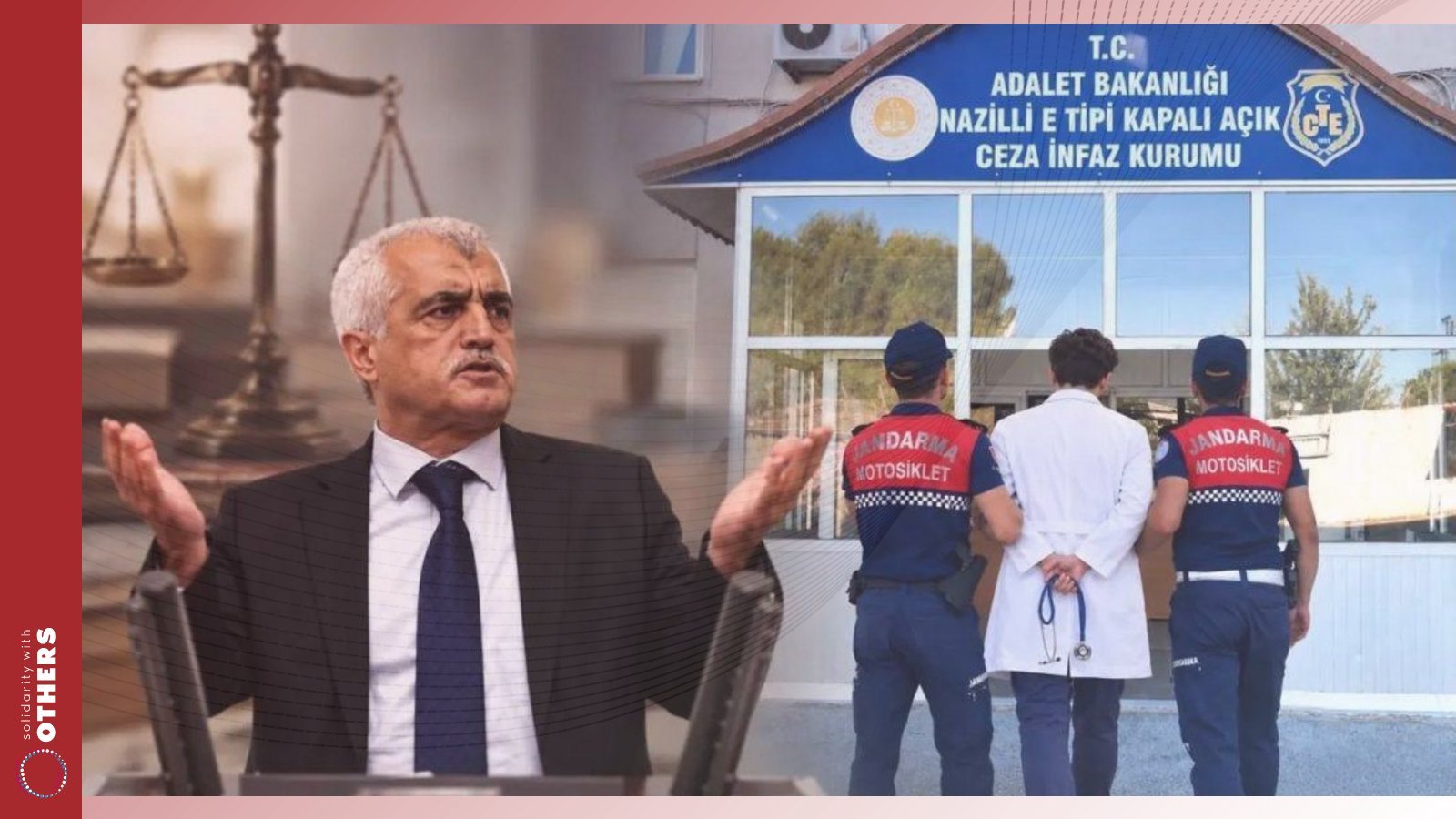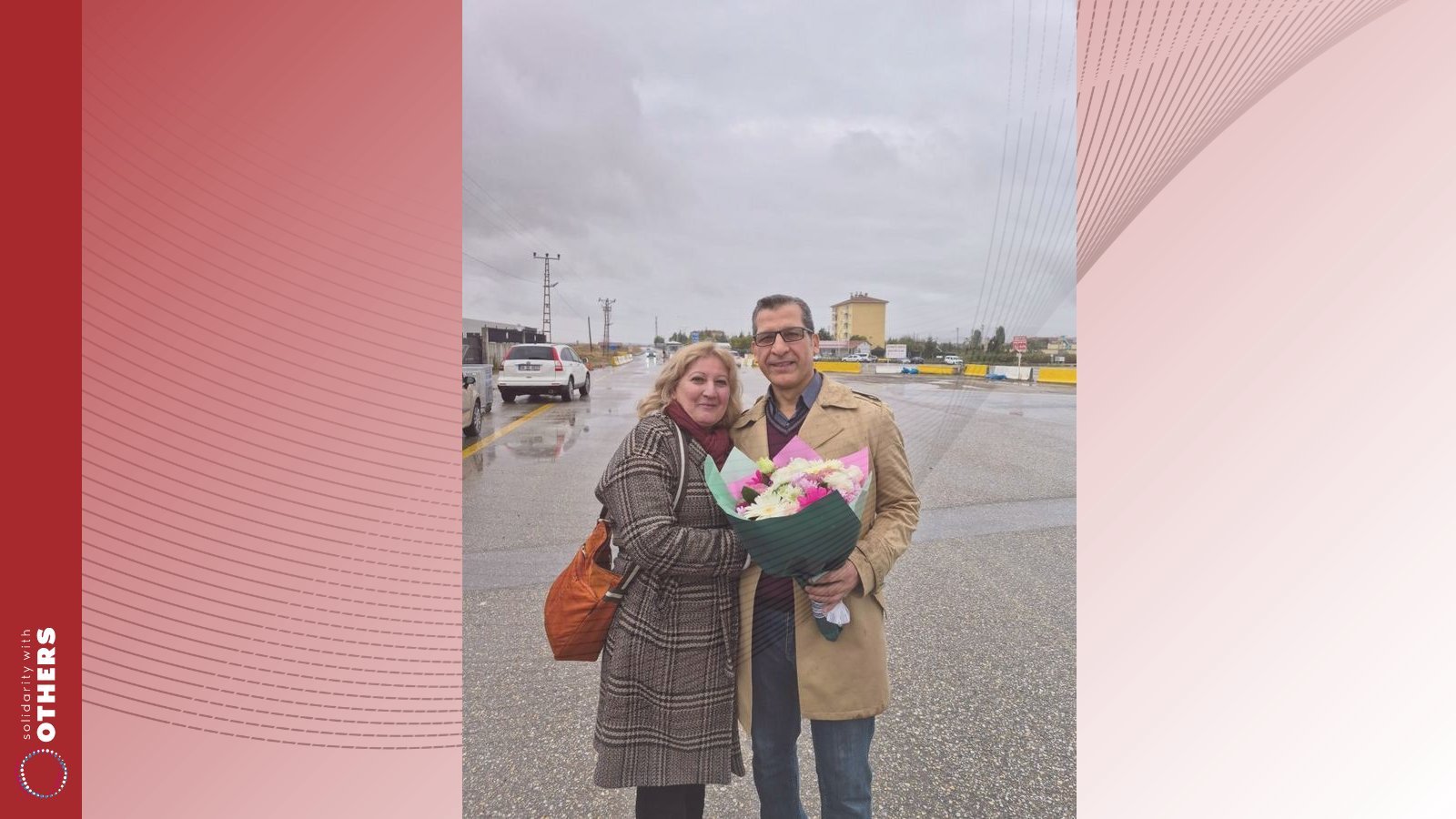


On 24 September the Gaziantep 2nd Assize Court sentenced Mehmet Daylak to seven years and six months and released him pending appeal. Five defendants were tried together. Some were convicted, some acquitted, and all were let go.
He left prison and telephoned his oncologist. He was seen a week later at Hacettepe in Ankara, and the doctor said a PET scan was needed to establish whether the cancer had returned. The appointment was set for the Thursday.
On the Wednesday night, 7 October, at around half past eleven, police came to his mother’s house in Aksaray, where the family had moved to be nearer the hospital. His wife says they came in shouting at them to get down, put him on the floor and took him out handcuffed behind his back. When he was first detained, she says, they broke the door.
He had been free for thirteen days. The prosecutor’s office had objected to his release, and the objection was upheld. According to his wife, the defendant who had been acquitted was taken back in as well.
He did not have the scan.
Mehmet Daylak was diagnosed with testicular cancer in 2014, two years into his marriage, while he was teaching mathematics at a private tutoring centre in Osmaniye. The disease was already at stage four. He spent two to three years in hospital. He had repeated operations, heavy chemotherapy, then high-dose chemotherapy, then a stem cell transplant. One kidney was removed because of a mass. In a second operation surgeons removed part of his liver and his gall bladder. He lives with one kidney. He also has gout, with attacks that leave him unable to walk for months at a time, diabetes and high cholesterol. His disability rating is 86 per cent.
When the treatment ended he took the civil service examination for disabled candidates and was appointed a mathematics teacher at a state school in Osmaniye in 2015. He taught for about seven months.
He was arrested in 2017. The prison doctor found his immune system too weak for an ordinary ward, and he spent seven months alone in the infirmary at Osmaniye Prison before being released on health grounds. He was sentenced to eight years and nine months in that case, on grounds that included having deposited money at Bank Asya. The Court of Cassation quashed the sentence. That file is still open, nine years on.
On 5 May 2025 he was arrested again, in house raids in Gaziantep. His wife says more than four hundred people were taken that day, and that no indictment was drawn up for a year. He spent some seventeen months in custody before the September hearing that convicted and released him.
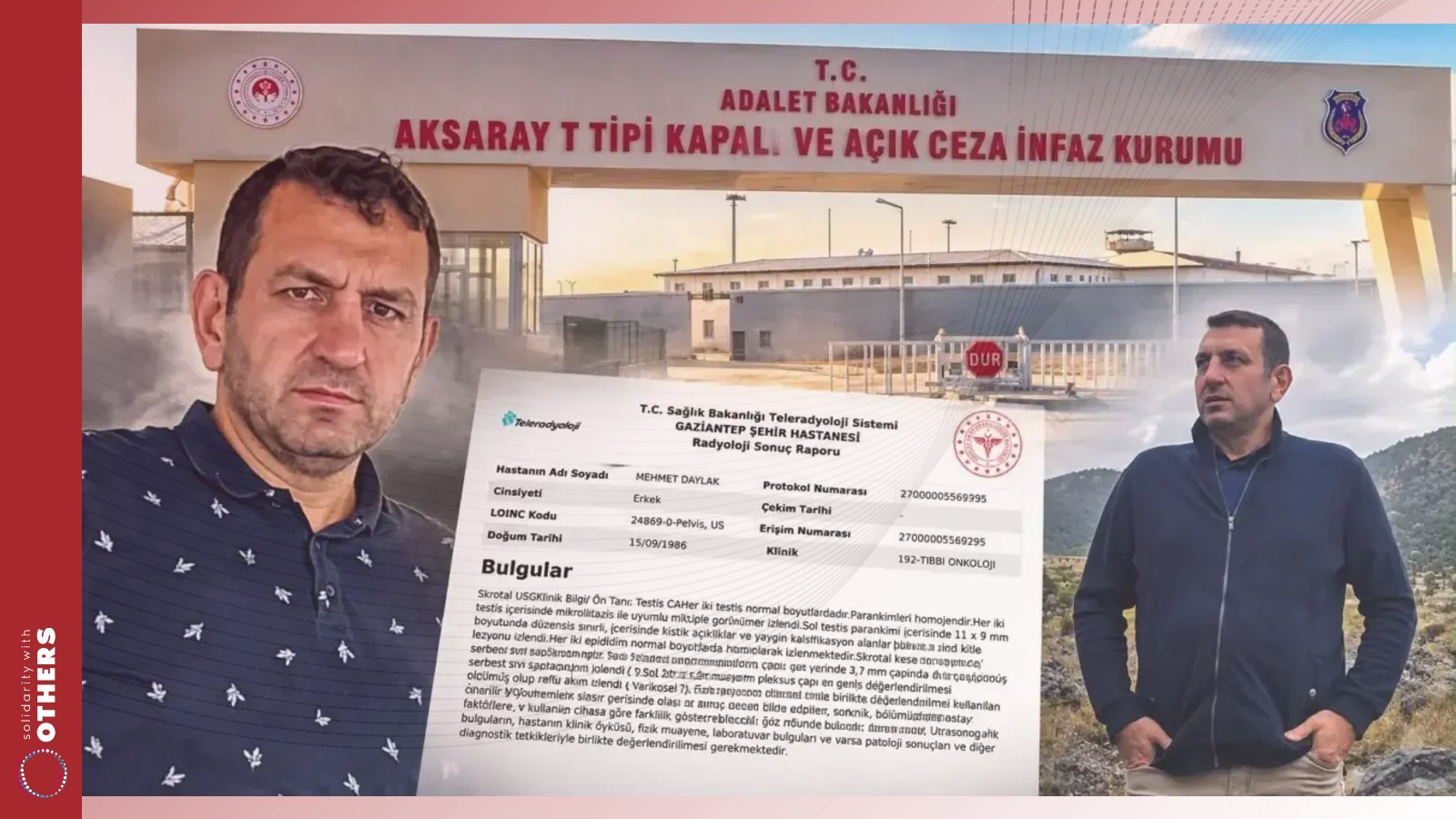
The most recent MRI and CT scans show findings that raise a suspicion of metastasis in his spleen, his kidney, his liver and his lung. Those are the findings the PET scan was booked to resolve. He is in Aksaray T Type Prison. His wife, his lawyer and he himself have each filed petitions asking that he be allowed to complete the investigation.

There is a provision for this. Article 16 of Law No. 5275 allows the execution of a sentence to be postponed where a prisoner has a severe illness or disability, cannot sustain life alone in prison conditions, and presents no grave and concrete danger to public safety, on a hospital board report approved by the Forensic Medicine Institute.
It is written for sentenced prisoners. Mehmet Daylak’s conviction is not final; his case is going to appeal, and he is on remand. On its face the provision does not reach him.
The European Court of Human Rights decided that question thirteen years ago. In Gülay Çetin v. Turkey it found that Türkiye had violated Article 3, and Article 3 together with Article 14, by refusing a woman with metastatic gastric cancer the health-based release available to sentenced prisoners, for the sole reason that she was held on remand. The Court held that remand prisoners and sentenced prisoners are in comparable situations and that no adequate justification had been shown for treating them differently. Gülay Çetin died in prison in July 2011, before the process that might have released her was finished.
Ömer Faruk Gergerlioğlu, who made the case public, says Daylak’s remaining kidney is blocked. His post gives the disability rating as 80 per cent; the report, as his family describes it, is 86. “They are ignoring the medical condition of sick prisoners,” he wrote. “They are trying to fill prisons that are already full to the brim.”
Ten days earlier the Council of Europe’s anti-torture Committee had published two reports recording that Türkiye holds 395 prisoners per 100,000 inhabitants, significantly higher than any other member state.
A scan was booked for a Thursday. On the Wednesday night he was taken back to prison, and the question the scan was meant to answer remains open.
Sources:
1- TR724, Sevinç Özarslan, “Kanser tedavisi gören KHK’lı matematik öğretmeni Mehmet Daylak, ikinci kez tutuklandı”, 18 October 2026: https://www.tr724.com/kanser-tedavisi-goren-khkli-matematik-ogretmen-mehmet-daylak-ikinci-kez-tutuklandi/
2- Ömer Faruk Gergerlioğlu (@gergerliogluof), 15 October 2026: https://x.com/gergerliogluof/status/2110750961132085376
Legal Note:
Article 3 of the European Convention on Human Rights is absolute and admits of no derogation. The State must ensure that persons deprived of their liberty are held in conditions compatible with respect for human dignity and that their health and well-being are adequately secured, including through requisite medical assistance: Kudła v. Poland [GC] (no. 30210/96, §§ 93–94, 26 October 2000). Three factors are particularly relevant when assessing whether detention remains compatible with Article 3: the prisoner’s medical condition, the adequacy of the care provided, and the advisability of maintaining detention in view of that condition: Mouisel v. France (no. 67263/01, §§ 40–48, 14 November 2002), in which the Court found a violation concerning a prisoner suffering from leukaemia.
In Gülay Çetin v. Turkey (no. 44084/10, 5 March 2013), the Court found a violation of Article 3, both taken alone and in conjunction with Article 14, concerning a prisoner suffering from advanced cancer. The applicant had been denied access, while on remand, to medical-release protections available to convicted prisoners. The Court found that the resulting difference in treatment lacked objective and reasonable justification. In Dorneanu v. Romania (no. 55089/13, 28 November 2017), it found a violation of Article 3 concerning the detention conditions and medical treatment of a prisoner with terminal prostate cancer.
The obligation to provide adequate medical care encompasses timely assessment and appropriate treatment of serious conditions. In Khudobin v. Russia (no. 59696/00, §§ 92–93, 26 October 2006), the Court reaffirmed the State’s duty to protect the physical well-being of detainees and to provide requisite medical assistance. An unjustified delay in carrying out a medically indicated investigation into suspected cancer recurrence may therefore raise an issue under Article 3, particularly where the delay creates a significant risk to the prisoner’s health. Article 3 does not, however, impose an automatic obligation to release every seriously ill prisoner.
Under Article 5 § 3, detention before conviction must be supported by relevant and sufficient reasons in addition to reasonable suspicion. Such reasons must be individualised rather than abstract, general or stereotyped: Buzadji v. the Republic of Moldova [GC] (no. 23755/07, §§ 87–91, 5 July 2016); Merabishvili v. Georgia [GC] (no. 72508/13, § 222, 28 November 2017). On 13 October 2026, the Court again found a violation of Article 5 § 3 in Ocak and Others v. Turkey (nos. 54358/19 and 25 others). Where detention follows a first-instance conviction, however, Article 5 § 1(a), rather than Article 5 § 3, will generally govern its classification under the Convention. The State’s obligations under Article 3 remain applicable irrespective of that distinction.
As regards the underlying criminal allegations, in Yüksel Yalçınkaya v. Turkey [GC] (no. 15669/20, 26 September 2023), the Court found a violation of Article 7 arising from the domestic courts’ approach to establishing membership of an armed terrorist organisation, particularly their treatment of ByLock use. The judgment also addressed the evidential reliance placed on Bank Asya transactions and lawful association or trade-union membership. In Yasak v. Turkey [GC] (no. 17389/20, 5 May 2026), the Court found a violation of Article 7 because the domestic courts had failed to establish the requisite criminal intent through an individualised assessment of the applicant’s conduct, knowledge and responsibilities.
Under Article 46 § 1, Turkey remains obliged to execute the judgment in Gülay Çetin. Although the Committee of Ministers acknowledged legislative amendments and improvements in domestic practice in 2016, supervision of the judgment remains pending. The Council of Europe Secretariat requested a revised action plan or report as recently as 17 March 2026. The Convention requires not merely the formal availability of safeguards for seriously ill detainees, but their effective implementation without undue delay. In Mehmet Daylak’s case, the immediate question is whether the authorities will ensure prompt access to the diagnostic investigations and specialist treatment required by his medical condition.