
Tamaz Glonti
Silenced without Censorship: The Chilling Effect of Online Abuse on Women
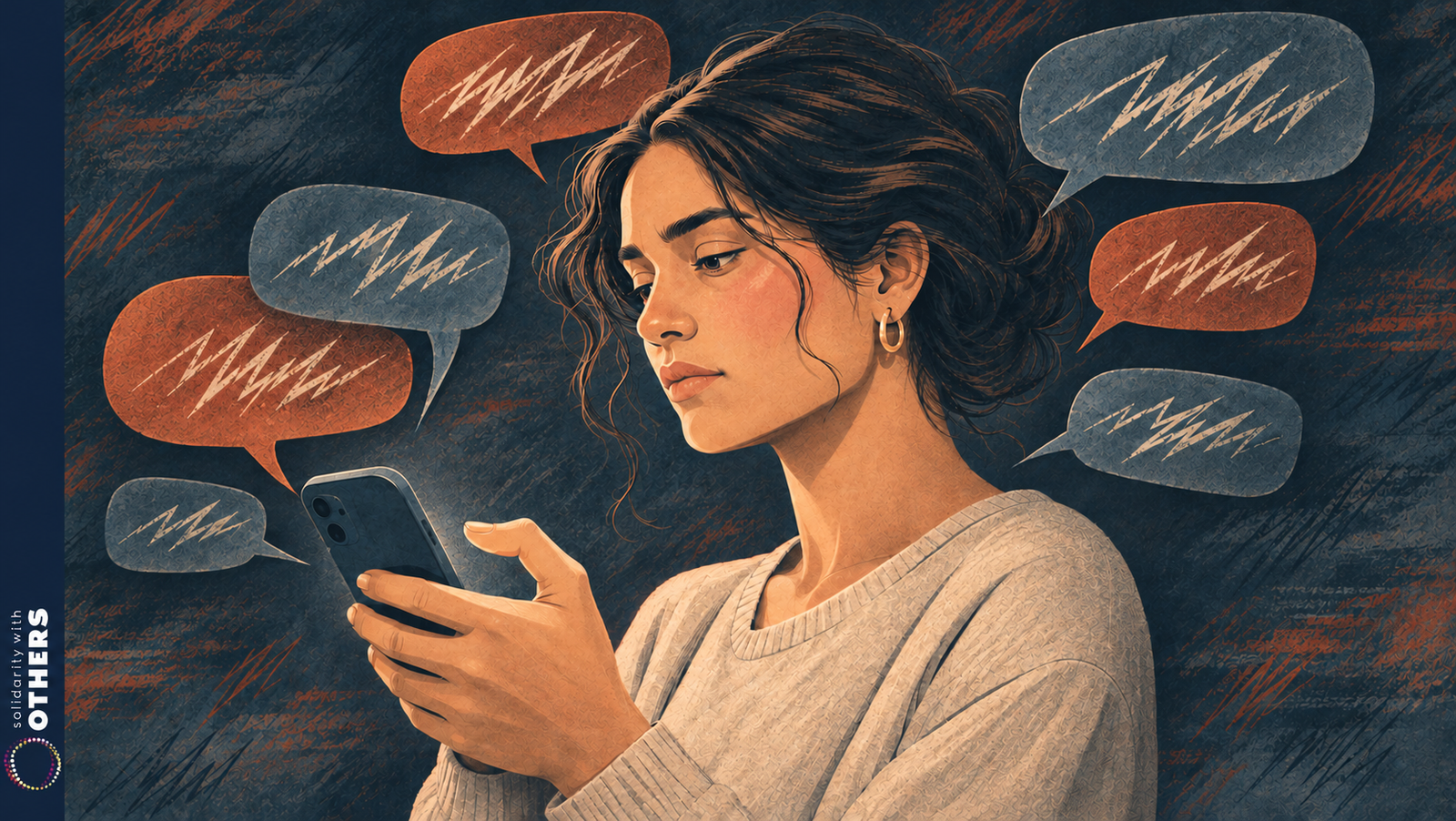
A woman frequents a social media website where she voices her opinion on various political or public affairs matters. At first, she’s met with a line of criticism which quickly escalates to replies about her appearance, sexuality and gender. Ultimately, anonymous accounts send sexual insults, rape threats, spread manipulated intimate photos of her and share the woman’s personal information with other anonymous users joining in. The woman on the receiving end of these actions slowly reduces her time spent on the social media website, posting less comments, refraining from sharing her opinions and avoiding certain topics altogether. Finally, her presence is not noticeable at all.
The question that must be asked is: Although she is technically free to speak but refrains from doing so since it has become personally degrading and dangerous, how meaningful and effective is her freedom of expression and participation in public debate?
There is a strong distinction that must be established between the expression of criticism and hateful speech that is directed towards women on social media. Criticism that might be regarded as rude or upsetting but tackles one’s views must be legally protected as part of freedom of expression. However, it differs significantly to the attacks a woman might be a victim of, during which internet users’ remarks often shift to her body, sexual availability, sexuality and gender with the purpose of silencing her.
A global study surveying more than 900 journalists across 125 countries by the International Center for Journalists researched violence against women around the world and illustrated the following staggering findings:
- Nearly three in four women respondents (73%) said they had experienced online violence.
- Threats of physical (25%) and sexual violence (18%) plagued the women journalists surveyed.
- One in five women respondents (20%) said they had been attacked or abused offline in incidents seeded online.
- The mental health impacts of online violence were the most frequently identified (26%) consequence. Twelve percent of respondents said they had sought medical or psychological help due to the effects of online violence, and 11% said they had taken days off work as a result.
Among many, one of the most important takeaways from this report is that rarely did the attackers target views, opinions, ideas or perspectives of these women. Instead, they based their remarks specifically on gendered humiliation, sexual harassment and intimidation. Furthermore, the interviewed women reported that they received threats involving rape, death and torture. The study demonstrates that online attacks frequently move beyond criticism of a journalist’s work and become explicitly gendered, relying on sexual harassment, threats and attacks on identity to intimidate their targets.
While the data shows numerous alarming findings, there is one statistic that is particularly relevant for the issue at hand which is the following: 30% of the surveyed women said that they self-censored on social media as consequence to online violence they had experienced and 20% withdrew from all online interaction.
Here, a clear picture is painted that presents a devastating process women go through that ultimately ends with the chilling effect of them completely withdrawing from social media use. It’s important to note, however, that this occurrence is never sudden but instead starts with the affected women changing the type of language they use, avoiding certain sensitive political topics, not expressing controversial opinions or ideas. Then, a woman might reduce her participation in public online debates by making her account private, refraining from commenting or shying away from attention-grabbing opinions publicly. The most extreme side of this spectrum is withdrawal from all online interaction which greatly restricts her ability to exercise her democratic right of freedom of expression and debate. Although this is the most severe case, it must be emphasized that the chilling effect mentioned in the comprehensive report becomes a real issue long before she deletes her social media account or stops using it. It happens as soon as a woman changes or avoids what she really wants to say due to intimidation, fear or harassment.
Intersectionality is a big part of this problem as the burden of this online violence among women is distributed unevenly, considering the fact that women that represent various minorities like different ethnic groups, the LGBTQI+ community or religions face significantly stronger discrimination, more complex and intense abuse in addition to the hate they receive based on their gender.
The legal tension of this issue lies in the importance of targeted women being equipped with the ability to exercise their freedom of expression not only in formal writing of the law but in practice as well. While the significance of freedom of expression on both sides is worth noting, the remarks of these users should not take the form of gender violence that, consequently, might become a cause for self-censorship for women and affect how and whether they participate in public discourse.
The online hate speech often infringes on other rights of women, such as equality, privacy and safety. As members of democratic societies, women bear a higher cost for public participation, often encountering obstacles that make it difficult to do so. This, therefore, infringes on their right of equal treatment which carries a systematic nature. As for privacy and safety, some of these risks are addressed in Directive (EU) 2024/1385. Article 5 requires Member States to criminalise specified forms of non-consensual sharing of intimate or manipulated material. This includes producing, manipulating or altering sexually explicit material and subsequently making it publicly accessible through information and communication technologies without the person’s consent, where the conduct is likely to cause serious harm. Artificial intelligence and deepfake technology may be used to create such material, but the technology itself is not what defines the offence. Articles 6–8 also address cyberstalking, cyber harassment and cyber incitement to violence or hatred. Member States bound by the Directive must transpose these rules into national law by 14 June 2027.
Conclusion
Any response to gendered online abuse must maintain an important balance. Where states restrict freedom of expression, such interference must be provided by law, pursue a legitimate aim and be necessary in a democratic society. This requires a proportionate response rather than blanket restrictions on controversial, harsh or offensive speech.
The role of social media platforms is different. Their decisions to moderate content are governed by their own content policies as well as the legal and regulatory obligations applicable to them. Effective platform responses should therefore focus on consistent and transparent enforcement, while recognising the importance of preserving legitimate public debate.
Ultimately, removing harmful content is only one part of the response. Its effectiveness should be judged by whether the woman targeted remains free and safe to participate in public debate afterwards.
[1] UNESCO & ICFJ, The Chilling: Global Trends in Online Violence Against Women Journalists (2021), https://www.icfj.org/our-work/chilling-global-study-online-violence-against-women-journalists
[2] Irene Khan, UN Special Rapporteur on freedom of opinion and expression, Gender Justice and Freedom of Opinion and Expression (2021), https://www.ohchr.org/en/documents/thematic-reports/a76258-gender-justice-and-freedom-expression-report-special-rapporteur
[3] Directive (EU) 2024/1385 on combating violence against women and domestic violence, https://eur-lex.europa.eu/eli/dir/2024/1385/oj/eng
[4] GREVIO, General Recommendation No. 1 on the Digital Dimension of Violence Against Women (2021), https://rm.coe.int/grevio-rec-no-on-digital-violence-against-women/1680a49147