


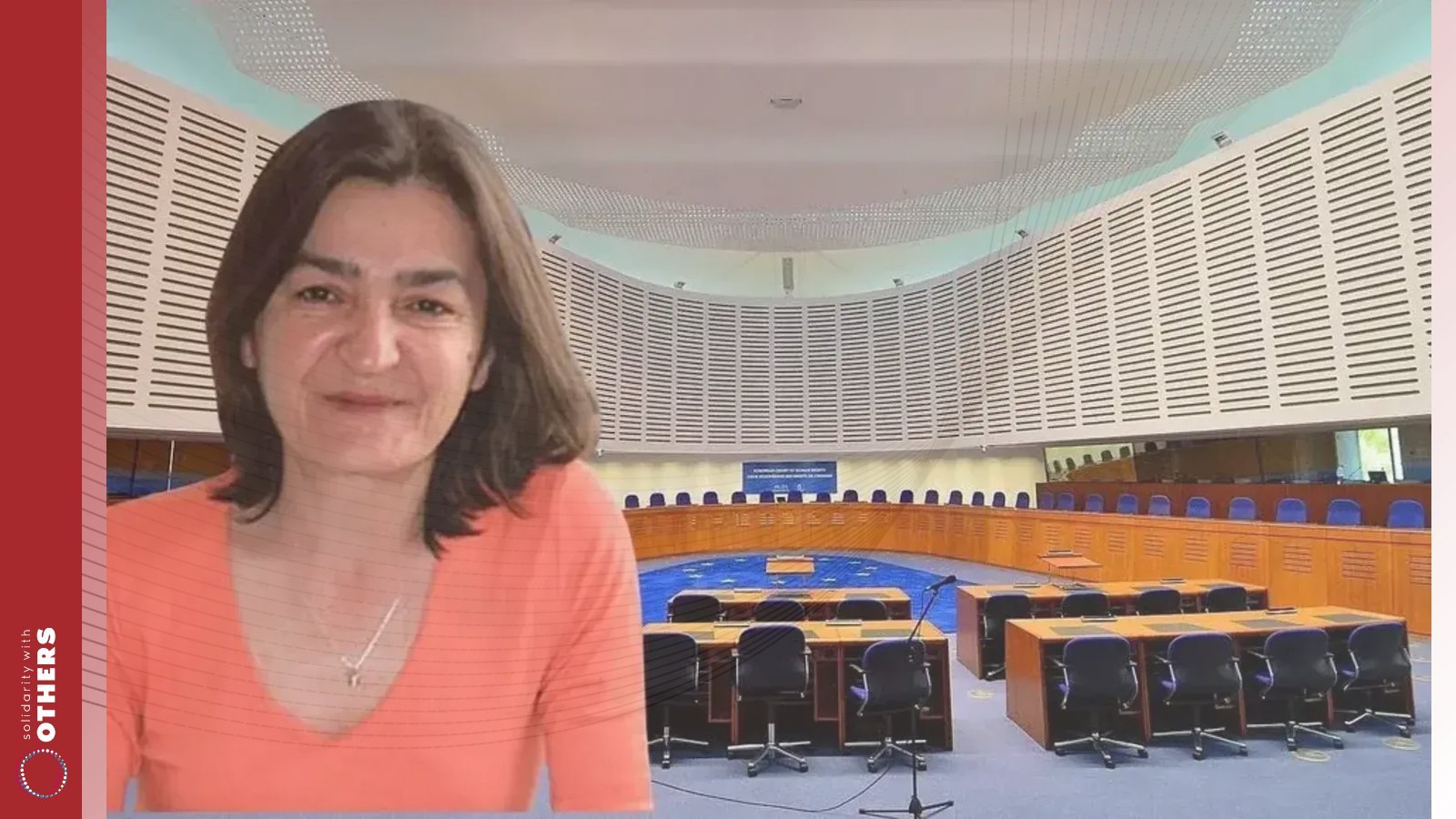
The European Court of Human Rights held unanimously on 6 October that Türkiye violated the right to freedom of expression of the investigative journalist Müyesser Uğur, who spent approximately five months in pre-trial detention over six articles about the deployment of Turkish troops to Libya.
Uğur, who writes on military and political affairs, published the articles on odatv.com between December 2019 and February 2020, after Türkiye signed a military cooperation agreement with Libya’s Government of National Accord. She was arrested on 8 June 2020 and released under judicial control on 9 November 2020.
The Court’s finding is narrower than it may appear, and more damaging for it.
It accepted that one of the six articles, which named the commander designated to lead the operations in Libya, was “capable of causing ‘considerable damage’ to national security and of affecting the safety of the individual concerned”. It did not find that article harmless.
What it found was that the domestic courts never asked the question. In ordering and extending her detention they “essentially confined themselves” to stating that the information was classified and that there was a strong suspicion of an offence. They did not assess the significance of what was disclosed, the article’s contribution to public debate, or the extent of any damage, and they did not weigh those against her right to impart information and the public’s right to receive it. The other five articles disclosed no confidential information or State secret.
Nor did any court address her central argument: that before she published, senior government officials had already disclosed the commander’s rank. On 5 January 2020 the President stated on television that a lieutenant general would head the operations centre in Libya. Very few officers held that rank. The domestic authorities never examined whether the interest in protecting the commander’s identity had thereby already been substantially diminished, or whether the harm had in part already occurred.
The Constitutional Court, sitting in plenary with fifteen judges, held by a majority in April 2022 that there had been no breach. The Strasbourg Court found that it had “essentially transposed” its conclusions on the lawfulness of the detention to the freedom of expression question, without conducting a separate balancing exercise. It had been the one body with the time to do so.
The Court noted that Uğur had not obtained the information unlawfully and had used no tricks, threats or pressure on her source, a member of the armed forces, while accepting that an experienced journalist could be expected to appreciate the sensitivity of what she was publishing.
On the measure itself, the Court held that detention for almost five months “constituted a particularly serious interference with the exercise of freedom of expression and was liable to produce a significant chilling effect on journalistic activity”.
It awarded €7,500 in non-pecuniary damage, by six votes to one. Judge Yüksel, partly dissenting, would have held that the finding of a violation was itself sufficient satisfaction. Having found a violation of Article 10, the Court held that there was no need to examine the complaint under Article 5.
In March 2021 the Ankara 26th Assize Court acquitted Uğur of the two offences she had been detained on, and convicted her instead under two different provisions, ordering her immediate detention on conviction. That appeal is still before the Court of Cassation.
The judgment is not yet final.
Source:
Müyesser Uğur v. Türkiye, no. 45738/22, Second Section, 6 October 2026: https://hudoc.echr.coe.int/eng?i=001-252630