


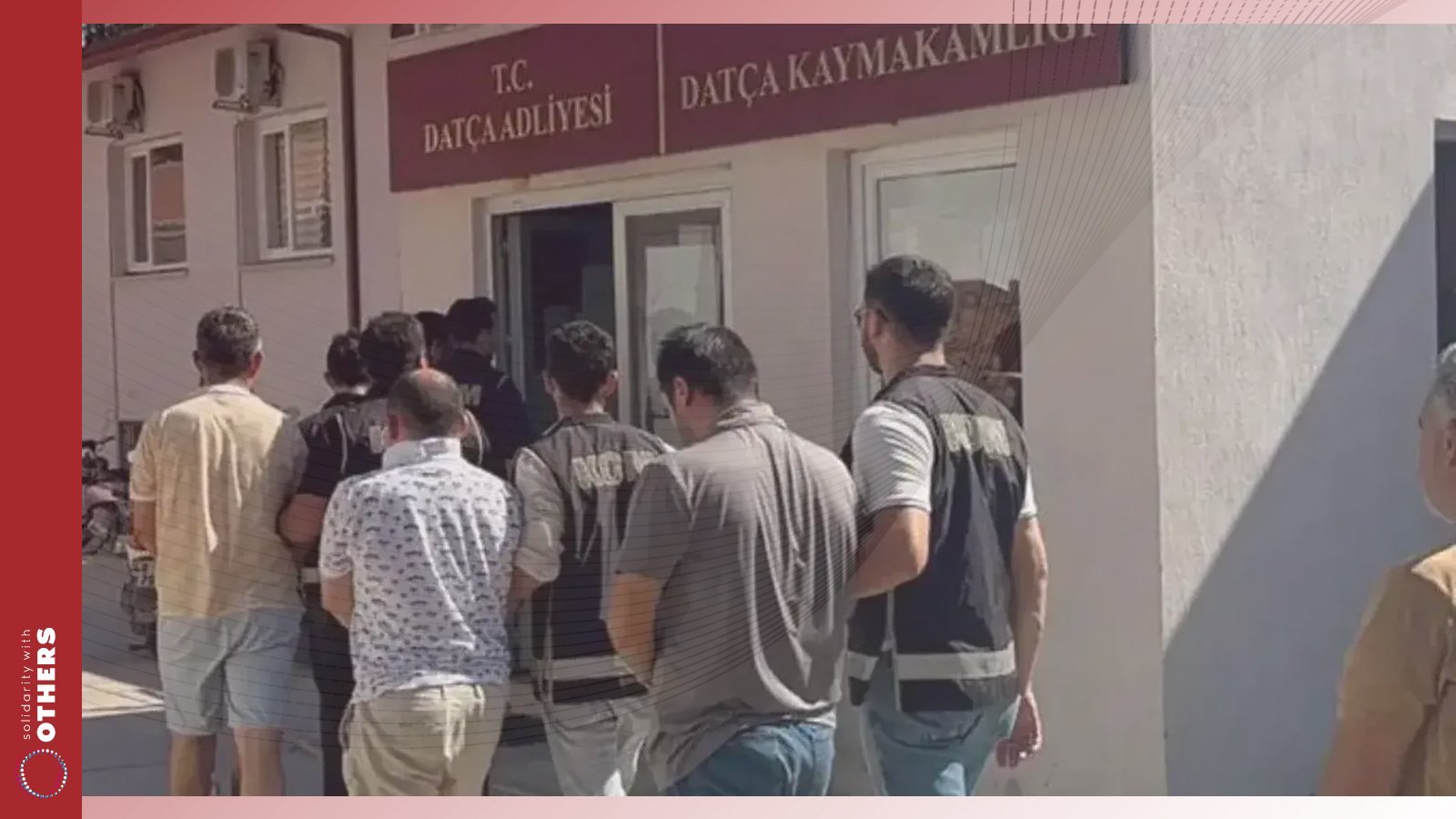
According to Turkish press reports of 9 September, the Turkish coast guard stopped a Russian-flagged sailing boat, the Peter Pan, off Datça in Muğla province, close to international waters. Turkish media, citing the Muğla Chief Public Prosecutor’s Office, reported that nine people prosecuted for alleged membership of the Gülen movement were on board, with two children and the boat’s captain. The children were handed to relatives.
Three of the nine were wanted to serve final prison sentences for “membership of an armed terrorist organisation”. The sentences were six years three months; six years ten months 15 days; and eight years eight months. Three had appeals pending before regional appeal courts and two before the Court of Cassation. The reports did not give the status of the ninth person.
The same reports describe the nine as a private school teacher, a dormitory director, a worker, a technician, a court clerk dismissed from public service, and several former teachers and a former principal from schools the authorities consider linked to the movement.
A report published on 27 July 2026 by Johan Vande Lanotte, emeritus professor at Ghent University and counsel for the applicants in the Yalçınkaya and Yasak ECtHR Grand Chamber cases, inventoried Gülen-related judicial actions reported in the media in 2025. The report counted around 100 such border detentions in 2025 media reports and considers this a significant undercount against partial official figures.
According to Bengü Türk, citing security forces, 5,033 people accused of links to the Gülen movement have been detained in Edirne since 15 July 2016 while attempting to cross illegally into Greece.
The nine were prosecuted under Article 314(2) of the Turkish Penal Code, the membership offence whose application in Gülen-related cases the Grand Chamber found in breach of Article 7 in Yalçınkaya (2023) and Yasak (2026).
Sources:
2- Prof. Johan Vande Lanotte’s recent report (July 2026): https://lnkd.in/p/ex3hKvVt
Legal Note:
Right to leave. Article 12(2) ICCPR, ratified by Türkiye in 2003, protects the freedom to leave any country, including one’s own. Article 12(3) permits restrictions that are provided by law, necessary for listed aims including public order, and consistent with other Covenant rights. UN Human Rights Committee General Comment No. 27 (1999) requires such restrictions to be proportionate. Enforcing a criminal sentence is generally accepted as a legitimate ground, so the Convention questions here concern the underlying proceedings. Article 2 of Protocol No. 4 to the ECHR does not bind Türkiye, which signed it in 1992 but has not ratified it. Domestically, Article 23 of the Turkish Constitution allows a citizen’s freedom to leave to be restricted only by judicial decision on account of a criminal investigation or prosecution.