


Giriş: Türkiye Seçimleri ve Mülteci Akışı
Türkiye, Mayıs 2023’te kritik bir cumhurbaşkanlığı seçimi gerçekleştirmiştir.[1] 14 Mayıs’ta yapılan ilk turda hiçbir aday oyların %50’sinden fazlasını alamamıştır. [2] Bunun üzerine en çok oyu alan iki aday – görevdeki Cumhurbaşkanı Recep Tayyip Erdoğan ve ana muhalefet lideri Kemal Kılıçdaroğlu – arasında ikinci tur seçim yapılmıştır. İkinci tur sonucunda Recep Tayyip Erdoğan %52,18 oy alırken, Kemal Kılıçdaroğlu %47,82 oy almış ve Erdoğan yeniden cumhurbaşkanı seçilmiştir.[3]
Seçimler, otoriterleşme eğilimleri, demokratik gerileme ve insan hakları ihlallerindeki artış bağlamında Türkiye açısından bir dönüm noktası olarak değerlendirilmiştir.[4] Bununla birlikte, uluslararası toplumun – özellikle Avrupa Birliği – yakından takip ettiği bir diğer temel konu mülteci meselesi olmuştur.[5] Türkiye, yaklaşık dört milyon yerinden edilmiş kişi ile dünyada en fazla mülteci barındıran ülkedir; bu kişilerin büyük bir kısmı Suriye ve diğer Arap ülkelerinden gelmektedir.[6] 18 Mart 2016 tarihinde Avrupa Konseyi ile Türkiye arasında düzensiz göç akışını durdurmaya yönelik bir mutabakat sağlanmıştır. Bu mutabakata göre, Türkiye’den Yunanistan’a geçen ve iltica başvuruları kabul edilmeyen tüm düzensiz göçmenlerin Türkiye’ye geri gönderilmesi öngörülmüştür.[7]
Seçim sürecinde Kemal Kılıçdaroğlu, hükümetin mülteci politikalarını ve AB ile yapılan anlaşmayı yoğun şekilde eleştirmiş ve bu söylemiyle önemli bir seçmen desteği kazanmıştır.[8][9] Ancak seçimlerin Erdoğan’ın zaferiyle sonuçlanmasıyla birlikte, muhalefetin bu söylemleri kısa vadede uygulanabilir olmasa da kamuoyunda güçlü bir politika tartışması olarak varlığını sürdürmüş; bu durumun hükümeti mülteci politikalarını yeniden gözden geçirmeye ve yeni yeniden yerleştirme politikaları geliştirmeye yöneltebileceği değerlendirilmektedir.
Suriye Mülteci Krizi ve Türkiye’nin Rolü
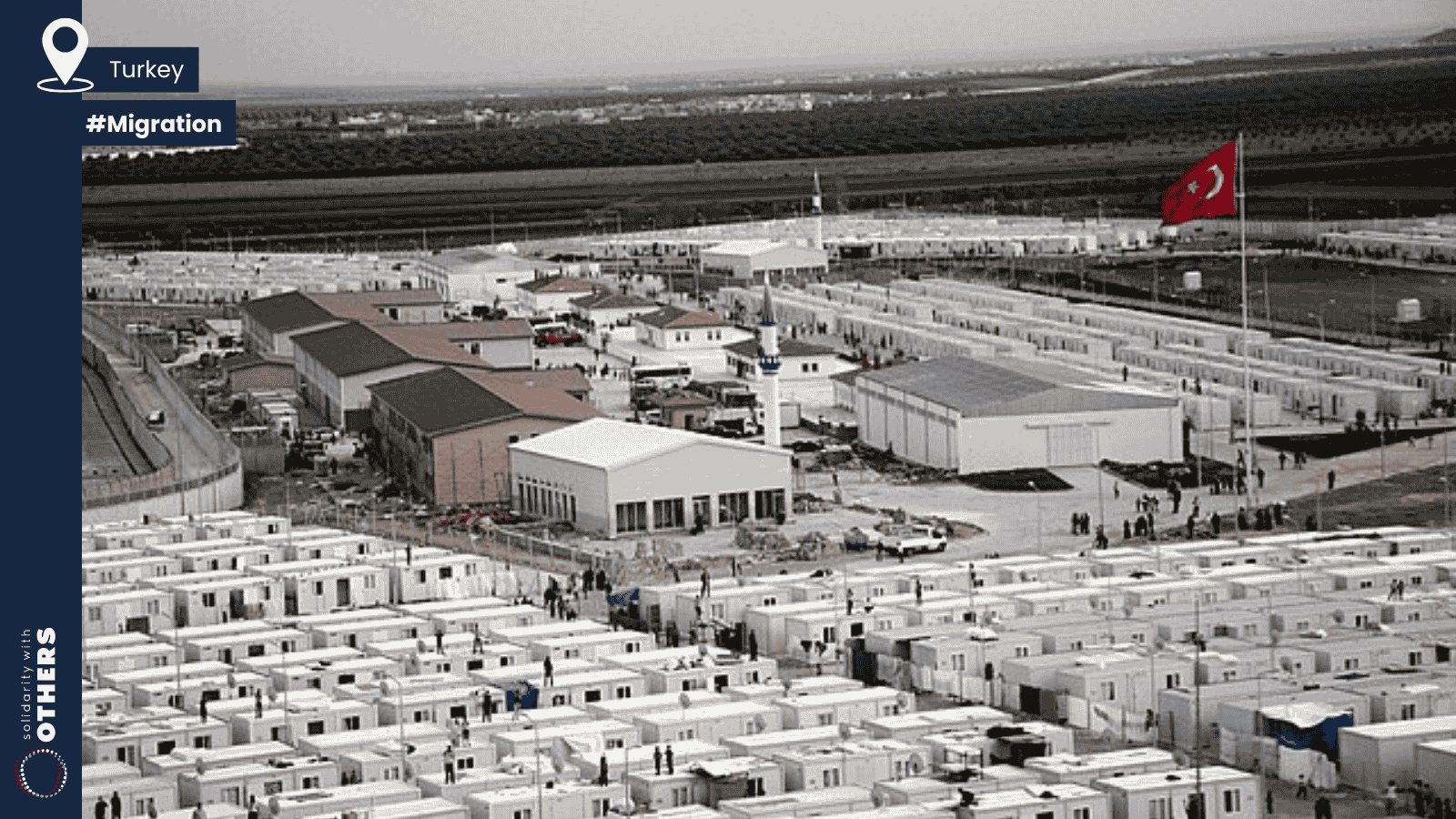
United Nations High Commissioner for Refugees verilerine göre Türkiye, resmi olarak yaklaşık 3,9 milyon mülteci ve sığınmacıya ev sahipliği yapmaktadır.[10] Gayriresmî tahminler ise toplam sayının 6–7 milyona ulaşabileceğini ileri sürmektedir.[11] Türkiye’nin coğrafi konumu, onu hem ilk varış hem de transit ülke haline getirmektedir.[12] Bu bağlamda Türkiye, Orta Doğu ve Akdeniz bölgesindeki mülteci krizinin yönetiminde, AB ve uluslararası toplumun desteğiyle kritik bir rol üstlenmektedir.[13]
Suriye’de on yılı aşkın süredir devam eden çatışmalar nedeniyle güvenlik, ekonomik ve altyapısal koşullar ciddi şekilde bozulmuştur. Bu nedenle, 2015–2018 döneminde yalnızca yaklaşık %2’lik bir kesim (103.090 kişi) gönüllü olarak geri dönmüştür.[14][15]
Mart 2016 tarihli AB–Türkiye mutabakatı ile taraflar, Türkiye’den Yunanistan üzerinden AB topraklarına yönelik göç akışını durdurmaya yönelik önlemler almaya başlamış ve bu durum Türkiye’nin Avrupa’nın “kapı bekçisi” konumunu pekiştirmiştir.[16] AB, bu çözümün mükemmel olmaktan uzak olduğunu kabul etmekle birlikte, ortaya çıkan benzeri görülmemiş koşullar karşısında Türkiye ile iş birliğinin zorunlu hale geldiğini belirtmiştir.[17] Bu kapsamda AB, Türkiye ile yakın iş birliği içinde, “Türkiye’deki Mülteciler için Mali Yardım Aracı” kapsamında tahsis edilen 6 milyar avroluk fonun dağıtımını hızlandırarak mültecilerin ihtiyaçlarının kapsamlı şekilde karşılanmasını ve ev sahibi toplulukların desteklenmesini hedeflemiştir.[18] Bu mutabakatın sonucu olarak, Türkiye’den Ege adalarına geçişler iki yıl içinde %97 oranında azalmış ve 2015’te günlük ortalama 3022 olan geçiş sayısı yaklaşık günlük 80 seviyesine düşmüştür. [19]
Bu anlaşma, Türkiye Cumhurbaşkanı’nın Avrupa jeopolitik alanı ile ilişkilerinde “bir ayağı içeride, bir ayağı dışarıda” kalmasını mümkün kılmıştır. AB, dolaylı olarak Türkiye’yi güvenli ülke olarak tanımıştır. Bir ülkenin güvenli olarak kabul edilmesi için dört temel kriter bulunmaktadır: ülkenin kendi vatandaşlarını mülteci durumuna düşürmemesi, mültecilerin iltica başvurusu yapabileceği bir ülke olması, işkence veya insanlık dışı muameleye izin verilmemesi ve geri göndermeme (non-refoulement) ilkesine uyulması.[20] Ancak bazı değerlendirmelere göre Türkiye bu kriterleri artık tam olarak karşılayamamaktadır.[21]
Özellikle 2020 yılında Suriye’nin İdlib vilayetinde Rus güçleri tarafından gerçekleştirilen hava saldırısında “onlarca Türk askerinin hayatını kaybettiği” İdlib saldırısının ardından[23], Recep Tayyip Erdoğan acil bir güvenlik toplantısına başkanlık etmiş ve Türkiye–Yunanistan sınırını açtıklarını ifade ederek Suriyeli mültecilerin artık Avrupa’ya girişlerinin engellenmeyeceğini belirtmiştir.[24] Bu adım, Kuzey Suriye’de yürütülen operasyonlar için hem AB hem de NATO nezdinde destek sağlama girişimi olarak değerlendirilmiştir. [25]
İdlib’de Türk askerlerine yönelik saldırının ardından Türkiye’de bulunan göçmenlerin Avrupa’ya gitmelerinin engellenmeyeceğine ilişkin iddialar sonrasında, mülteciler Avrupa’ya doğru yürümeye başlamıştır. Bazı göçmenler, özellikle Edirne bölgesinde olmak üzere, gruplar halinde Yunanistan sınırına doğru ilerlemiştir. Bu kararın ardından Ege kıyılarındaki düzensiz göçmen sayısında önemli bir artış yaşanmıştır. Cumhurbaşkanı Erdoğan, Avrupa liderlerini, Türkiye’nin milyonlarca Suriyelinin yükünü taşımasına yardımcı olma konusundaki taahhütlerini yerine getirmemekle suçlamaya başlamıştır.
COVID-19 krizinden ağır şekilde etkilenen Türkiye,[27] AB ile yaptığı göç anlaşmasını sürdürmüş, 2021 yılında Taliban’ın Afganistan’da kontrolü ele geçirmesinin ardından Afgan mültecileri kabul etmiş ve Suriyeli sığınmacıları kabul etmeye devam etmiştir. Bununla birlikte Erdoğan, mülteci meselesini araçsallaştırmayı sürdürmüş; hem İslami/moral duygular üzerinden hem de AB’nin insan haklarına yeterince saygı göstermemesi üzerinden bir söylem kurarak iç politikada destek kazanmıştır. Türkiye’nin “kapı bekçisi” rolünün özellikle Şubat 2023’te meydana gelen ve Suriye’den gelen mülteci akışını artıran ve yüksek düzeyde iç yerinden edilmeye yol açan yıkıcı deprem bağlamında ekonomiyi nasıl etkileyeceği ise belirsizliğini korumaktadır. Tüm bu iç ve bölgesel gelişmeler ışığında, göç anlaşmasının kırılgan bir denge üzerinde durduğu görülmektedir. [28]
Mülteci Politikalarına Etkiler ve Avrupa’ya Yansımaları
Conclusion
[1] Rajvanshi, A. (2023, May 11). Türkiye’s crucial election is coming. here’s what to know. Time. https://time.com/6279098/Türkiye-election-2023/
[2] Tuysuz, G., Gezer, Y., & Qiblawi, T. (2023, May 29). Erdogan wins Turkish election, extending rule to Third decade. CNN. https://edition.cnn.com/2023/05/28/europe/Türkiye-president-runoff-polls-erdogan-intl/index.html
[3] CNN TÜRK. (2023, June 1). 2. Tur seçi̇m SONUÇLARI 2023: 28 mayıs cumhurbaşkanlığı seçim Sonuçları Ysk! – 2023 Seçim Haberleri. CNN TÜRK. https://www.cnnturk.com/turkiye/secim-2023/2-tur-secim-sonuclari-2023-28-mayis-cumhurbaskanligi-secim-sonuclari-ysk
[4] Foster, A. (2023, May 20). Türkiye election: Why the world is watching the presidential race. BBC News. https://www.bbc.com/news/world-europe-65647483
[5] Gavin, G. (2023, May 18). I’ll kick all refugees out of Türkiye, Erdoğan rival vows. POLITICO. https://www.politico.eu/article/kick-all-refugees-out-Türkiye-kemal-kilicdaroglu-recep-tayyip-erdogan-election/
[6] Ibid.
[7] European Parliament. (2023, May 20). EU-Türkiye Statement & Action Plan: Legislative Train Schedule. European Parliament. https://www.europarl.europa.eu/legislative-train/theme-towards-a-new-policy-on-migration/file-eu-Türkiye-statement-action-plan
[8] NTV. (2023, May 18). Kılıçdaroğlu: Ben Iktidara Gelir Gelmez Tüm Mültecileri Evlerine Göndereceğim. ntv.com.tr. https://www.ntv.com.tr/turkiye/kilicdaroglu-ben-iktidara-gelir-gelmez-tum-multecileri-evlerine-gonderecegim,PFHFD6ZmKEmjyxMqOoApxw
[9] Sade, G. (2023, May 24). Ab “Suriyelilerin Bir Yıl Içinde Gönderileceği” Vaadine Nasıl Bakıyor? euronews. https://tr.euronews.com/2023/05/24/avrupa-birligi-suriyelilerin-bir-yil-icinde-gonderilecegi-taahhudune-nasil-bakiyor
[10] UNHCR. (2023). Türkiye. Global Focus. https://reporting.unhcr.org/operational/operations/t%C3%BCrkiye#:~:text=T%C3%BCrkiye%20hosts%20four%20million%20refugees,and%20maintains%20the%20geographical%20limitation.
[11] Akpamuk, G. (2023, May 25). Türkiye’Deki Suriyelilerin çoğu neden Kayıt Dışı çalışıyor, Hükümetin Bu Konuda Politikası Ne? BBC News Türkçe. https://www.bbc.com/turkce/articles/cz51zr816mlo
[12] European Economic and Social Committee. (2017, September 18). The role of Türkiye in the refugee crisis. European Economic and Social Committee. https://www.eesc.europa.eu/en/agenda/our-events/events/role-Türkiye-refugee-crisis
[13] European Economic and Social Committee. (2018, February 14). The role of Türkiye in the Refugee Crisis (OWN-initiative opinion). European Economic and Social Committee. https://www.eesc.europa.eu/en/our-work/opinions-information-reports/opinions/role-Türkiye-refugee-crisis-own-initiative-opinion
[14] Sharani, S. (2022). The Narratives of Syrian Refugees on Taking Türkiye as a Land of a Long or Temporary Settlement. In E. Balkan & Z. K. Tonak (Eds.), Refugees on the Move: Crisis and Response in Türkiye and Europe (pp. 281–311). Berghahn Books. https://doi.org/10.2307/j.ctv2vr8tsk.17
[15] UNHCR. (2021). Syria situation. Global Focus. https://reporting.unhcr.org/operational/situations/syria-situation#:~:text=2021%20Situation%20overview&text=By%20the%20end%20of%202021,internally%20displaced%20people%20(IDPs).
[16] de Martin, N. (2023, April 2). Türkiye’s weaponisation of the refugee crisis. Jason Institute for Peace and Security Studies. https://jasoninstitute.com/Türkiyes-weaponisation-of-the-refugee-crisis/
[17] Tsarouhas, D. (2023, May 6). The critical role of Türkiye in the management of the Syrian refugee crisis. E-International Relations. https://www.e-ir.info/2023/05/06/the-critical-role-of-Türkiye-in-the-management-of-the-syrian-refugee-crisis/
[18] European Commission. (2022). EU support to refugees in Türkiye. European Neighbourhood Policy and Enlargement Negotiations (DG NEAR). https://neighbourhood-enlargement.ec.europa.eu/enlargement-policy/turkiye/eu-support-refugees-turkiye_en
[19] European Commission. (2018). EU-TÜRKİYE STATEMENT Two years on. Migration and Home Affairs. https://home-affairs.ec.europa.eu/system/files/2020-09/20180314_eu-Türkiye-two-years-on_en.pdf
[20] de Martin, N. (2023, April 2). Türkiye’s weaponisation of the refugee crisis. Jason Institute for Peace and Security Studies. https://jasoninstitute.com/Türkiyes-weaponisation-of-the-refugee-crisis/
[21] Ibid.
[22] Ibid.
[23] Akca, I. (2023). The fineline between Pushbacks and illegal practices at the Greece-Turkiye border. Flipsnack. (p. 9). https://www.flipsnack.com/peaceandjustice/pushbacks-report.html
[24] Şahin-Mencütek, Z., Gökalp-Aras, N. E., Kaya, A., & Rottmann, S. B. (2023). Syrian Refugees in Türkiye: Between Reception and Integration. Springer Nature. https://doi.org/10.1007/978-3-031-27366-7
[25] McKernan, B. (2020, February 28). Dozens of Turkish soldiers killed in strike in Idlib in Syria. The Guardian. Retrieved June 19, 2023, from https://www.theguardian.com/world/2020/feb/27/dozens-of-turkish-soldiers-killed-in-strike-in-idlib-in-syria-reports-say
[26] Baran, S. (2020, February 29). Turkiye Kapıları Açıyor Mu? Mülteciler Sınırlara Yürüyor. euronews. Retrieved June 19, 2023, from https://tr.euronews.com/2020/02/28/turkiye-kapilari-aciyor-mu-multeciler-yunanistan-a-dogru-yurumeye-basladi
[27] Cavus, U. (2022, March 23). The impacts of the covid-19 on Turkish economy and policy recommendations on government spending. HEConomist. https://heconomist.ch/2022/03/23/the-impacts-of-the-covid-19-on-turkish-economy-and-policy-recommendations-on-government-spending/
[28] de Martin, N. (2023, April 2). Türkiye’s weaponisation of the refugee crisis. Jason Institute for Peace and Security Studies. https://jasoninstitute.com/Türkiyes-weaponisation-of-the-refugee-crisis/
[29] Tsarouhas, D. (2023, May 6). The critical role of Türkiye in the management of the Syrian refugee crisis. E-International Relations. https://www.e-ir.info/2023/05/06/the-critical-role-of-Türkiye-in-the-management-of-the-syrian-refugee-crisis/
[30] Imrie-Kuzu, D. & Özerdem, A. (2023). Keeping Syrian refugees in Türkiye is not a good idea: a new concept of ‘reluctant local integration’, Third World Quarterly, 44:7, 1606-1624, DOI: 10.1080/01436597.2023.2197205
[31] International Crisis Group. (2018, December 28). Türkiye’s Syrian refugees: Defusing Metropolitan Tensions. Crisis Group. https://www.crisisgroup.org/europe-central-asia/western-europemediterranean/Türkiye/248-Türkiyes-syrian-refugees-defusing-metropolitan-tensions
[32] Tsarouhas, D. (2023, May 6). The critical role of Türkiye in the management of the Syrian refugee crisis. E-International Relations. https://www.e-ir.info/2023/05/06/the-critical-role-of-Türkiye-in-the-management-of-the-syrian-refugee-crisis/
[33] Ibid. (p. 7)
[34] Jones, D. (2019, November 1). Many Syrian refugees in Türkiye want to stay, despite Erdogan plan to force their return. VOA. https://www.voanews.com/a/europe_many-syrian-refugees-Türkiye-want-stay-despite-erdogan-plan-force-their-return/6178633.html#:~:text=Breaking%20News-,Many%20Syrian%20Refugees%20in%20Türkiye%20Want%20to%20Stay%2C%20Despite,Plan%20to%20Force%20Their%20Return&text=Turkish%20President%20Recep%20Tayyip%20Erdogan’s,Syria%20is%20increasingly%20in%20question.
[35] Anadolu Agency. (2022, March 21). Most Syrians in Türkiye are happy, more willing to stay: Study. Daily Sabah. https://www.dailysabah.com/Türkiye/most-syrians-in-Türkiye-are-happy-more-willing-to-stay-study/news
[36] Tsarouhas, D. (2023, May 6). The critical role of Türkiye in the management of the Syrian refugee crisis. E-International Relations. https://www.e-ir.info/2023/05/06/the-critical-role-of-Türkiye-in-the-management-of-the-syrian-refugee-crisis/
[37] Ahval News. (2022, April 22). Türkiye says over 200,000 Syrians granted citizenship. https://ahvalnews.com/Türkiye-syrians/Türkiye-says-over-200000-syrians-granted-citizenship
[38] Petillo, K. (2022, May 9). Türkiye’s Open door closes: How europe can better support syrian refugees. European Council on Foreign Relations. https://ecfr.eu/article/Türkiyes-open-door-closes-how-europe-can-better-support-syrian-refugees/
[39] Italian Institute for International Political Studies. (2023, May 12). The refugee issue and the Turkish elections: What’s at stake? ISPI. https://www.ispionline.it/en/publication/the-refugee-issue-and-the-turkish-elections-whats-at-stake-128676
[40] Ibid.
[41] Ibid.
[42] Tol, G. (2019, August 21). From “compassionate Islamism” to “Türkiye first.” Middle East Institute. https://www.mei.edu/publications/compassionate-islamism-Türkiye-first
[43] Tokyay, M. (2022, February 6). Survey shows negative attitudes among Turks towards Syrians on the rise. Arab News. https://www.arabnews.com/node/2019381/middle-east
[44] Yetkin, M. (2022, March 17). “Erdoğan Sığınmacıları Vatandaş Yapıp Oy Mu Kullandıracak?” – yetkin report: Siyaset, Ekonomi Haber-Analiz, yorum. Yetkin Report | Siyaset, Ekonomi Haber-Analiz, Yorum. https://yetkinreport.com/2022/03/17/erdogan-siginmacilari-vatandas-yapip-oy-mu-kullandiracak/
[45] Tokyay, M. (2022, February 6). Survey shows negative attitudes among Turks towards Syrians on the rise. Arab News. https://www.arabnews.com/node/2019381/middle-east
[46] Ibid.
[47] Italian Institute for International Political Studies. (2023, May 12). The refugee issue and the Turkish elections: What’s at stake? ISPI. https://www.ispionline.it/en/publication/the-refugee-issue-and-the-turkish-elections-whats-at-stake-128676
[48] Ibid.
[49] Gavin, G. (2023, May 18). I’ll kick all refugees out of Türkiye, Erdoğan rival vows. POLITICO. https://www.politico.eu/article/kick-all-refugees-out-Türkiye-kemal-kilicdaroglu-recep-tayyip-erdogan-election/
[50] Gostoli, Y. (2023, May 27). Turkish presidential run-off leaves Syrians with uncertain future. Refugees News | Al Jazeera. https://www.aljazeera.com/news/2023/5/27/turkish-presidential-run-off-leaves-syrians-with-uncertain-future
[51] Ibid.
[52] CNN TÜRK. (2023, June 1). 2. Tur seçi̇m SONUÇLARI 2023: 28 mayıs cumhurbaşkanlığı seçim Sonuçları Ysk! – 2023 Seçim Haberleri. CNN TÜRK. https://www.cnnturk.com/turkiye/secim-2023/2-tur-secim-sonuclari-2023-28-mayis-cumhurbaskanligi-secim-sonuclari-ysk
[53] D’Ignoti, S. (2023, June 8). Future unknown but Syrians in Türkiye “relieved” after Erdogan win. Refugees News | Al Jazeera. https://www.aljazeera.com/news/2023/6/8/future-unknown-but-syrians-in-Türkiye-relieved-after-erdogan-win
[54] Ibid.
[55] Ibid.