

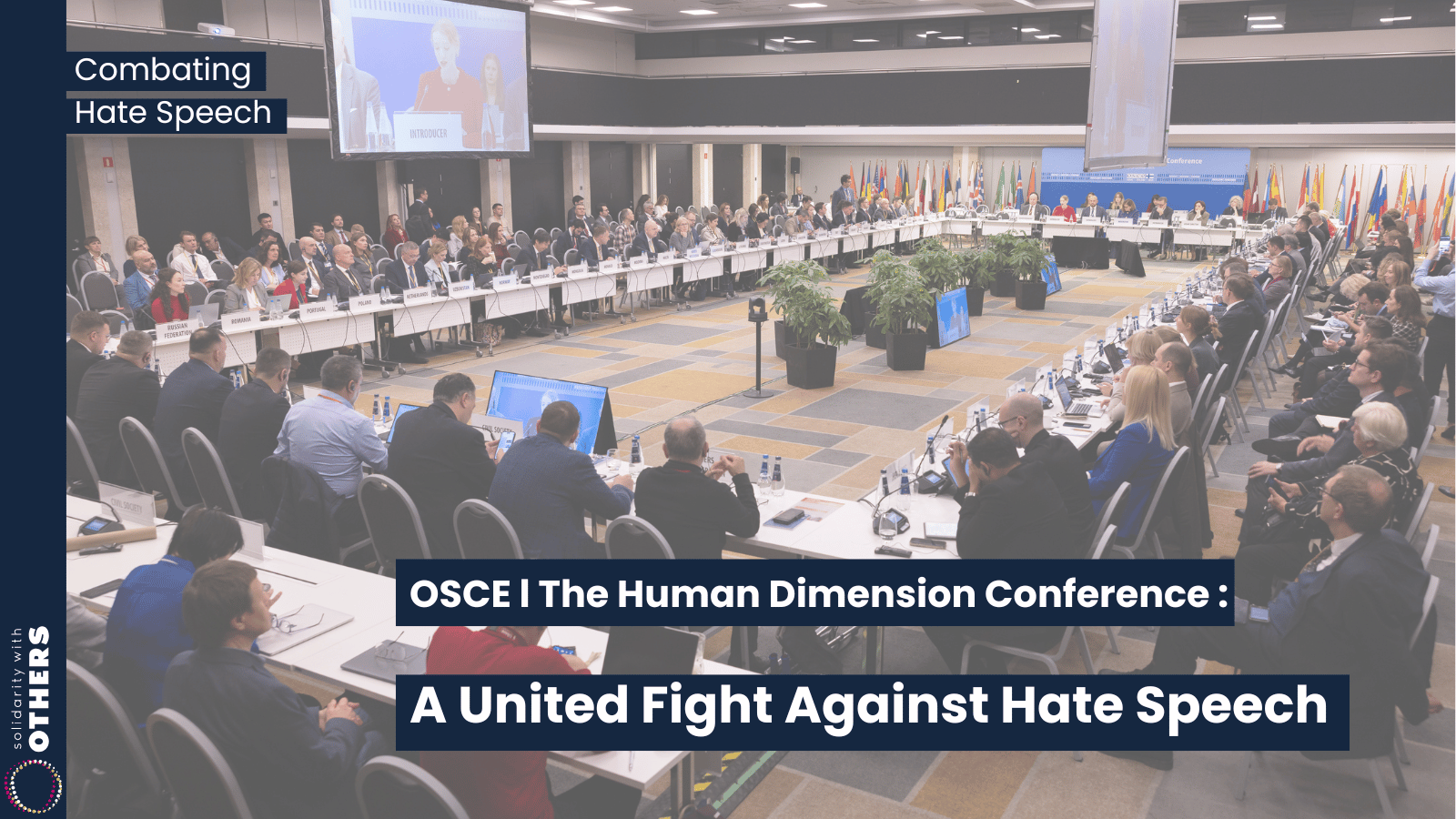
For Solidarity with OTHERS, participating in this year’s Human Dimension Conference was about more than representation — it was about contributing our experiences into the international human rights dialogue, and making sure that our perception, and the realities we see each day are reflected in policy discussions.
The Rise of Right-wing and Populist Tendencies in Connection to Hate Speech
Hate has become socially acceptable, stigmatising and dehumanising people based on characteristics like age, ethnicity, language, nationality, religion, sex and sexual orientation (Immenkamp, Zamfir, & de Groot, 2024). In recent years, right-wing ideologies, and populist movements have risen across the world. The latest European elections has revealed growing support for radical right‐wing populist parties – with politicians, often using exclusionary language to demonize ethnic minorities and immigrants under the disguise of being ‘concerned citizens’ (Pérez-Escolar, Morejón-Llamas, & Alcaide-Pulido, 2025, p. 1).
The use of hate speech threatens a cohesive, democratic society, while hiding its instigators from accountability. Something that has been intensified through online forums, and social media, allowing racism and discrimination, to spread rapidly – reaching previously unexposed audiences. Showing us that philosopher Karl Popper’s ‘paradox of tolerance’ (1945), remains deeply relevant today, as it warns that unlimited tolerance can eventually destroy tolerance itself, and questions if freedom of speech should extend to extremist, or violent views (Trepainer, S., 2025). The paradox is not abstract; hate that starts as speech can quickly turn into discrimination and physical violence. A danger that was emphasized by the UN Secretary-General António Guterres in 2019, “Addressing hate speech does not mean limiting or prohibiting freedom of speech. It means keeping hate speech from escalating into something more dangerous, particularly incitement to discrimination, hostility and violence, which is prohibited under international law” (United Nations, n.d.). His words highlight the urgent need for action, and by linking the issue to international law, he emphasizes that it is a global challenge, requiring collaborative solutions to ensure accountability for those responsible.
Current Human Right Challenges
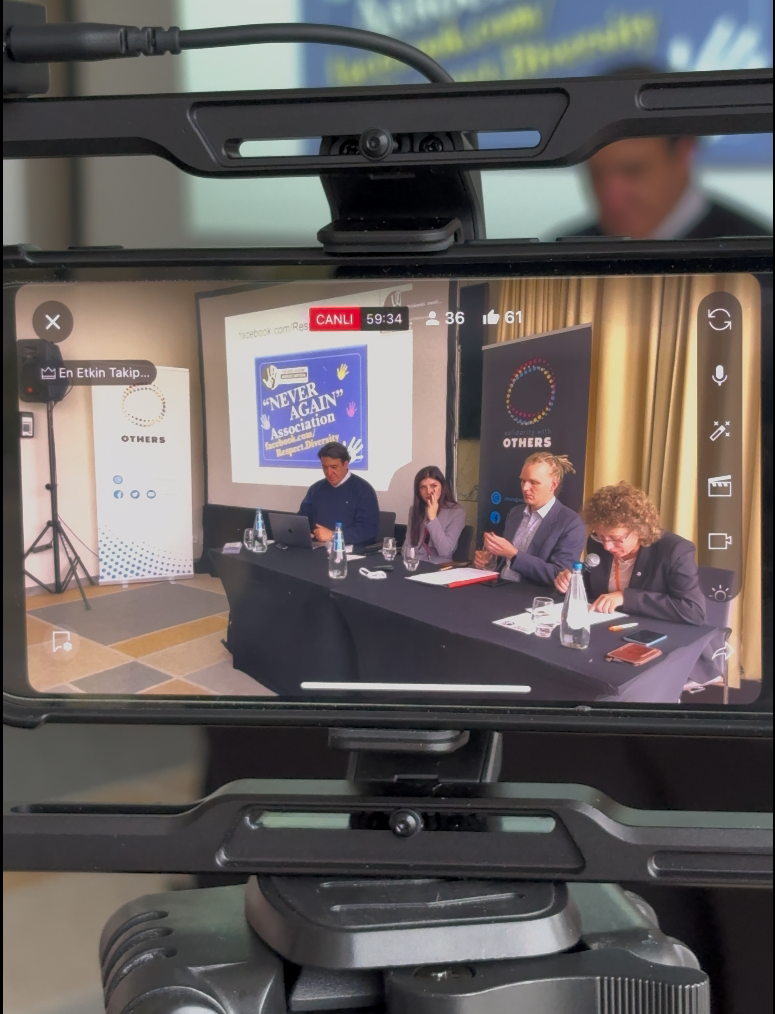 During the OSCE conference, Solidarity with OTHERS hosted a side event, in collaboration with the No Hate Speech Network, that brought together experts, educators, and activists, utilizing their experiences and individual perspectives in order to collaboratively identify solutions to protect human rights, and support conflict prevention, crisis management, and post-conflict rehabilitation (Organization for Security and Co-operation in Europe, n.d.).
Although 2025 marked the 50th year anniversary of the Helsinki Final Act, the repeated violations of its principles are a strong reminder of the Act’s importance. One of the most grave violations of current time is Russia’s invasion of Ukraine, as two OSCE member States, the war represents severe violations, threatening sovereignty, territorial integrity. Beyond breaching international commitments to uphold peace, these violations compromise the human rights of the invaded State’s
population. Likewise, the devastating Genocide in Gaza, shows severe breaches of international commitments, and violations of the human rights of the occupied Palestinian population.
These crises have contributed to a dramatic spike in anti-jewish and anti-muslim discrimination, and hate crime and – as previously mentioned – hate speech, both on-and-offline around the world, bringing the conflict beyond politicians and military, and into everyday society. (Immenkamp, Zamfir, & de Groot, 2024).
The holy trinity, a multi-level collaborative approach to equality
Tackling inequality, and building systems for lasting change, is no easy task, yet of utmost importance, and calls for collaboration across States. Achieving meaningful progress in human rights issues is dependent on what can be described as ‘the holy trinity’: multi-level collaboration between States, civic engagement, and NGOs. Guided by the Helsinki principles, the trinity acknowledges that human rights challenges are interrelated and appear on multiple levels, including cross-boarder intersections. By building on the testimonies and needs of participating States the OSCE works towards ensuring more sustainable and inclusive solutions.
Conclusion
Real, lasting change requires a coordinated effort through education, legal frameworks, technology, and civic engagement to ensure accountability, and lasting solutions. The importance of a unified sense of responsibility, and effort is essential: real change is not achieved until justice is realized for everyone.
References:
Immenkamp, B., Zamfir, I., & de Groot, D. (2024, September). Hate speech and hate crime: Time to act? (EPRS Briefing No. 762.389). European Parliamentary Research Service. https://www.europarl.europa.eu/RegData/etudes/BRIE/2024/762389/EPRS_BRI(2024)762389_EN.pdf
Organization for Security and Co-operation in Europe. (n.d.). Who we are. OSCE.
https://www.osce.org/who
Pérez-Escolar, M., Morejón-Llamas, N., & Alcaide-Pulido, P. (2025). Populist rhetoric and hate speech: Analyzing xenophobic narratives in VOX’s 2023 election campaign. Politics & Governance, 13, Article 9346. https://doi.org/10.17645/pag.9346
Trepanier S. (2025). The Paradox of Tolerance as a Shield to Demonstrate Intolerance. Journal of continuing education in nursing, 56(8), 312–313.
https://doi.org/10.3928/00220124-20250718-03
United Nations. (n.d.). Hate speech versus freedom of speech. UN.
https://www.un.org/en/hate-speech/understanding-hate-speech/hate-speech-versus-freedom-of-speech