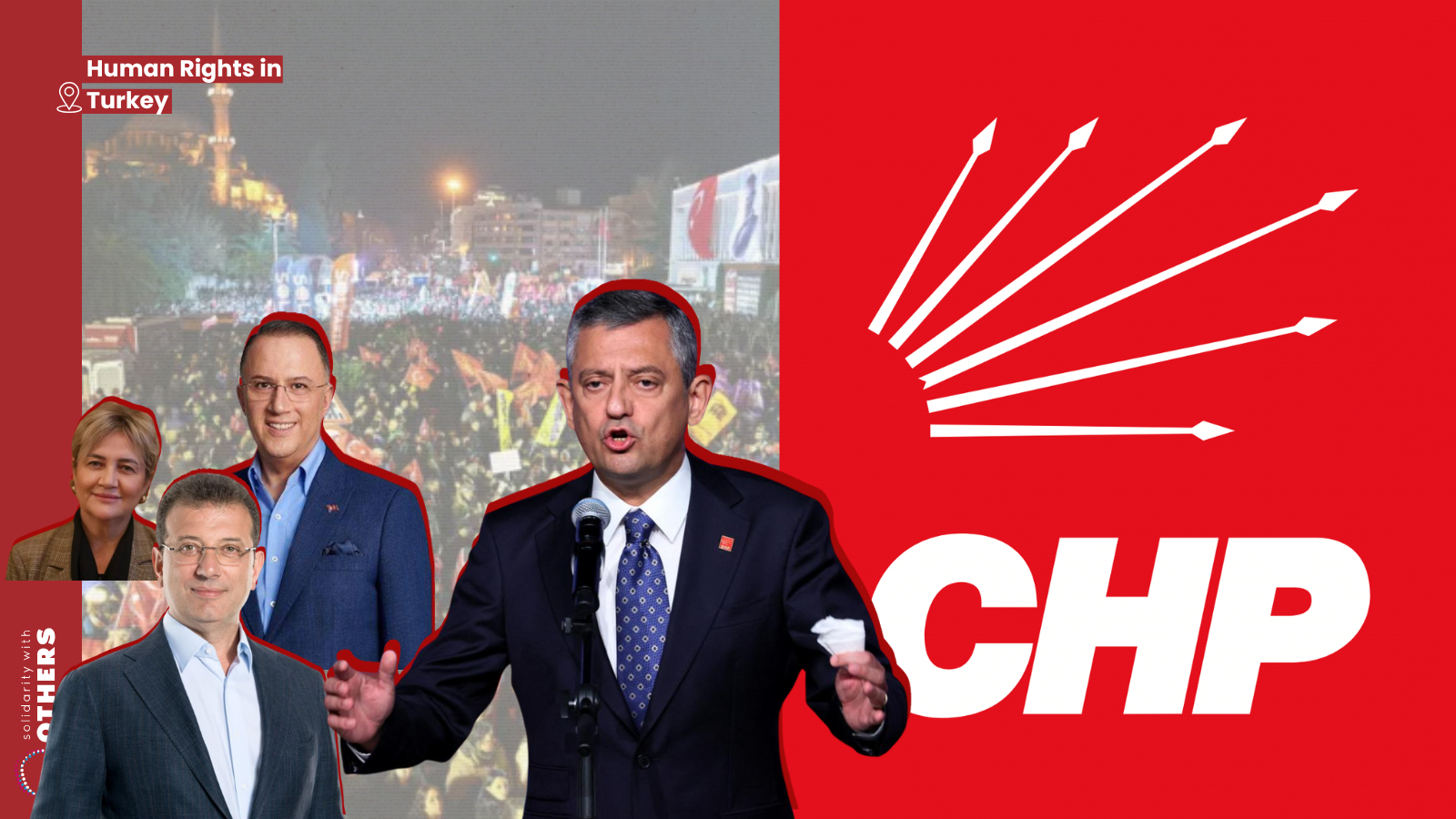
A detailed chronology of events between late 2024 and 2025 documenting the crackdown on Turkey’s main opposition party and President Erdoğan’s top rival
Table of Contents
Executive Summary
Over the past year, President Recep Tayyip Erdoğan’s government has launched an unprecedented crackdown on Turkey’s main opposition party, the Republican People’s Party (CHP). Dozens of opposition mayors and officials have been detained or removed from office on dubious charges of corruption, terrorism links, or “insulting” authorities. This includes the high-profile jailing of Istanbul Mayor Ekrem İmamoğlu – Erdoğan’s potential presidential rival – and at least 16 other CHP mayors, in what observers widely denounce as a politically motivated purge of elected opposition figures.[1]
The crackdown comes in the wake of significant opposition electoral successes. In the March 2024 local elections, the CHP swept most major cities – including Istanbul, Ankara, Adana, and Antalya – handing Erdoğan’s ruling AK Party (AKP) its biggest local defeat in years.[2] In response, authorities have systematically targeted the CHP’s power base, jailing mayors, imposing state trustees over CHP-run municipalities, and even meddling in the party’s internal leadership. Courts have annulled CHP party congress results and provincial leadership elections, steps seen as aiming to unseat CHP’s new leader Özgür Özel and destabilise the party from within.[3] [4] These moves threaten to eviscerate Turkey’s democratic opposition and tighten Erdoğan’s grip on power ahead of the next national elections.
The methods employed in this crackdown raise grave legal and human rights concerns. Opposition figures face trumped-up prosecutions and prolonged pre-trial detentions, undermining judicial independence and due process.[5] There are reports of ill-treatment and torture of detainees – including the strip-search and abuse of female protestors in custody[6] – and politically driven denial of medical care to imprisoned opposition members, some of whom are seriously ill[7]. Mass arrests of protestors and blanket bans on public gatherings have violated the rights to freedom of expression and assembly.[8] The impartiality of Turkey’s judiciary is widely questioned, as courts and prosecutors appear to selectively pursue opposition members while insulating ruling-party figures – a pattern that signals the erosion of the rule of law in Turkey.
The crackdown has been accompanied by sweeping censorship and intimidation of media and civil society. Independent news outlets and journalists face harsh reprisals for reporting on opposition activities: Turkey’s media regulator (RTÜK) has banned broadcasts on opposition-friendly TV channels and threatened others over their protest coverage.[9] Social media platforms are pressured to censor content critical of the government – with Twitter (X) blocking hundreds of accounts at Ankara’s request and a Turkish court banning access to sites that published an opposition boycott call.[10] Journalists covering anti-government protests have been detained, deported, or prosecuted, stifling press freedom.[11] Meanwhile, authorities have violently dispersed peaceful demonstrations with tear gas and rubber bullets, and arrested over 1,800 protesters in the wake of İmamoğlu’s arrest along.[12] This multi-pronged suppression of dissent has cultivated a climate of fear, further shrinking Turkey’s civic space.
Government crackdown on the CHP – Turkey’s oldest political party – marks a dangerous escalation in the country’s authoritarian drift. By effectively criminalising the mainstream opposition, the Turkish government risks destroying democratic competition and leaving millions of voters disenfranchised. The crackdown has already sparked the largest street protests Turkey has seen in a decade[13] and drawn condemnation from opposition groups, human rights organisations, and international observers who call it a blatantly anti-democratic campaign.[14] This report provides a detailed chronology of these developments and analyses their political context and legal ramifications. It concludes with actionable recommendations for the international community, human rights bodies, and democratic governments to address this rapidly deteriorating situation and to support the restoration of democratic norms and human rights in Turkey.
Introduction
Turkey is experiencing one of the most significant political crackdowns in its recent history. President Erdoğan’s administration, long criticised for authoritarian tendencies, has turned its sights on the country’s largest opposition bloc – the secular center-left Republican People’s Party (CHP). In the past year, a series of events has unfolded that suggests a concerted campaign to weaken or incapacitate the CHP and its leading figures. This campaign intensified dramatically with the detention of İstanbul’s Mayor Ekrem İmamoğlu in March 2025 on dubious charges, a move that many view as an attempt to eliminate Erdoğan’s most formidable political rival.[1] İmamoğlu, a charismatic figure who twice defeated Erdoğan’s party in Istanbul’s mayoral races (2019 and 2024) and was being touted as a possible presidential candidate, became a central target. Notably, just one day before his arrest, İstanbul University annulled İmamoğlu’s college diploma – a constitutional prerequisite for presidential office – in what was widely seen as a preemptive strike to bar him from running in the 2028 elections.[2]
This report draws on a detailed chronology of events from late 2024 through 2025 documenting the crackdown on the CHP and İmamoğlu. It provides a contextual analysis of these developments, examining the political motivations behind Erdoğan’s actions and the consequences for Turkey’s democracy. It also explores the legal and human rights implications, as the crackdown has involved mass arrests, alleged abuses of the justice system, and violations of fundamental rights. Furthermore, the report discusses how media freedom and the right to protest have been curtailed during this period, silencing dissent and shielding the government’s actions from scrutiny.
The stakes are high: The CHP, founded by the republic’s founder Mustafa Kemal Atatürk, is not only Turkey’s oldest political party but also the primary representative of nearly half the Turkish electorate in recent elections. A state-led onslaught against the CHP thus represents an assault on pluralism and the democratic process itself. Understanding the breadth of this crackdown – from courtroom maneuvers to street-level repression – is crucial for the international community, legal experts, NGOs, and human rights defenders who are monitoring Turkey’s trajectory. In the sections that follow, we chronicle key events in President Erdoğan’s offensive against the opposition, analyze the broader political context and implications, and finally present recommendations for how global actors can respond to support democracy and human rights in Turkey.
Political Context: President Erdoğan’s Dominance and Opposition Under Siege
A Campaign to Nullify Electoral Defeat
President Erdoğan’s aggressive actions against the CHP must be viewed in the context of Turkey’s recent electoral politics. In the March 2024 local elections, the CHP and its allies dealt a stinging blow to ruling AK Party (AKP) by winning mayoralties in many of Turkey’s largest cities. Istanbul – the country’s economic and cultural hub – remained in CHP hands with Ekrem İmamoğlu’s re-election, and other major metros like Adana, Antalya, Ankara, and İzmir were governed by opposition mayors. This urban victory was described as the AKP’s “biggest ever electoral defeat” at the municipal level.[3] For an embattled President Erdoğan, who had narrowly secured his own presidential re-election in 2023, the prospect of a reinvigorated opposition controlling key cities and building momentum was clearly unwelcome.
Rather than accepting the electorate’s choices, the government appears to have opted for nullifying the opposition’s gains through the courts and police. Shortly after these elections, authorities began targeting CHP-run municipalities with investigations and raids. In fact, the legal crackdown began in late 2024: on 31 October 2024, a CHP district mayor in Istanbul (Esenyurt Mayor Ahmet Özer) was jailed pending trial for alleged links to the outlawed PKK militant group.[4] In early January 2025, another opposition mayor in Istanbul (Beşiktaş Mayor Rıza Akpolat) was arrested in a so-called corruption probe involving public tenders.[5] These moves signalled the opening salvo of a campaign that would soon widen to encompass dozens of local officials across Turkey.
By mid-2025, the scale of this purge was unmistakable. At least 16 CHP mayors had been jailed (with additional mayors placed under house arrest or suspended) since the opposition’s local election triumph, according to opposition tallies.[6] Even CHP mayors of major metropolitan areas have not been spared. For example, in July 2025, the elected mayors of Adana, Antalya, and Adıyaman were simultaneously detained in pre-dawn operations on vague corruption allegations.[7] The CHP decried these high-profile arrests as “politically motivated efforts to undermine the 2024 local election results”.[8] Similarly, in İzmir – another opposition stronghold – authorities launched a massive sweep: 120 people were detained on 4 July as part of a probe into a municipal company, including İzmir’s former mayor Tunç Soyer and the CHP’s provincial chair, with 60 of those detained formally arrested.[9] This level of simultaneous, nationwide action against opposition officials is unprecedented in Turkey’s multi-party history.
Dismantling Opposition Strongholds and Installing Trustees
A defining feature of government crackdown is the strategy of ousting elected CHP officials and replacing them with government-aligned trustees or appointees, effectively undoing election outcomes. This tactic was employed extensively in the past against pro-Kurdish mayors, but is now being used against the CHP. Following the waves of arrests, the Interior Ministry and courts have moved to remove opposition mayors from office on various pretexts. For instance, after Istanbul Mayor İmamoğlu’s detention in March 2025, the Interior Ministry swiftly suspended İmamoğlu and two Istanbul district mayors (in Beylikdüzü and Şişli), and appointed a state trustee to at least one of those municipalities (Şişli) pending new council elections.[10] In another case, in August 2025, the government removed the CHP mayor of Beyoğlu (İstanbul) from office entirely, ostensibly due to a corruption investigation – a move critics said was part of a broader purge of opposition mayors under false pretenses.[11] By June 2025, the Interior Ministry had also suspended or removed 11 CHP district mayors across the country following their arrests on various charges.[12]
These actions mirror the AKP’s past treatment of Kurdish HDP mayors (many of whom were replaced by Ankara-appointed “trustees” after 2016), and their extension to CHP officials underscores an expansion of authoritarian control beyond traditional targets. In effect, voters in opposition-held areas are seeing their chosen leaders criminalised and replaced by unelected authorities, calling into question the meaningfulness of local democracy in Turkey. As one CHP figure put it, the government is “cracking down on opposition mayors under the guise of corruption probes” to reverse election outcomes.[13]
Targeting the CHP’s Organisational Structure
Beyond individual office-holders, the crackdown has encroached into the CHP’s party organisation itself, suggesting an attempt to weaken the party at its core. In late 2023, the CHP underwent a leadership change after its long-time chairman Kemal Kılıçdaroğlu was defeated in an intra-party election by challenger Özgür Özel. Not long thereafter, Turkey’s judiciary took a keen interest in CHP internal matters. In February 2025, prosecutors opened an investigation into the CHP’s 38th Ordinary Congress (where Özel was elected leader), even summoning former leader Kılıçdaroğlu for questioning as a witness.[14] The ostensible rationale was to probe allegations of voting irregularities in the party election – an extraordinary intrusion of the state into the affairs of an opposition party.
By mid-2025, this meddling escalated. On 30 August 2025, İstanbul prosecutors indicted 10 CHP officials, including the party’s Istanbul provincial chairman, on charges of election irregularities during the 2023 CHP provincial congress.[15] And in early September, an Istanbul court went so far as to annul the CHP’s recent Istanbul provincial congress altogether, dismissing the elected CHP provincial chair (Özgür Çelik) and his board, suspending nearly 200 party delegates, and installing a five-member caretaker board to run the province’s CHP branch.[16] Critics immediately warned that this move “paves the way for annulling the party’s national leadership vote” in an upcoming court hearing.[17] In other words, there is a genuine fear that the judiciary may overturn Özgür Özel’s election as CHP leader and force the party into chaos or new internal elections – a scenario that would delight the AKP. (Indeed, President Erdoğan publicly welcomed recent defections of some CHP mayors to the AKP and spoke glowingly of disarray in opposition ranks.[18]) CHP leader Özgür Özel has characterised the onslaught of legal cases as a “coup attempt” against the opposition, aimed at incapacitating the AKP’s chief rival.[19]
President Erdoğan’s Motives and the Road to 2028
President Erdoğan’s motivations for this crackdown are deeply intertwined with his long-standing hold on power and plans for the future. Having led Turkey for 22 years, President Erdoğan is constitutionally term-limited from running again in 2028 – unless he can justify an early election or a legal workaround.[20] Many analysts believe Erdoğan may seek to extend his rule, and eliminating popular opponents like İmamoğlu is crucial for that agenda. İmamoğlu in particular, a telegenic mayor with broad appeal, has consistently polled ahead of Erdoğan in hypothetical matchups.[21] His imprisonment not only removes a key challenger from the political field but also serves as a warning to any other ambitious opposition figures.
Furthermore, by portraying the crackdown as a fight against “corruption” and “terrorism,” President Erdoğan aims to rally his base and justify extraordinary measures. He has claimed that the sweeping probes into CHP municipalities are necessary to “clean up” a vast network of graft. However, given the selective focus on opposition strongholds, few outside Erdoğan’s circle take these justifications at face value. Opposition leaders and international observers widely regard the crackdown as politically driven persecution rather than an even-handed application of law. Indeed, the timing – immediately after significant AKP electoral defeats – strongly suggests a retaliatory motive.
In sum, the political context of government crackdown on the CHP is one of an authoritarian leader moving to safeguard his incumbency at all costs. By wrenching control of local governments away from the opposition and crippling the CHP’s capacity to organise, President Erdoğan is effectively attempting to rewrite the outcome of elections and dictate the terms of political competition. This sets the stage for a profoundly uneven playing field heading into Turkey’s next general elections. The following sections will explore how these political maneuvers have entailed serious violations of legal norms and basic rights.
Legal and Human Rights Implications of the Crackdown
The ongoing crackdown not only carries political significance but also represents a severe challenge to the rule of law and human rights in Turkey. Legal experts and rights advocates observe that the government is weaponising the judiciary and law enforcement to punish and intimidate the opposition, eroding judicial independence and due process guarantees. This section examines key legal concerns arising from the crackdown, including politically motivated prosecutions, erosion of fair trial standards, and allegations of serious human rights abuses such as arbitrary detention and torture.
Politically Motivated Prosecutions and Erosion of Judicial Independence
A hallmark of the crackdown is the proliferation of criminal cases against CHP politicians and officials that appear to be driven more by politics than evidence. The charges range from corruption and fraud to terrorism links and insulting the president – broadly framed allegations that are routinely levelled against critics of the government in today’s Turkey. What makes the CHP cases stand out is their sweeping, coordinated nature and the targeting of individuals who are political obstacles to the ruling regime.
One clear example is the case of Ekrem İmamoğlu. Officially, İmamoğlu was arrested on corruption and “misuse of office” charges related to municipal contracts. Yet, prosecutors have conspicuously failed to issue any detailed indictment months later, and the CHP flatly maintains that the charges are fabricated. The context – coming days before his expected nomination as presidential candidate – suggests that neutralising İmamoğlu politically was the true objective. Similarly, numerous CHP mayors arrested in 2024-2025 were suddenly accused of past misconduct (such as “tender rigging” or vague corruption dating back years) only after their electoral victories over AKP rivals. For instance, when the CHP mayor of Esenyurt was jailed in October 2024 on terrorism-link charges, it marked the start of this campaign. Notably, Esenyurt is a large Istanbul district the AKP has long hoped to control, raising suspicions about the prosecution’s timing.
The breadth of investigations also raises eyebrows. As of mid-2025, hundreds of CHP members and municipal staff have been detained or jailed on accusations ranging from graft to terror links.[22] Entire city councils and administrative departments in CHP-run cities have been subjected to police raids. For example, Istanbul’s municipal government saw 47 officials hit with detention warrants in a single sweep on 31 May 2025 – a move critics labelled a blatant effort to paralyse the opposition-led city administration.[23] Likewise, in Antalya, police detained 17 people in the CHP-run metropolitan municipality in September 2025, after the arrest of the city’s mayor, in what the opposition called a “politically motivated crackdown” rather than a genuine corruption inquiry.[24] The pattern is striking: investigations tend to coincide with political flashpoints (e.g. immediately after protests or electoral defeats for the AKP), and they disproportionately target opposition figures, whereas corruption allegations involving pro-government officials often go untouched. This fuels the perception that law enforcement is being selectively used as a tool against the ruling party’s opponents.
The independence of the judiciary is also under question. High-profile judges and prosecutors known for ruling in favour of government interests have been involved in key cases against CHP figures. A notable example cited by observers is Judge Akın Gürlek, who gained notoriety for decisions in cases against Erdoğan critics, and is now leading several investigations against CHP mayors in Istanbul.[25] The climate in Turkey’s courts has grown so politicised that CHP leader Özgür Özel himself is under investigation simply for publicly criticising the Istanbul Chief Prosecutor’s perceived bias.[26] The message to the judiciary is clear: those who advance cases against the opposition are rewarded, and those who rule otherwise risk their careers. Such an environment gravely undermines due process. Opposition lawyers note that standard legal safeguards are being ignored – for instance, lengthy pre-trial detentions have become routine, bail is frequently denied without clear justification, and indictments (if filed at all) often lack concrete evidence linking defendants to actual crimes.
International and domestic legal communities have sounded alarms over these trends. The sheer scale of the crackdown – “hundreds of people detained or jailed”, including lawyers and elected officials – has been criticised as anti-democratic and politicised by opposition parties, human rights groups and some European leaders, although the government insists the judiciary acts independently.[27] The Council of Europe, to which Turkey is a party, has mechanisms (such as the European Court of Human Rights) that have previously found Turkey in violation of political rights in similar cases (e.g. rulings on imprisoned Kurdish politicians). In the current CHP crackdown, the legal harassment of a mainstream opposition party on this scale is without precedent in Turkey’s post-1980 history. It represents a full-frontal assault on the concept of an opposition free to challenge those in power within a democratic system.
Arbitrary Detentions and Politically-Driven Charges
Many of the legal actions taken against CHP members appear to violate basic principles of criminal justice, particularly the requirement that charges be based on clear evidence of wrongdoing rather than political expression. Several common charges have been leveraged against CHP figures during this period, often in an abusive manner:
- “Insulting” Offenses: Turkey’s penal code criminalises insulting the President or state officials, provisions that have been widely used to stifle dissent. During the crackdown, CHP officials and even citizens have been arrested for alleged “insults” over remarkably trivial incidents. In one case, 10 members of a leftist party (TİP) were detained for chanting slogans deemed insulting to President Erdoğan at a CHP rally.[28] In another, union leaders in İzmir were arrested simply because they chanted slogans against İmamoğlu’s jailing that allegedly insulted the President.[29] Such uses of “insult” laws clearly aim to punish political speech. Even a CHP lawmaker, Cemal Enginyurt, faced an investigation for “insulting and threatening” President Erdoğan based on a parliamentary speech critical of the President.[30] These examples reflect how ordinary political expression is being criminalised. The European Court of Human Rights has repeatedly ruled against Turkey’s misuse of insult laws, but the practice continues unabated.
- Terrorism-Related Charges: Another troubling aspect is the recourse to terrorism charges without compelling evidence, in order to detain opposition figures. The October 2024 jailing of the Esenyurt mayor on PKK affiliation claims is one instance.[31] More broadly, authorities have suggested that some CHP-run municipalities covertly aided terrorist groups – for example, alleging that public contracts were funnelled to a far-left militant group (DHKP/C) years earlier. This led to the arrest of a dozen people including a former CHP mayor on terror charges in March 2025.[32] The timing and selective nature of these terrorism allegations raise red flags. By branding opponents as security threats, the government can justify draconian measures and lengthy detentions. Yet independent observers note that the evidence presented is often scant or based on secret witness testimony, heightening concerns of arbitrary detention. Even CHP’s most prominent figure, İmamoğlu, was absurdly linked by pro-government media to terrorism (suggesting his administration hired workers with terror group ties) – a claim used to muddy the waters as his corruption case faltered.
- Retrospective Corruption Investigations: Many CHP mayors are accused of corruption (fraud, bid-rigging, bribery) in relation to municipal contracts or services. While corruption must be taken seriously, the context here is suspect. Investigations have overwhelmingly focused on opposition-controlled cities, and they intensified only after the CHP’s electoral wins. For instance, a bid-rigging probe in Istanbul’s Beşiktaş municipality in April 2025 led to the detention of a deputy mayor and others.[33] In May 2025, Istanbul prosecutors charged a dozen individuals, including İmamoğlu, for alleged “vote manipulation” at a 2023 party congress – effectively treating an internal party election dispute as a criminal conspiracy.[34] Moreover, the government’s double standards are evident: it has financially pressured CHP municipalities for debts while rarely scrutinising AKP-run cities. In one notable act of economic coercion, the Treasury in December 2024 froze bank accounts or imposed sanctions on six opposition-run city governments (including Istanbul and Ankara) over debts to the social security fund, a move seen as punitive since such debts are typically restructured without such drastic action.[35] This selective enforcement suggests the law is being wielded as a political bludgeon rather than applied impartially.
Combined, these practices indicate a collapse of the line between criminal conduct and political opposition in Turkey. The right to a fair trial as enshrined in Turkey’s constitution and international law (e.g. Article 6 of the European Convention on Human Rights) is under severe strain. When opposition figures are detained en masse on dubious charges, kept in custody without timely indictment, and tried in courts where outcomes seem predetermined, the fundamental presumption of innocence and equality before the law is fatally undermined. It creates a system of de facto political offences – something fundamentally at odds with democratic governance and the rule of law.
Human Rights Abuses: Ill-Treatment, Health Neglect, and Suppression of Basic Freedoms
The human cost of government crackdown is increasingly apparent in the numerous reports of rights violations against those caught in its net. Beyond the legal injustices, there are credible allegations of inhumane treatment of detainees and prisoners, as well as broad violations of basic freedoms such as expression, assembly, and media freedom (the latter two will be addressed in the next section).
Several CHP-affiliated mayors and officials in custody have suffered serious health issues, amid accusations that authorities are neglecting or even aggravating their conditions as a form of pressure. A prominent example is Mehmet Murat Çalık, the CHP mayor of Istanbul’s Beylikdüzü district, who was arrested and later diagnosed with a possible recurrence of lymphoma (cancer). Despite medical reports advising urgent treatment and even release on health grounds, Çalık was sent back to prison in August 2025 by order of the state’s Council of Forensic Medicine, raising an outcry that his life was being endangeringly politicised.[36] Around the same time, Şükrü Genç, a 71-year-old former CHP mayor imprisoned on questionable terror charges, was reported to be “slowly dying” of untreated colon cancer and other ailments in Silivri Prison.[37] Family and supporters allege he has been denied adequate care, highlighting a pattern of medical neglect that critics say is driven by political vendetta. International standards, including the UN’s Nelson Mandela Rules for prisoner treatment, insist that prisoners have access to proper healthcare; the accounts from Turkey suggest these standards are being willfully ignored for political prisoners.
Treatment of detainees during arrests and custody has also raised alarm. As mass arrests of protesters unfolded in March–April 2025, reports of police brutality and torture emerged. The Ankara Bar Association documented the cases of seven women who were detained on 22 March for protesting İmamoğlu’s arrest and later alleged they were subjected to torture and ill-treatment, including strip searches and physical abuse while in custody.[38] One detainee placed under house arrest described being sexually harassed and violently assaulted by police during detention, prompting a legal complaint and bar association monitoring.[39] Such abuses suggest a disturbing willingness of security forces to inflict degrading treatment to instill fear. The fact that Turkey’s own lawyers’ associations and the Council of Europe’s Committee for the Prevention of Torture (CPT) have intervened – the CPT even conducted an ad hoc visit to Turkey in April 2025 to investigate these mistreatment claims[40] – underscores the severity of the allegations. Torture and inhuman treatment are absolutely prohibited under both Turkish law and international conventions (like the European Convention on Human Rights, Article 3), yet the persistence of such reports indicates a climate of impunity for security personnel dealing with opposition protesters.
The crackdown has also run roughshod over freedoms of expression and association in less overtly violent ways. The government has routinely banned opposition demonstrations, censored speech, and punished individuals for peaceful activism during this period. For instance, in the immediate aftermath of İmamoğlu’s arrest, several local governors (who are centrally appointed) issued blanket bans on all protests and public gatherings – Ankara banned protests for six days, İzmir for four days[41] – essentially outlawing the opposition’s right to rally support at a critical moment. On another occasion in April 2025, the Ankara Governor’s Office even denied the CHP permission to hold a march to celebrate a national holiday, a march that was a symbolic protest against the crackdown.[42] By forbidding even such commemorative gatherings, authorities signalled that any show of collective opposition, no matter how symbolic or peaceful, would be suppressed.
Civil society groups and ordinary citizens have also been targeted. Students at state-run dormitories who participated in anti-government protests were threatened with eviction and disciplinary action, with some indeed being expelled from their housing – despite court precedents that peaceful protest should not result in loss of student rights.[43] A teachers’ union (Eğitim Sen) faced a criminal investigation merely for supporting a student boycott in protest of İmamoğlu’s detention.[44] These examples demonstrate the expansion of repression to every corner of society: not just politicians and journalists, but also educators, students, and activists face repercussions for any form of dissent. The cumulative effect is a severe chilling effect on public life.
In summary, the legal and human rights dimensions of the crackdown paint a picture of a state that is departing from core democratic values and international norms. The principles of transparent justice, presumption of innocence, protection from torture, and the freedoms of speech and assembly – all guaranteed under Turkey’s constitution and the international treaties it has signed – are being overridden by security-state tactics aimed at silencing opposition. The next section will delve further into how media freedoms and public dissent have been curtailed, as those are key battlegrounds in this confrontation between President Erdoğan’s government and its critics.
Media Freedom Under Fire and Suppression of Dissent
Free media and the right to protest are the lifeblood of any democracy; in Turkey, these have been prime casualties of government crackdown. In tandem with the legal assault on the opposition, authorities have moved forcefully to control the narrative and prevent mobilisation by silencing journalists, censoring news and social media, and crushing public demonstrations. This section discusses how media outlets and reporters have been targeted, and how protesters and civil society have faced heavy-handed repression, as documented in the chronology of events.
Censorship, Broadcast Bans, and Targeting of Journalists
The Turkish government’s response to opposition and public dissent has included an aggressive campaign of media censorship and intimidation. As CHP-led protests and criticism of the crackdown grew, state institutions acted swiftly to curb independent reporting and critical voices:
- Broadcast Blackouts: The Radio and Television Supreme Council (RTÜK), Turkey’s state media regulator headed by ruling-party allies, has imposed severe penalties on broadcasters deemed sympathetic to the opposition. Notably, RTÜK issued a 10-day broadcast ban on Sözcü TV, a pro-opposition television channel, accusing it of “inciting public unrest” through its coverage of the protests following İmamoğlu’s arrest.[45] This draconian sanction effectively took the channel off air during a crucial period when the public was seeking information about the mass demonstrations. Around the same time, RTÜK also sanctioned other opposition-aligned stations for their protest coverage[46] and even publicly warned TV broadcasters not to allow personal commentary on İmamoğlu’s detention – threatening them with further punishment for any narrative diverging from the official line.[47] Such actions blatantly violate freedom of the press, as they amount to state censorship of content and viewpoints that the government finds inconvenient.
- Social Media Clampdown: Social media – one of the few spaces for relatively free discourse in Turkey – has been another front of the censorship push. Turkish authorities have leveraged new internet laws and their influence over tech companies to block or filter online content about the protests and opposition actions. In the days after İmamoğlu’s arrest, the government ordered the blocking of 126 social media accounts (many belonging to journalists, activists, or student groups) that were sharing protest information.[48] Platform X (formerly Twitter), under pressure, initially complied by blocking access to certain critical accounts within Turkey[49], though it later legally challenged some of these orders at Turkey’s Constitutional Court.[50] Additionally, X was found to have blocked the account of Bianet, a well-respected independent news outlet, following government demands during the protests.[51] Meanwhile, Facebook’s parent company Meta reportedly resisted some censorship demands and was hit with a substantial fine by Turkish regulators for not suspending protest-related accounts – illustrating the government’s willingness to even penalise global companies to enforce information control.[52] Perhaps most tellingly, when the CHP publicly called for a boycott of pro-government businesses and media (to protest biased coverage), a Turkish court banned access to websites that published the boycott list[53], an extraordinary intervention to shield government-friendly enterprises from a peaceful opposition campaign. Even İmamoğlu’s own voice was muzzled online: courts ordered access bans on his official Twitter accounts, forcing him to communicate through lawyers with messages decrying the “political censorship” against him.[54]
- Harassment and Detention of Journalists: On the ground, reporters trying to cover opposition events have faced obstruction, violence, and arrest. The chronology records multiple incidents: In late March 2025, as protests raged in Istanbul, at least seven journalists and photojournalists were detained by police while covering the demonstrations, prompting public outrage and their eventual release.[55] International media were not spared: the BBC’s Istanbul correspondent Mark Lowen was detained and deported simply for reporting on the protests[56], and a Swedish journalist arriving to cover the unrest was immediately detained at the airport and expelled the next day.[57] These actions sent a chilling message to foreign press to stay away. Turkish journalists have also been targeted in unrelated incidents that appear aimed at discouraging investigative reporting. For example, in January 2025 a local journalist, Cihan Polat, was detained by gendarmes over an article exposing alleged corruption involving an AKP politician’s family[58]; a CHP city council member quoted in that article was detained as well.[59] In April 2025, two well-known Turkish journalists, Timur Soykan and Murat Ağırel, were briefly detained on dubious allegations of “blackmail” related to a media sale – a move widely interpreted as retaliation for their critical coverage of the government’s handling of İmamoğlu’s arrest.[60] By June and July, reporting even routine opposition events had become perilous: three reporters from the opposition Cumhuriyet newspaper were arrested and handcuffed while covering a CHP rally in Istanbul[61]; and prosecutors sought to jail seven other journalists on charges of participating in unlawful protests, simply because they were reporting from the scene of demonstrations.[62] These patterns indicate that journalists who do not echo the government narrative are being treated as enemies of the state.
- Direct Censorship of Opposition Voices: The crackdown has extended to directly silencing prominent dissidents in media. A striking example is the treatment of Can Dündar, a renowned exiled Turkish journalist. In September 2025, after Dündar urged citizens to protest the government’s takeover of CHP institutions, an Istanbul court blocked access to Dündar’s YouTube channel in Turkey, invoking “national security and public order” grounds.[63] This demonstrates how even from exile, opposition voices are being censored to prevent them from reaching the Turkish public.
The cumulative impact on media freedom has been devastating. Turkey was already ranked among the lowest countries for press freedom, and this latest campaign further cements state domination over information. The public’s right to know is severely compromised when broadcasters are muted, online content is filtered, and independent journalists are removed. In effect, Erdoğan’s administration is shielding its crackdown from scrutiny by cutting off the platforms that can expose abuses and amplify dissenting opinions. This media stranglehold goes hand-in-hand with the legal crackdown; each enables the other by limiting oversight and criticism.
Suppression of Protests and Public Dissent
Parallel to silencing the media, the Turkish authorities have taken extreme measures to suppress street protests and intimidate citizens who oppose the crackdown. The right to peaceful assembly has been systematically curtailed through a mix of legal bans, police violence, and punitive legal actions:
- Protest Bans and Dispersal: Immediately after the detention of İmamoğlu on 19 March 2025, spontaneous protests erupted in Istanbul and spread nationwide, reportedly becoming the largest anti-government demonstrations Turkey had seen in a decade.[64] The state’s response was swift and heavy-handed. Security forces in Istanbul used tear gas, water cannons, and rubber bullets to disperse crowds near City Hall, with reports of police chasing and beating protesters through side streets.[65] Within days, officials essentially outlawed protests through blanket orders: the governors of Ankara and İzmir banned all public gatherings for days on end to pre-empt solidarity demonstrations.[66] Even in the face of these bans, protests continued in dozens of provinces, often met with force. The Interior Minister justified zero-tolerance policing by framing the protests as “attempts to provoke chaos”.[67] By late March, the Interior Ministry announced over 1,800 arrests of protesters, with at least 260 people kept in pre-trial detention, essentially criminalising mass protest.[68] Videos and eyewitness accounts described how police in Istanbul’s Saraçhane district fired plastic bullets at crowds and made violent arrests.[69] Such scenes, more reminiscent of martial law than a democracy, highlighted the state’s willingness to use brutality to crush dissent.
- Criminalising Protest Participation: In the aftermath of these demonstrations, authorities launched a legal offensive against those who took to the streets. Istanbul prosecutors filed 20 separate indictments against 819 individuals for simply partaking in anti-government protests, with hundreds of these protesters (278 as noted) held in custody awaiting trial.[70] Many of those indicted are charged with offenses like resisting police or violating protest bans; notably, 16 young protesters were charged with “insulting the president” due to slogans they chanted, and 14 of them were kept in jail for 45 days before trial.[71] The sheer number of people facing prosecution for protest activity is staggering – clearly intended to deter future protests by making an example of participants. The government even targeted those supporting protests indirectly: as mentioned, a teachers’ union faced investigation for endorsing a student boycott, and the CHP itself was castigated for encouraging peaceful civil disobedience (such as the economic boycott campaign). By treating protests as a criminal conspiracy, President Erdoğan’s administration is effectively outlawing dissent in public spaces.
- Police Abuse and Use of Force: The behaviour of law enforcement during the crackdown has raised serious human rights issues. Apart from the earlier noted instances of torture of detainees, there were numerous credible allegations of excessive force during protest policing. Plastic bullets and tear gas were used at close range; lawyers documenting the protests were themselves harassed; even elected opposition MPs were not immune – one CHP MP, Mahmut Tanal, who staged a solitary peaceful protest outside the Justice Ministry, had his protest tent forcibly torn down by police.[72] The disproportionate use of force against essentially unarmed civilians points to an unofficial policy of intimidation. Such conduct contravenes domestic laws on police conduct and Turkey’s commitments under international law to respect the right of peaceful assembly.
- Intimidation Beyond the Streets: The crackdown on dissent has extended into other realms of civil society and everyday life, aiming to punish or preempt any expression of solidarity with the opposition. When some Turkish celebrities and artists supported a social media protest (a “boycott” of certain pro-government media), they faced swift retribution: state-run TV projects dropped actors and entertainers who had backed the protests, one well-known actor was even detained for his involvement.[73] The message was clear – even cultural figures are expected to toe the government line or face career-threatening consequences. Additionally, some opposition supporters have responded creatively – for example, activists in Diyarbakır hung banners saying “Free İmamoğlu” in Kurdish (“Azadi”) on city walls – but even this peaceful act led to arrests and confiscation of the banners by police.[74] There is thus virtually no outlet for dissent that the government has not tried to stifle, from street marches to symbolic gestures.
The overall effect of these repressive measures on media and protests is the closing of Turkey’s democratic space. Citizens are being denied the avenues to express discontent or to hear uncensored information, which are essential pressure valves in any society. Without these outlets, political grievances fester and the risk of instability or radicalisation can grow. Moreover, when a government refuses to tolerate peaceful protest and independent media, it often signals that institutional accountability is failing – the government no longer accepts being answerable to the public except on its own terms. This erosion of checks and balances is precisely what observers warn is happening in Turkey.
In the final section, we turn to what can be done about this situation. The international community, human rights bodies, and democratic governments all have a stake in preventing Turkey – a NATO member and key regional player – from sliding further into authoritarianism. The following recommendations outline steps those actors can take to support Turkish democracy and pressure the government to change course.
Recommendations
In light of the developments detailed above, a robust response from international actors is crucial to uphold democratic principles and human rights in Turkey. The following recommendations are directed at the international community at large – including intergovernmental organisations – as well as human rights bodies and democratic governments that value the rule of law. These steps are intended to support Turkey’s embattled opposition and civil society, and to hold the Turkish authorities accountable to their obligations under domestic and international law:
- Publicly Condemn the Crackdown and Demand Accountability: International and regional organisations – from the United Nations and its Special Rapporteurs to the Council of Europe and European Union – should issue strong, coordinated statements condemning the politically motivated crackdown on the CHP and other opposition voices. Such statements should call for the immediate release of political prisoners (including Ekrem İmamoğlu and the many detained mayors and activists) and urge Turkey to halt prosecutions lacking credible evidence. Diplomatic pressure should emphasise that jailing opposition leaders and suppressing dissent is unacceptable conduct for a member of the international community, and it violates Turkey’s commitments under instruments like the European Convention on Human Rights. High-level dialogues and international forums (e.g. the UN Human Rights Council, OSCE meetings) should consistently spotlight these issues, countering Ankara’s narrative and keeping global attention on those unjustly detained.
- Leverage Political and Economic Relations: Democratic governments with ties to Turkey – such as the United States, United Kingdom, EU member states, and others – should use bilateral channels to press for change. This includes raising the crackdown in meetings with Turkish officials and linking progress on human rights to the broader bilateral agenda. For instance, the EU should consider making any advances in Turkey’s EU customs union update or other partnerships contingent on tangible improvements in democratic norms (e.g. releasing opposition mayors, stopping misuse of anti-terror laws). Similarly, countries involved in defence or trade deals with Turkey should evaluate those deals in light of Turkey’s human rights record. Parliaments and congresses abroad can pass resolutions condemning the repression and urging targeted sanctions if the situation worsens. The message must be clear that President Erdoğan’s actions carry a cost to international goodwill and cooperation.
- Impose Targeted Sanctions on Rights Abusers: Where dialog and statements prove insufficient, democratic governments should be prepared to employ targeted sanctions against individuals and entities complicit in human rights abuses. Using tools like the Global Magnitsky-style sanctions, they can sanction Turkish officials (for example, senior police commanders, prosecutors, judges or political figures directly responsible for ordering arrests and torture of dissidents) for their role in the crackdown. Such sanctions – visa bans, asset freezes – signal that the world is watching and that perpetrators of political repression will pay a personal price. Importantly, these measures should be carefully targeted to avoid harming the Turkish populace at large, focusing instead on those undermining democracy. Even the threat of sanctions or international legal action (for example, possible proceedings in international courts for torture allegations) can exert pressure on Turkish authorities to reconsider their approach.
- Support Turkish Civil Society and Independent Media: Human rights organisations, NGOs, and supportive governments should ramp up support for Turkey’s civil society and free media, which are under severe strain. This can involve increasing funding and emergency assistance to independent Turkish media outlets (including those operating in exile) so they can continue providing uncensored news to citizens. It also means backing NGOs and lawyers in Turkey who are providing legal aid to detainees, documenting abuses, and campaigning for justice. Where Turkish organisations face censorship or closure, international NGOs might help amplify their voice or adopt their causes transnationally. For example, press freedom groups should continue to advocate for detained Turkish journalists, and legal defence funds could assist in high-profile cases (like appeals to the European Court of Human Rights on behalf of jailed mayors and activists). Solidarity visits or observer missions by international NGOs and bar associations to political trials in Turkey can also shine a light on judicial proceedings and deter overt bias or mistreatment.
- Ensure International Monitoring and Fact-Finding: International bodies should step up monitoring mechanisms with respect to Turkey’s situation. The Council of Europe’s Committee for the Prevention of Torture (CPT) should be urged to publish its findings from the April 2025 Turkey visit and conduct follow-up visits to detention centres where political detainees are held. The OSCE could be invited to send observers for any upcoming Turkish elections or by-elections to report on fairness given the current climate. The UN Human Rights Council could consider a special session or a fact-finding mission focused on Turkey’s crackdown on opposition and civil liberties. Moreover, democratic countries’ embassies in Turkey should continue (or increase) the practice of attending trials of journalists, politicians, and activists – their presence can discourage blatant miscarriages of justice and shows moral support to those on trial. By keeping an international spotlight on events, it becomes harder for abuses to occur in darkness.
- Encourage Dialogue and Mediation: While pressure is key, the international community can also explore avenues for dialogue to de-escalate Turkey’s internal conflict. For instance, quiet diplomacy could be used to encourage reforms – perhaps offering Turkey expertise or support in judicial reforms that bolster independence, or platforms for dialogue between the government and opposition (though the latter is challenging in the current atmosphere). Friendly nations might remind Ankara that a genuine democracy with a loyal opposition ultimately leads to stability and prosperity – whereas one-man rule and perpetual crackdowns invite instability. International mediators or respected figures could offer to facilitate a resolution in specific cases (for example, finding a face-saving way to release İmamoğlu and other mayors). While Erdoğan’s government has shown little appetite for conciliation, sustained international engagement combined with pressure can sometimes open space for compromise.
- Reiterate Support for Democratic Forces in Turkey: Finally, it is vital that democratic governments and international political groupings maintain relationships with Turkey’s democratic forces. This means continuing to engage with CHP representatives and other opposition voices through official visits, invitations, and dialogue in international forums, thereby according them legitimacy and moral support. For example, international political party alliances (Socialist International, European Parliament political groups, etc.) should speak out in solidarity with the CHP and its imprisoned members, and if feasible, invite CHP leaders or their proxies to speak on global stages about the situation. The aim is to show the Turkish people that they have allies abroad who care about their democratic rights – a reassurance that can strengthen public resolve to stand up for those rights.
In conclusion, these recommendations seek to unite the efforts of global actors in upholding the fundamental values of democracy and human rights in Turkey. President Erdoğan’s crackdown on the CHP and İmamoğlu is not an “internal matter” to be ignored; it is part of a broader pattern of democratic backsliding that, if left unchecked, could destabilise Turkey and set a troubling example in the region. A concerted international response, combining principled criticism with concrete actions, is essential to encourage a reversal of this authoritarian course and to support the Turkish people’s aspiration for a free and democratic future.
By implementing the steps above – from high-level advocacy and conditional diplomacy to on-the-ground support for civil society – the international community, human rights organisations, and democratic governments can help create pressure and incentives for Turkey to return to a path of respect for the rule of law, ensure accountability for abuses, and ultimately, safeguard the space for peaceful democratic opposition in the country.
Chronology of the Incidents
(This chronology is a collections of events reported by weekly Turkey Rights Monitor)
13 September 2025: İstanbul prosecutors ordered the detention of Bayrampaşa Mayor Hasan Mutlu and 46 others on corruption charges, with police raiding 72 sites as part of a broader crackdown on CHP-run municipalities that has already seen major opposition figures jailed.
10 September 2025: Turkish authorities jailed three people and released others under supervision after detaining 14 over social media posts urging gatherings outside the CHP’s İstanbul headquarters, amid a court-ordered takeover of the opposition party’s provincial branch.
10 September 2025: Turkish police detained 17 people in a pre-dawn raid on Antalya’s CHP-run municipality as part of a corruption probe that earlier saw Mayor Muhittin Böcek jailed, in what opposition leaders call a politically motivated crackdown on local governments.
7 September 2025: An İstanbul court blocked exiled journalist Can Dündar’s YouTube channel on “national security and public order” grounds after he urged street protests against government-appointed CHP trustees.
3 September 2025: An İstanbul court annulled the CHP’s October 2025 provincial congress, dismissed chair Özgür Çelik and his board, suspended 196 delegates, and appointed a five-member caretaker board, a move critics say paves the way for annulling the party’s national leadership vote in a September 15 hearing.
30 August: The İstanbul chief public prosecutor has indicted 10 CHP officials, including İstanbul provincial chair Özgür Çelik, over alleged election irregularities at the party’s 2023 provincial congress, seeking prison terms of up to three years in what observers describe as part of a wider judicial crackdown on Turkey’s main opposition.
19 August: Beyoğlu Mayor İnan Güney from the CHP has been removed from office as part of what critics call a government crackdown on opposition mayors under the guise of a corruption probe.
12 August: Turkish authorities detained 30 people in raids on opposition-run municipalities in Antalya and Istanbul as part of widening corruption probes against the CHP, adding to more than 500 detentions since March, including jailed opposition leader Ekrem Imamoglu.
6 August: Despite medical reports indicating serious health risks and possible lymphoma recurrence, imprisoned CHP mayor Mehmet Murat Çalık was returned to prison Wednesday, highlighting concerns over politically influenced decisions by Turkey’s Council of Forensic Medicine.
30 July: Şükrü Genç, the 71-year-old former CHP mayor of Sarıyer imprisoned on terror charges, is reportedly “slowly dying” from untreated colon cancer and other chronic illnesses in Silivri Prison, amid growing criticism of politically influenced medical neglect in Turkey’s prison system.
26 July: 10 members of the Workers’ Party of Turkey (TİP), including party council member Arzum Yalçın, were briefly detained on charges of “insulting the president” over slogans chanted during a CHP rally in İstanbul
8 July: A presidential motion has been submitted to the Turkish Parliament seeking to lift the immunity of 61 CHP lawmakers, including party leader Özgür Özel, amid an escalating crackdown on the opposition following their 2024 local election victory.
9 July: A crackdown on Turkey’s main opposition CHP has intensified since its March 2024 election victory, with 16 mayors jailed, one under house arrest, and investigations targeting 17 municipalities, prompting widespread protests and allegations of politically motivated repression by the ruling AKP.
10 July: Mehmet Murat Çalık, the jailed CHP mayor of Istanbul’s Beylikdüzü district, was hospitalized and admitted to intensive care amid suspected cancer recurrence, underwent an angiography and biopsy, but was later returned to prison despite medical recommendations for release.
2 July: Cumhuriyet newspaper reporters İrem Karataş, Erdem Öktem, and Engin Deniz İpek were handcuffed behind their backs and detained by police while covering a CHP rally in Saraçhane Square, Fatih, İstanbul.
4 July: In a politically charged operation targeting opposition-run municipalities, Turkish authorities detained 120 people in İzmir, including former İzmir Mayor Tunç Soyer and CHP İzmir Chair Şenol Aslanoğlu, over corruption allegations related to subcontracting at municipal company İZBETON, with 60 of them—Soyer included—formally arrested.
5 July: In a widening crackdown on Turkey’s main opposition, three more CHP mayors—Zeydan Karalar (Adana), Muhittin Böcek (Antalya), and Abdurrahman Tutdere (Adıyaman)—were detained on corruption charges, prompting strong backlash from the party, which denounced the arrests as politically motivated efforts to undermine the 2024 local election results.
7 July: Ankara’s chief public prosecutor has launched a new investigation into CHP leader Özgür Özel for allegedly insulting President Erdoğan and inciting crime following his strong criticism of recent mayoral arrests.
23 June: Hundreds of lawyers protested at İstanbul Courthouse against the arrest of Mehmet Pehlivan, lawyer for jailed mayor Ekrem İmamoğlu, but were blocked by police from marching to the İstanbul Bar Association.
25 June: Turkish prosecutors have filed a new indictment against jailed İstanbul Mayor Ekrem İmamoğlu for allegedly insulting two prosecutors, seeking up to four years in prison and a public office ban.
17 June: Two local union leaders from the DİSK-affiliated Genel-İş were arrested in İzmir for allegedly “insulting the president” during protests against the jailing of opposition mayor Ekrem İmamoğlu.
20 June: Lawyer Mehmet Pehlivan, who represents jailed opposition mayor Ekrem İmamoğlu, was arrested on charges of membership in a criminal organization, prompting strong condemnation from the İstanbul Bar Association, which called the move a blatant violation of constitutional rights and an attempt to criminalize legitimate legal defense.
11 June: Dr. İpek Elif Atayman, former general manager of İstanbul’s municipal media company, has alleged abusive treatment and a rights-violating prison transfer following her arrest in a politically charged corruption probe targeting Mayor Ekrem İmamoğlu and opposition figures.
5 June: Turkish prosecutors have launched an investigation into CHP leader Özgür Özel for allegedly insulting İstanbul Chief Prosecutor Akın Gürlek during a rally, following accusations that pro-government prosecutor Gürlek is targeting opposition figures.
5 June: Turkey’s Interior Ministry has suspended five more opposition CHP district mayors following their arrests on alleged financial crimes, bringing the total number of removed CHP mayors to 11 amid ongoing investigations and growing accusations of politically motivated repression.
4 June: Turkish prosecutors have charged 12 people, including İstanbul Mayor Ekrem İmamoğlu, over alleged vote manipulation at the CHP’s 2023 congress, seeking prison terms and political bans amid accusations the case is politically motivated.
31 May: Turkish authorities have issued detention warrants for 47 officials linked to İstanbul’s opposition-led municipality, escalating a series of corruption investigations widely criticized as politically motivated efforts to undermine the main opposition party and its jailed mayor, Ekrem İmamoğlu.
29 May: In Diyarbakır, at least four people, including CHP Diyarbakır Deputy Provincial Chair Remzi Sürek and Bağlar District Chair Çiğdem Özturan, were detained by police for hanging a banner reading “Azadi/Free İmamoğlu” on the city’s historic walls; the banners were confiscated.
29 May: A Turkish court has accepted an indictment seeking prison terms up to 15 years and political bans for 26 members of the main opposition Republican People’s Party (CHP), including the party’s İstanbul provincial chair Özgür Çelik, over their alleged involvement in a courthouse protest earlier this year.
28 May: Turkey’s media watchdog RTÜK has imposed a 10-day broadcast blackout on pro-opposition Sözcü TV starting June 1, citing incitement of public unrest in its coverage of protests following the arrest of İstanbul Mayor Ekrem İmamoğlu.
22 May: U.S. Senator Adam Schiff has accused President Erdoğan of democratic backsliding over the jailing of Istanbul Mayor Ekrem İmamoğlu, urging the Senate to support a resolution demanding either credible evidence or his release and calling on Secretary of State Marco Rubio to confront Turkey over its anti-democratic practices.
23 May: Turkish police have detained 44 more individuals, including İstanbul Mayor Ekrem İmamoğlu’s private secretary, in a corruption probe widely seen as politically motivated, bringing the total to 237 detentions and 92 arrests since the mayor’s jailing two months ago.
15 May: İstanbul Mayor Ekrem İmamoğlu, jailed on corruption charges widely seen as politically motivated, testified in a new investigation for “insulting public officials” after criticizing prosecutors during a March court hearing.
10 May: After Turkish courts ordered access bans on both his main and international X accounts, jailed opposition leader and İstanbul Mayor Ekrem İmamoğlu posted a defiant message condemning the moves as political censorship, vowing that efforts to silence him would only amplify his campaign for justice and democracy.
7 May: Turkish prosecutors have charged 16 people, mostly young protesters supporting opposition mayor Ekrem İmamoğlu, with “insulting the president” during March demonstrations in İstanbul, leaving 14 in pretrial detention for 45 days ahead of their May 30 trial.
29 April: Ahead of International Workers’ Day, Turkish police detained 92 people in İstanbul, mostly linked to banned leftist groups, in a preemptive counterterrorism operation criticized for police violence and seen as part of a broader crackdown on dissent following the arrest of opposition mayor Ekrem İmamoğlu.
26 April: Turkish authorities detained 47 people, including senior municipal officials and the brother-in-law of jailed opposition leader Ekrem İmamoğlu, in a sweep targeting İstanbul’s opposition-run municipality, drawing accusations of political repression and judicial abuse.
22 April: Ankara Governor’s Office rejected the main opposition Republican People’s Party’s (CHP) request to march from the 1st Parliament building to Anıtkabir for the April 23 National Sovereignty and Children’s Day.
19 April: Turkish authorities have detained former Devrek mayor Çetin Bozkurt and seven others in a corruption probe, part of a wider crackdown that has seen at least 26 people held this week and multiple CHP-run municipalities targeted.
17 April: Turkish prosecutors detained pro-government journalist Rasim Ozan Kütahyalı for spreading alleged disinformation after he claimed the government would seize control of the CHP and raid two of its municipalities.
17 April: Twelve officials, including Deputy Mayor Ali Rıza Yılmaz, were detained in a bid-rigging probe targeting İstanbul’s opposition-run Beşiktaş Municipality, marking another wave in the government’s widening crackdown on the CHP following its major electoral gains and the controversial arrest of Mayor Ekrem İmamoğlu.
16 April: University students who joined protests against the detention of Istanbul Mayor Ekrem İmamoğlu are facing threats of eviction from state-run KYK dormitories, with some already forcibly removed and others under disciplinary investigation, despite legal precedent affirming that peaceful protest participation cannot justify cutting scholarships or housing.
15 April: The Council of Europe’s CPT conducted an ad hoc visit to Turkey from April 7–11 to investigate allegations of mistreatment during mass detentions following İstanbul Mayor Ekrem İmamoğlu’s March 19 arrest and growing concerns over police abuse, prison conditions, and politically motivated repression.
11 April: An İstanbul prosecutor is seeking prison sentences for seven journalists detained while covering protests over Mayor İmamoğlu’s arrest, accusing them of unlawfully participating in demonstrations despite their claims of performing journalistic duties, prompting condemnation from press freedom groups.
10 April: Seven women detained in Ankara on March 22 for protesting the arrest of İstanbul Mayor Ekrem İmamoğlu were subjected to torture and ill-treatment, including strip searches, prompting the Ankara Bar Association to file a criminal complaint and request an administrative investigation from the Interior Ministry.
10 April: Turkish journalists Timur Soykan and Murat Ağırel were briefly detained over alleged blackmail linked to a TV station sale, prompting condemnation from media outlets who say the move aims to silence criticism of İstanbul Mayor İmamoğlu’s arrest.
8 April: CHP MP Mahmut Tanal’s solo protest in front of Turkey’s Justice Ministry for jailed students was disrupted by police, who dismantled his tent and took security measures, reflecting broader police crackdowns on mass protests following İstanbul Mayor İmamoğlu’s arrest.
8 April: İstanbul Chief Public Prosecutor’s Office announced that 20 separate indictments were filed against 819 individuals, including 278 in pretrial detention, for participating in protests against the arrest of İstanbul Mayor Ekrem İmamoğlu.
4 April: Turkish authorities have removed several celebrities from state-run TV projects and blocked social media accounts after they supported a boycott protesting İstanbul Mayor Ekrem İmamoğlu’s arrest, with one actor detained and widespread backlash from artists and unions.
3 April: Meta has been fined a “substantial amount” by Turkey for refusing to suspend protest-related accounts after İstanbul Mayor Ekrem İmamoğlu’s arrest, while X complied with similar orders amid ongoing nationwide demonstrations.
3 April: German pianist Davide Martello, known for his 2013 Gezi Park performance, was detained by Turkish police while trying to play at protests over İstanbul Mayor İmamoğlu’s arrest and forced to leave the country.
27 March 2025: Turkey’s interior minister has announced that more than 1,800 people have been detained and 260 have been put in pretrial detention for participating in protests that erupted after İstanbul’s popular mayor, Ekrem İmamoğlu, was taken into custody last week.
27 March 2025: BBC correspondent Mark Lowen has been deported from Turkey after being detained in Istanbul while covering protests following the arrest of Istanbul Mayor Ekrem İmamoğlu.
27 March 2025: Even photojournalists covering the protests were among the seven journalists first detained over their reporting on demonstrations against the jailing of Mayor Ekrem İmamoğlu, but released Thursday following widespread outrage.
28 March 2025: Swedish journalist Joakim Medin was detained upon arrival in Turkey, where he planned to cover protests over Mayor Ekrem İmamoğlu’s arrest, just a day after British journalist Mark Lowen was deported under similar accusations.
28 March 2025: Ebru Özdemir, Deputy Mayor of İstanbul’s Şişli district, was arrested on terrorism-related charges amid a broader crackdown following the detention of İstanbul Mayor Ekrem İmamoğlu.
28 March 2025: Mehmet Pehlivan, the lawyer of jailed İstanbul Mayor Ekrem İmamoğlu, was detained and released after a two-day interrogation.
28 March 2025: A Turkish court blocked access to three websites that published a CHP-issued boycott list targeting pro-government media outlets ignoring the protests and their affiliated brands, following a call by the opposition party.
27 March 2025: Turkey’s broadcasting watchdog, RTÜK, has imposed a 10-day broadcast ban on Sözcü TV and imposed sanctions on three other opposition-aligned stations over their coverage of mass protests following the detention of İstanbul Mayor Ekrem İmamoğlu.
27 March 2025: Following police intervention in protests over the arrest of İstanbul Mayor Ekrem İmamoğlu, a woman placed under house arrest reported being sexually harassed and violently assaulted in custody, prompting legal action and monitoring by the İstanbul Bar Association and CHP lawyers.
26 March 2025: As mass protests grip Turkey, social media platform X challenged a government order blocking 126 accounts, many belonging to critics, students, and media, filing a case at the Constitutional Court, amid growing digital censorship following Mayor Ekrem İmamoğlu’s detention.
25 March 2025: The İstanbul Chief Public Prosecutor’s Office has launched an investigation into the teachers’ union Eğitim Sen for allegedly inciting crime after it backed a student-led academic boycott protesting the detention of Mayor Ekrem İmamoğlu.
25 March 2025: Following the arrest of İstanbul Mayor Ekrem İmamoğlu, the Ankara Governor’s Office banned all protests and public gatherings for six days from March 26 to April 1, while the İzmir Governor’s Office imposed a four-day ban from March 26 to 29 on all demonstrations and press statements.
24 March 2025: During the protests against the arrest of İstanbul Mayor Ekrem İmamoğlu, it was reported that police violently dispersed crowds in Saraçhane using plastic bullets and tear gas, chasing demonstrators through side streets and detaining many after beating them.
24 March 2025: Social media platform X has blocked access in Turkey to Bianet, one of the country’s few remaining independent news outlets with over 365,000 Turkish and 11,000 English followers, following government orders over its protest coverage after the arrest of Mayor Ekrem İmamoğlu.
23 March 2025: The Turkish Interior Ministry has suspended İstanbul Mayor Ekrem İmamoğlu and two district mayors from office following their arrests on corruption and terrorism charges, appointing a trustee to Şişli and scheduling council elections for Mar 26 to replace İmamoğlu and Beylikdüzü Mayor Murat Çalık.
22 March 2025: More than 340 people were detained across Turkey following massive protests sparked by the detention of İstanbul Mayor Ekrem İmamoğlu, as Interior Minister Ali Yerlikaya vowed zero tolerance for what he called attempts to provoke chaos amid growing unrest in over 50 provinces.
21 March 2025: X has blocked access to student-run accounts from top Turkish universities at the request of the Turkish government amid nationwide protests over the detention of İstanbul Mayor Ekrem İmamoğlu and the annulment of his university diploma, drawing renewed criticism over the platform’s compliance with authoritarian censorship.
20 March 2025: Turkish riot police fired rubber bullets and tear gas at thousands of protesters near İstanbul City Hall on Thursday as demonstrations intensified over the detention of Mayor Ekrem İmamoğlu.
20 March 2025: Turkey’s media watchdog RTÜK, led by President Ebubekir Şahin, a former government appointee with close ties to the ruling AKP, warned broadcasters against expressing personal views on the detention of İstanbul Mayor Ekrem İmamoğlu and threatened them with potential sanctions.
20 March 2025: Turkish authorities have detained 37 people for allegedly posting “provocative” messages on social media about İstanbul Mayor Ekrem İmamoğlu’s arrest, as Interior Minister Ali Yerlikaya announced ongoing efforts to track 261 users amid criticism of a broader crackdown on dissent.
19 March 2025: More than 80 people, including İstanbul Mayor Ekrem İmamoğlu, two district mayors, city officials, journalists, and businessmen, were detained as part of corruption and terrorism investigations seen by critics as a politically motivated effort to block İmamoğlu’s expected presidential candidacy, just one day after his university degree was annulled.
18 March 2025: İstanbul University announced that it had annulled the diploma of opposition Mayor Ekrem İmamoğlu due to an “obvious error” in graduation records, a politically motivated move to block İmamoğlu’s potential 2028 presidential bid, which constitutionally requires a university degree. The decision also affected 27 others, including Prof. Dr. Aylin Ataay Saybaşılı, head of Galatasaray University’s Business & Management department.
12 March 2025: Twelve people, including former Sarıyer Mayor Şükrü Genç, were arrested in an investigation into allegations that four CHP-led municipalities provided financial support to the DHKP/C, a far-left militant organization designated as a terrorist group by Turkey, with authorities claiming that public contracts were used to channel funds to the group between 2014 and 2016.
4 March 2025: Turkey’s Interior Ministry has removed Beykoz Mayor Alaattin Köseler, the third opposition CHP mayor in İstanbul to be arrested in four months, amid growing judicial pressure on the party.
26 February 2025: A total of 21 summaries of proceedings seeking to lift the parliamentary immunity of four opposition MPs—CHP’s Cemal Enginyurt, DEM Party’s Öznur Bartın and Vezir Coşkun Parlak, and TİP leader Erkan Baş—were submitted to the Turkish Parliament.
17 February 2025: Turkish prosecutors are seeking prison sentences ranging from four to 14 years for Halk TV journalists and executives over airing a phone interview with court-appointed expert, whom İstanbul Mayor Ekrem İmamoğlu accused of bias against the opposition.
11 February 2025: The Ankara Chief Public Prosecutor’s Office has launched an investigation into the Republican People’s Party (CHP)’s 38th Ordinary Congress, where Özgür Özel was elected party leader, summoning former CHP leader Kemal Kılıçdaroğlu and Akif Hamzaçebi as witnesses.
13 February 2025: An İstanbul court ordered the arrest of 10 senior municipal officials from the main opposition CHP on terrorism charges, targeting deputy mayors and city council members from nine district municipalities, amid an ongoing crackdown that previously saw two CHP mayors removed from office, with critics warning that the judicial actions aim to discredit İstanbul Mayor Ekrem İmamoğlu and weaken opposition ahead of future elections.
8 February 2025: Turkish authorities denied the main opposition CHP a permit for a pro-Palestinian march in İstanbul, sparking criticism over double standards as the ruling AKP recently held a similar rally at the same location.
5 February 2025: Turkish prosecutors are seeking up to seven years in prison and a political ban for İstanbul Mayor Ekrem İmamoğlu over his criticism of judicial authorities, accusing him of “insult,” “threat,” and “targeting individuals fighting terrorism”.
5 February 2025: İstanbul prosecutors launched an investigation into CHP lawmaker Cemal Enginyurt for allegedly insulting and threatening President Erdoğan during a parliamentary speech, with the probe initiated ex officio.
29 January 2025: A court order blocked access to 361 URLs containing news articles and social media posts about former AKP Mersin MP Zeynep Gül Yılmaz’s 2021 roadside argument with police during a routine road check, which was publicized by CHP MP Ali Mahir Başarır, citing violations of personal, trademark, and copyright rights.
27 January 2025: Turkish prosecutors initiated a new investigation into İstanbul Mayor Ekrem İmamoğlu on accusations of “attempting to influence a judicial officer” and “attempting to influence a fair trial” after he criticized a court expert for allegedly being selectively assigned to cases against opposition-run municipalities.
21 January 2025: Mertcan Üreten, a CHP municipal council member from Manisa’s Yunusemre district, was detained for sharing İstanbul Mayor Ekrem İmamoğlu’s remarks about the İstanbul Chief Public Prosecutor on social media.
20 January 2025: İstanbul Mayor Ekrem İmamoğlu is under investigation for allegedly targeting Chief Public Prosecutor Akın Gürlek with remarks made on Monday, following the detention of CHP youth branches head Cem Aydın, as part of ongoing probes into opposition figures and CHP municipalities.
19 January 2025: Eighteen years after the assassination of Turkish-Armenian journalist Hrant Dink, Reporters Without Borders (RSF) criticized Turkey for failing to ensure justice, as the trials were politicized by the AKP ruling party to target the Gülen movement for political gains, a narrative widely criticized and unconvincing, with controversial decisions by Judge Akın Gürlek—now leading investigations against CHP mayors in Istanbul—drawing particular scrutiny.
11 January 2025: A total of 17 summaries of proceedings seeking the removal of parliamentary immunity were submitted to the Grand National Assembly of Turkey (TBMM), targeting 14 opposition MPs, including the President of the CHP.
10 January 2025: Kocaeli Gazetesi journalist Cihan Polat was detained by the gendarmerie due to his article titled ‘Shocking Allegations About AKP’s Katırcıoğlu’s Advisor and Brother.’ CHP City Council Member from İzmit, Nazım Gençtürk, who was quoted in the same report, was also detained as part of the same investigation.
16 December 2024: The Turkish government imposed financial sanctions on six municipalities run by the main opposition Republican People’s Party (CHP), part of its oppression targeting opposition-run administrations since the ruling party lost control of major municipalities in 2023 election. The ministry is seeking to collect the debt owed by the six cities including the metropolitan municipalities of İstanbul, Ankara, Adana and Mersin in addition to the Şişli district municipality in İstanbul for their unpaid premiums to the Social Security Institution (SGK).
[1] See Annex below.
[2] Ibid.
[3] See footnote 2.
[4] Ibid.
[5] Ibid.
[6] See Annex below.
[7] Ibid.
[8] Ibid.
[9] Ibid.
[10] Ibid.
[11] Ibid.
[12] Ibid.
[13] Ibid.
[14] Ibid.
[15] Ibid.
[16] Ibid.
[17] Ibid.
[18] See footnote 4.
[19] See footnote 2.
[20] Ibid.
[21] Ibid.
[22] Ibid.
[23] See Annex below.
[24] Ibid.
[25] Ibid.
[26] Ibid.
[27] See footnote 2.
[28] See Annex below.
[29] Ibid.
[30] Ibid.
[31] See footnote 2.
[32] See Annex below.
[33] Ibid.
[34] Ibid.
[35] Ibid.
[36] Ibid.
[37] Ibid.
[38] Ibid.
[39] Ibid.
[40] Ibid.
[41] Ibid.
[42] Ibid.
[43] Ibid.
[44] Ibid.
[45] Ibid.
[46] Ibid.
[47] Ibid.
[48] Ibid.
[49] Ibid.
[50] Ibid.
[51] Ibid.
[52] Ibid.
[53] Ibid.
[54] Ibid.
[55] Ibid.
[56] Ibid.
[57] Ibid.
[58] Ibid.
[59] Ibid.
[60] Ibid.
[61] Ibid.
[62] Ibid.
[63] Ibid.
[64] See footnote 2.
[65] See Annex below.
[66] Ibid.
[67] Ibid.
[68] Ibid.
[69] Ibid.
[70] Ibid.
[71] Ibid.
[72] Ibid.
[73] Ibid.
[74] Ibid.
[1] See Annex below.
[2] Reuters. (2025, 10 July). Key facts on Turkey’s legal crackdown on main opposition party CHP. Reuters. https://www.reuters.com/world/middle-east/turkeys-legal-crackdown-main-opposition-party-chp-2025-07-10/
[3] See Annex below.
[4] Turkish Minute. (2025, 16 September). Erdoğan denies his party’s role in legal case that could oust main opposition leader. Turkish Minute. https://www.turkishminute.com/2025/09/16/erdogan-denies-his-partys-role-in-legal-case-that-could-oust-main-opposition-leader/
[5] See footnote 2.
[6] See Annex below.
[7] See Annex below.
[8] Ibid.
[9] Ibid.
[10] Ibid.
[11] Ibid.
[12] Ibid.
[13] See footnote 2.
[14] Ibid.