

Francesca LE PERA *
Introduction
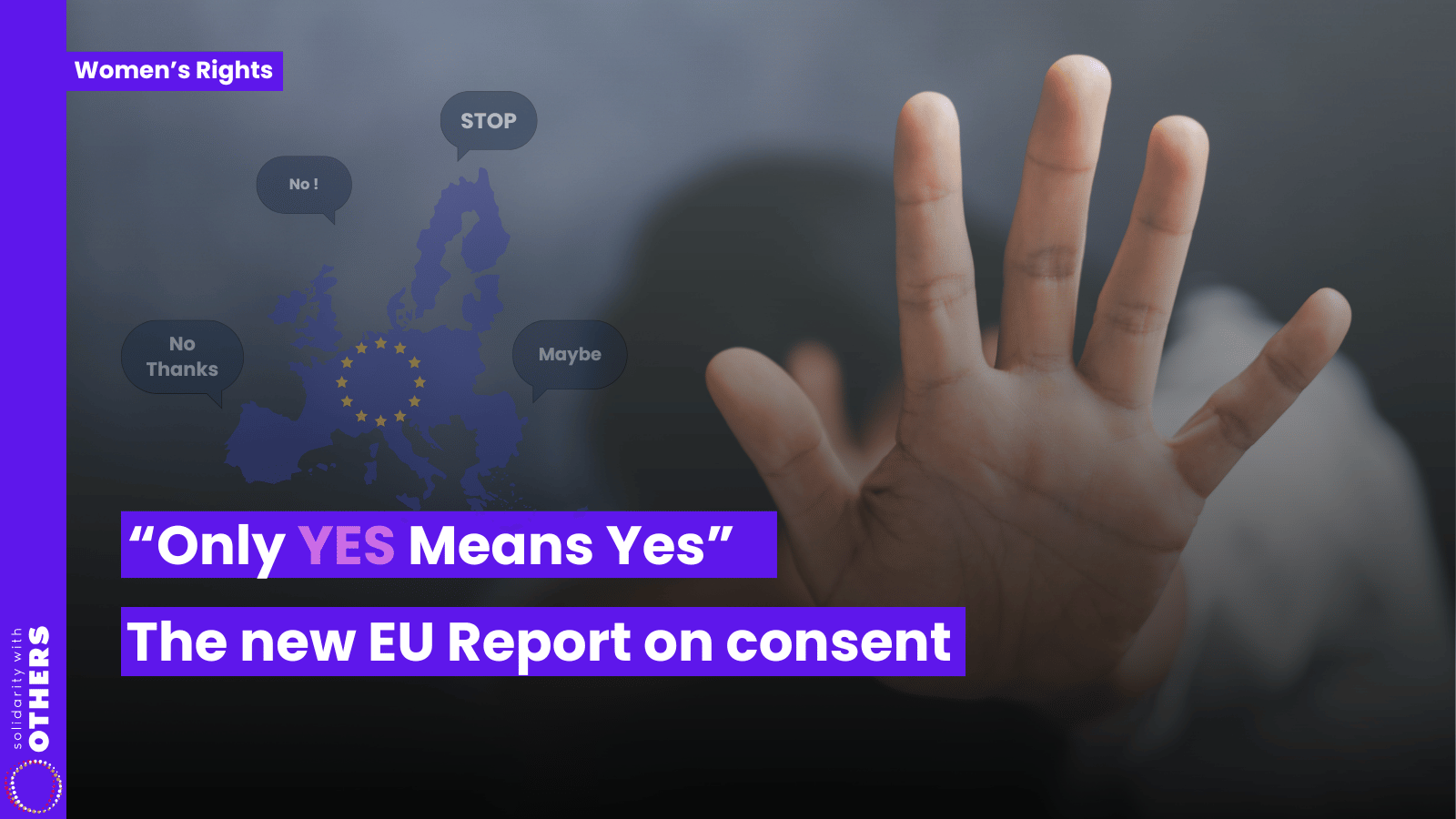
Over the past few months, discussions around consent and sexual violence legislation have moved back to the centre of European political debate. On April 28th 2026, the European Parliament adopted a report calling for a harmonised, consent-based definition of rape across all EU Member States, summarised by the phrase “Only yes means yes”.
The report argues that sexual violence should be understood through the absence of freely given consent, rather than evidence of force, resistance, or physical injury. This debate is not entirely new. It builds on years of advocacy by survivors, feminist organisations, human rights groups, and international legal frameworks such as the Council of Europe’s Istanbul Convention.
A Harmonized definition
The European Parliament’s first request to the Commission was to craft a common definition of rape based on freely given, informed, and revocable consent. MEPs called on Members States who still rely on force or violence-based definitions of rape to align their laws with international standards, such as the Istanbul Convention. The latter is called upon specifically for its Article 36, which explicitly states that consent must be given voluntarily, as the result of the person’s free will, and that such standard also applies within marriages and relationships, thus criminalizing marital rape.
The EP states that silence, lack of resistance, the absence of a “no”, as well as previous consent, past sexual conduct, or any current or previous relationship must not be interpreted as consent. Thanks to this, only a clear, continuously asserted signal of consent can be interpreted as a voluntary participation in the sexual act, ruling out ambiguity as an excuse for sexual assault.
The Parliament introduced the topic of contextual assessment of consent, including the consideration of cases involving violence, threats, the abuse of power, fear, intimidation, unconsciousness, intoxication, chemical submission, sleep, illness, disability or vulnerability. It also fundamentally asserted that trauma responses (such as the “freeze” or the “fawn” responses) must be reflected in legislation and judicial practice.
Support for the victims
The report also discussed the pivotal topic of victims’ support. Based on Article 26 of Directive (EU) 2024/1385, on combating violence against women and domestic violence, MEPs requested for legislative action ensuring adequate support and protection for victims and survivors across the EU. Demands for immediate medical care, sexual and reproductive healthcare, safe and legal abortion, trauma care, psychological support and legal assistance, as well as free specialist support services, (including 24-hours crisis centres offering medical, psychological and legal support) were made.
Entailed in the report was also a call for regular and tailored mandatory training for professionals likely to come into contact with rape victims, including law enforcement officers, judges, prosecutors, lawyers, healthcare professionals and frontline workers.
Further Actions
Finally, MEPs demanded for gender-based violence to be added to the charges considered as EU crimes, as provided by Art. 83(1) of the Treaty on the Functioning of the European Union (TFEU), which presents a limited list of crimes for which the EU can set common criminal-law standards across all Members States. This would help advance a cohesive, supportive and safe environment for victims all over the EU, tackling issues of cultural and legislative barriers.
Moreover, in the educational sector, the report called on the Commission to present EU guidelines in 2026 on comprehensive sexuality and relationship education, as well as for EU-wide awareness campaigns on consent, relationships, sexual integrity and bodily autonomy, and for action against rape myths, anti-gender content, and incel propaganda online.
Beyond legal reform, education can indeed help challenge harmful stereotypes and online misogynistic narratives by promoting a clearer understanding of consent, mutual respect, and healthy relationships from an early age. In this sense, awareness and education measures are presented not only as tools for informing the public, but also as long-term strategies for reducing gender-based violence across the EU.
Conclusion
In conclusion, the European Parliament’s report represents a significant political step toward a more unified and survivor-centred approach to sexual violence legislation across the European Union. By placing freely given consent at the core of the definition of rape, the report challenges outdated legal standards that still require victims to prove force, resistance or physical injury in order to obtain justice. At the same time, it recognises that legal reform alone is not sufficient, stressing the importance of accessible support services, professional training, education, and awareness-raising efforts capable of addressing the broader cultural roots of gender-based violence.
As Civil Liberties Committee rapporteur Evin Incir (S&D) stated: “Momentum is with us: it’s time to deliver a common European definition of rape based on the absence of freely given and revocable consent.”