

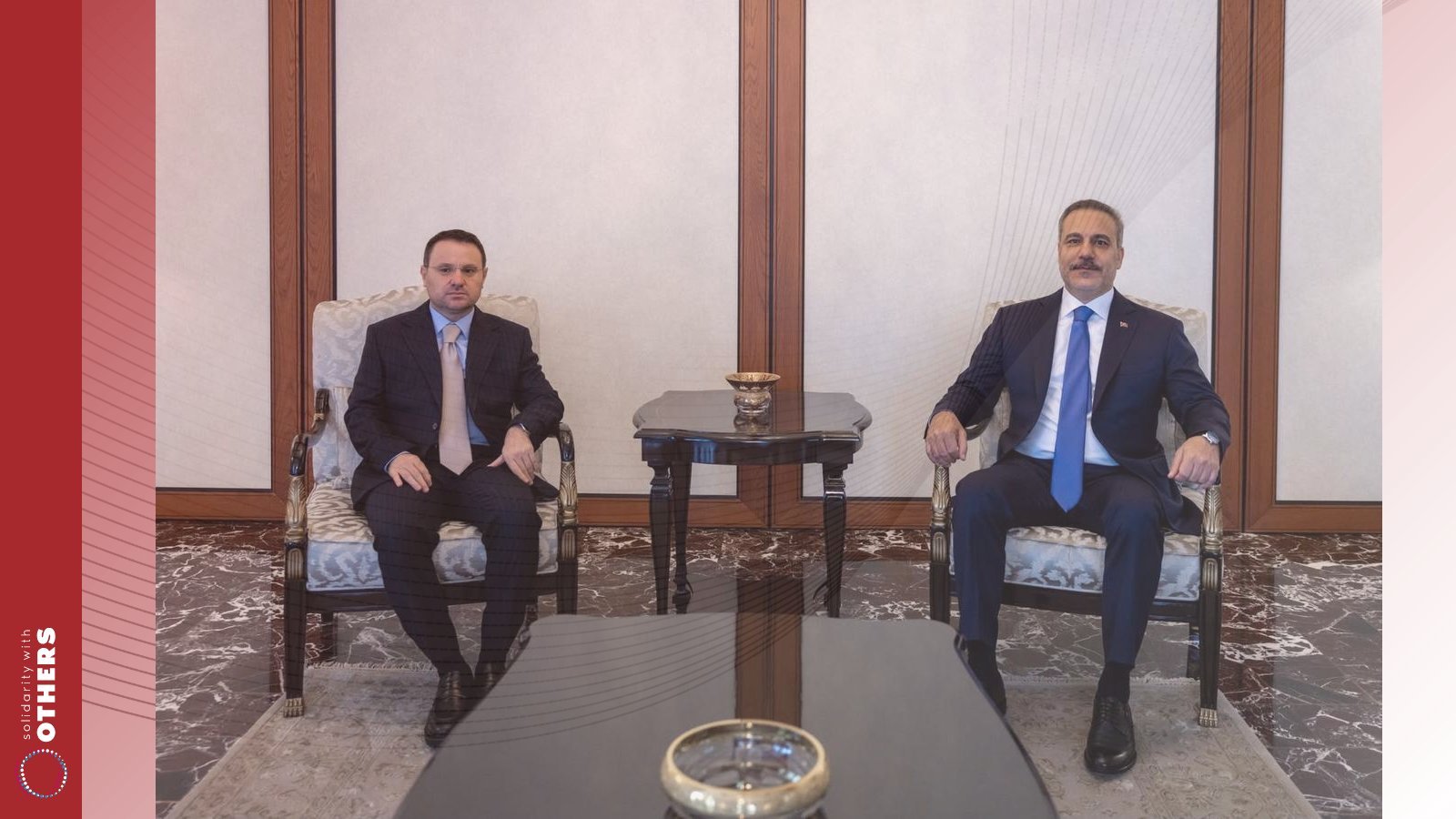
The day after meeting Minister of Foreign Affairs Hakan Fidan, Justice Minister Akın Gürlek announced that 33 people had been detained in four operations in İzmir, Eskişehir, Ağrı and Aydın, out of 35 sought. One is abroad; one is still being looked for.
In the İzmir investigation, he said, the suspects were identified through “ByLock correspondence, Bank Asya and HTS records”. HTS records are telephone traffic logs.
Those are the categories the Grand Chamber of the European Court of Human Rights ruled on three years ago. In Yüksel Yalçınkaya v. Türkiye, delivered on 26 September 2023, the Court found violations of Article 7, Article 6 § 1 and Article 11 in the conviction of a teacher on alleged ByLock use, a Bank Asya account and membership of a union and an association closed by emergency decree. It held that the domestic courts had treated alleged ByLock use as sufficient in itself to establish membership of an armed organisation, without establishing the mental element the offence requires and without examining individual circumstances.
The Court described the problems as systemic. It recorded that around 8,500 applications raising the same complaints were already before it, and called on Türkiye to take general measures.
The judgment has not been executed. Yalçınkaya was retried in Kayseri and convicted again, on the same charges. A Committee of Ministers request for information on the steps taken, due by the end of June 2026, went unanswered.
On 29 September — fifteen days before the minister’s announcement — the Court delivered three further judgments covering 947 applicants, finding violations of Article 6 § 1 in Ünal and Others and Parun and Others, and of Article 7 in Korkmaz and Others, all arising from post-coup terrorism convictions.
In July 2025 the Court had decided 239 ByLock applications and told the Turkish Government it had given notice of 5,000 more. As of 31 August 2026 Türkiye accounted for 23,850 of the 58,100 applications pending before the Court, or 41 per cent of its docket.
The announcement itself should be read for what it does and does not contain. Every figure in it comes from the minister. No court has ruled on any of these cases. The people described are detained, not charged and not convicted, and the statement names them as members of a terrorist organisation before any judge has seen the file. CNN Türk’s report reproduces the statement and adds nothing to it.
Of the 35 people named, 34 are in the Gülen-related investigations and one is in the ISIS financing case in Ağrı, although the operation is announced as directed at both.
For the largest group — the 21 detained in four provinces in the İzmir-centred operation — the statement gives no evidence at all. It says they were “assessed as operating within the current structuring” of the organisation. The Eskişehir case is described as money transferred through a company in the United States against food products sent from Türkiye, transfers which “were assessed as capable of being used” in financing. No offence is identified beyond that assessment.
The minister opened by saying that the fight against terrorist organisations is being pursued “under the leadership of our President”. He closed by thanking the chief public prosecutors who conducted the investigations.
The hate terms “FETÖ” and “FETÖ/PDY” are the Turkish authorities’ designation and are used here as quotation only. Solidarity with OTHERS does not adopt them.
Three years after Strasbourg held that these categories of evidence cannot sustain a conviction in the way Turkish courts use them, and fifteen days after it said so again in 947 cases, they are being announced as the basis for new detentions.
Source:
Akın Gürlek, Minister of Justice (@abakingurlek), statement of 14 October 2026: https://x.com/abakingurlek/status/2110324466584568177