


The European Court of Human Rights delivered three judgments against Türkiye on 29 September 2026 concerning convictions for membership of an armed terrorist organisation based decisively on use of the ByLock messaging application.
In Korkmaz and Others, eleven applicants, the Court found a violation of Article 7, no punishment without law. In Parun and Others, 345 applicants, it found violations of Articles 7 and 6(1). In Ünal and Others, 591 applicants, it found a violation of Article 6(1), the right to a fair trial. The judgments cover 947 people in total and are final.
All three were decided by the same three-judge Committee of the Second Section, the formation reserved for cases where the legal question is already settled by the Court’s well-established case law. In each case the Turkish Government objected to examination by a Committee, and in each case the Court rejected that objection.
The Court recorded that the domestic authorities treated ByLock as designed for the exclusive use of members of the organisation, and that establishing a person’s use of it was sufficient on its own for conviction under Article 314(2) of the Criminal Code.
The Government argued that the convictions had not rested solely on ByLock but on a wide range of other evidence, and asked the Court to assess each applicant’s proceedings on their own facts. The evidence it listed includes membership of trade unions, associations or foundations; account activity at Bank Asya; possession of publications; participation in trips abroad and records of entry and exit; donations to foundations; attendance at demonstrations; social media posts; residence in student houses or dormitories; use of other messaging applications; telephone traffic records showing contact with others prosecuted for the same offence; and employment by particular institutions or companies.
The Court accepted that the evidence against some applicants included material not at issue in Yalçınkaya. It found no reason to depart from that judgment. It held that establishing the mere use of ByLock served, on its own, as conclusive proof of all the constituent elements of the offence, and that this approach effectively imputed objective liability to users of the application, contrary to the principle of legality under Article 7.
On fair trial, the Court held that whatever the particularities of each file, the uniform and global approach of the domestic courts to ByLock had defined the procedural framework of all these proceedings. The failure to put safeguards in place, to address the salient issues and to give reasons was incompatible with the essence of the applicants’ rights under Article 6(1).
The Court accepted that the difficulties Türkiye faced after the coup attempt are a contextual factor, but held it had no basis on which to find that the limitations were strictly required by the exigencies of the situation within the meaning of Article 15.
In some cases, the Court noted, convictions were imposed without waiting for the detailed ByLock findings and evaluation reports to be placed in the file, on the ground that establishing use of the application was sufficient regardless of the content of the communications.
Every applicant in the three cases had applied to the Turkish Constitutional Court. Every application was summarily dismissed as inadmissible.
No compensation was awarded. The Court treated the finding of a violation as sufficient just satisfaction and made no award for costs, noting that the applicants may seek the reopening of the domestic proceedings under Article 311(1)(f) of the Code of Criminal Procedure, and that reopening consistent with the conclusions and spirit of the judgment would in principle be the most appropriate redress.
The three judgments cite four earlier follow-up rulings in the same group: Demirhan and Others in July 2025, covering 239 applicants; Seyhan and Others and Bozyokuş and Others in December 2025, covering 852 and 132; and Çalı and Others and Dönmez and Others in June 2026, covering 264 and 34. With the 947 decided today, follow-up judgments in this group have now covered at least 2,468 applicants.
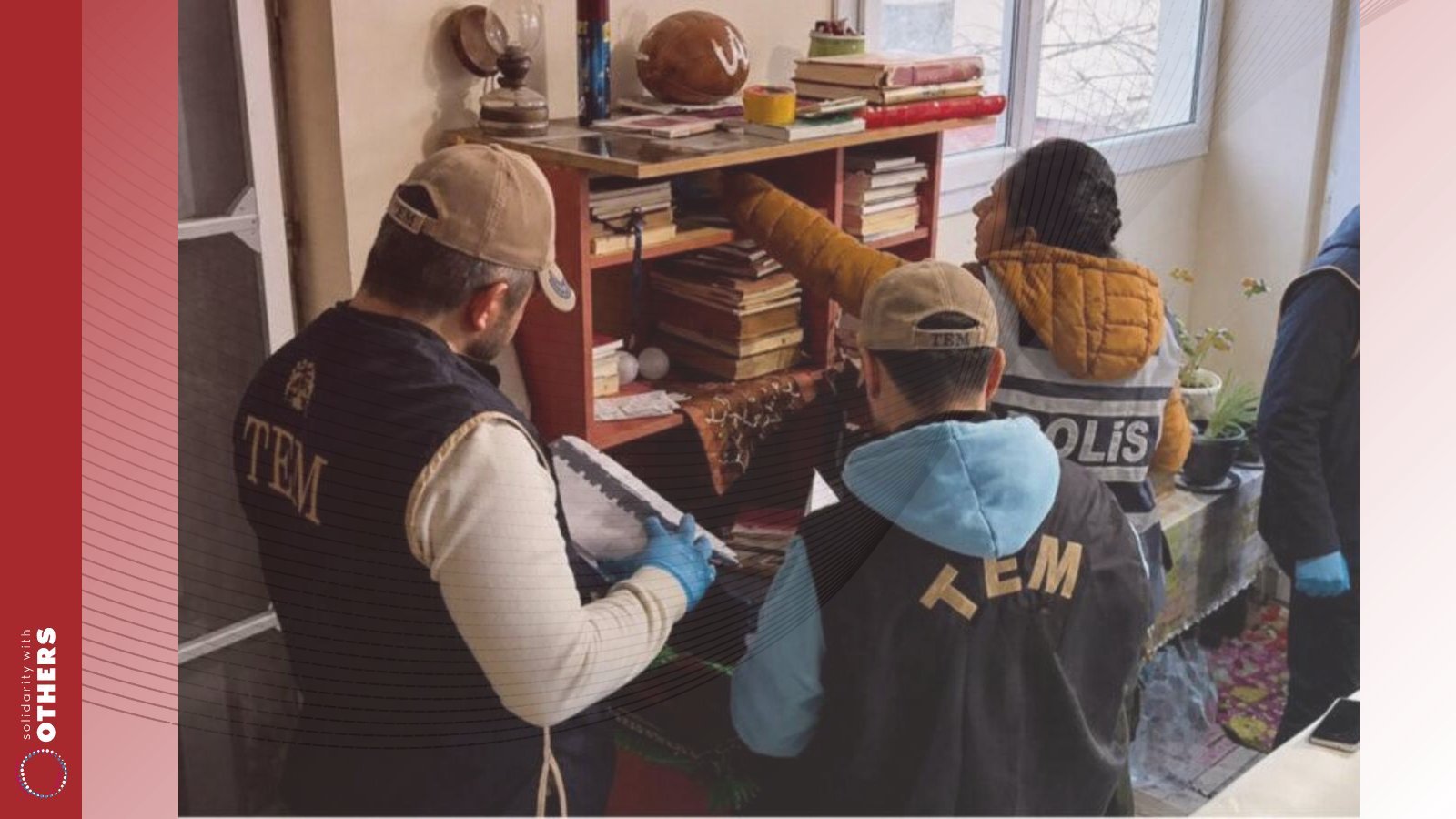
On the same day these judgments were delivered, police in six Turkish provinces detained twenty people in an investigation whose stated grounds included Bank Asya account movements and payphone call records.
Sources:
1- ECtHR, Korkmaz and Others v. Türkiye, no. 36880/20 and 10 others, 29 September 2026: https://hudoc.echr.coe.int/eng?i=001-252506
2- ECtHR, Parun and Others v. Türkiye, no. 9991/20 and 344 others, 29 September 2026: https://hudoc.echr.coe.int/eng?i=001-252505
3- ECtHR, Ünal and Others v. Türkiye, no. 61641/19 and 590 others, 29 September 2026: https://hudoc.echr.coe.int/eng?i=001-252504